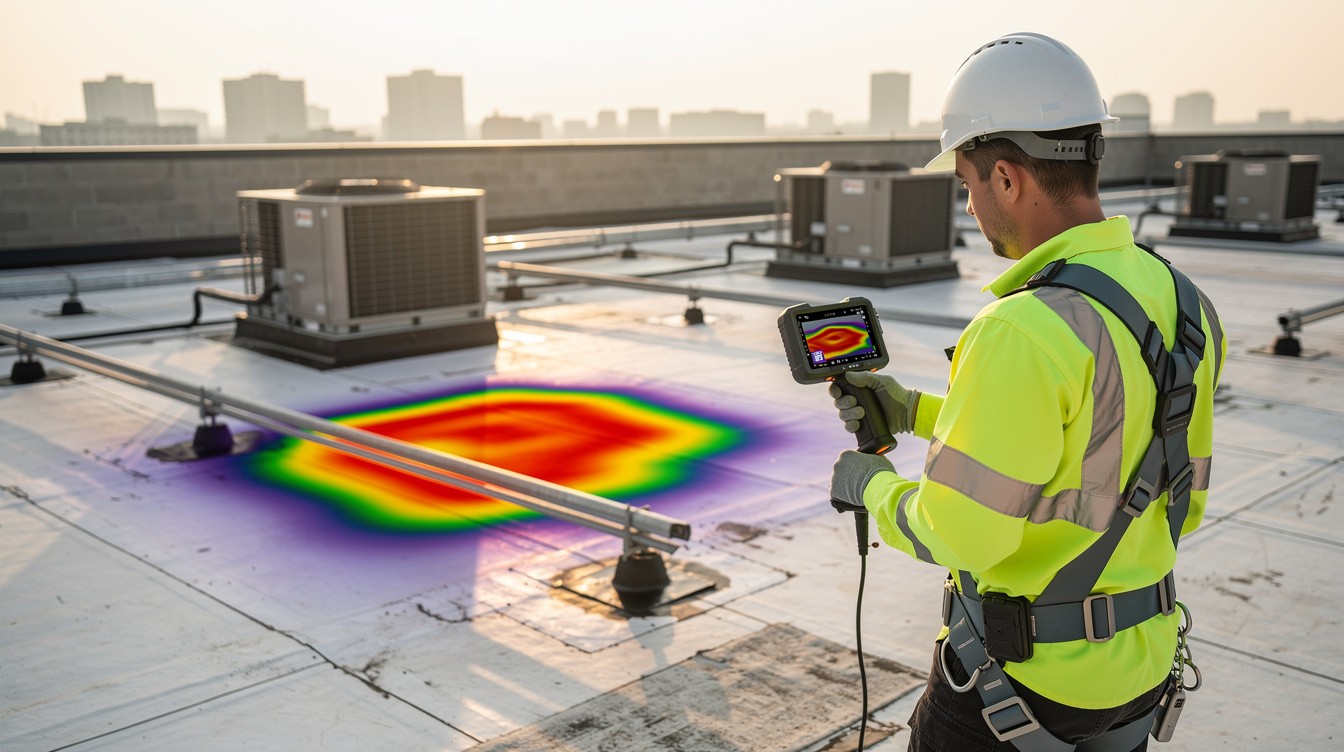
Your commercial roof is one of your biggest assets, yet most property owners don’t know what’s happening beneath the surface. Thermal imaging reveals hidden problems like insulation gaps, moisture damage, and air leaks that cost you thousands in wasted energy and emergency repairs.
At IE Drone Services, we use thermal technology to catch these issues early, when they’re cheap to fix. A commercial roof thermal check takes the guesswork out of maintenance and protects your bottom line.
What Thermal Imaging Reveals on Your Commercial Roof
How Temperature Differences Expose Hidden Problems
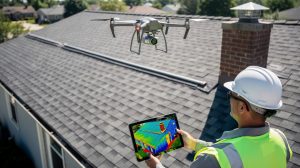
Thermal imaging works because wet insulation and air gaps absorb and release heat differently than healthy roof materials. When an infrared camera scans your commercial roof, it detects these temperature differences invisible to the naked eye, producing a heat map that pinpoints exactly where your building loses energy and where moisture sits trapped. The technology measures real temperature variations across every square foot of your roof surface rather than relying on guesswork.
Insulation Gaps Show Up as Bright Spots
Insulation gaps and heat loss appear as bright spots on thermal scans because compromised insulation has higher thermal mass and holds heat longer than surrounding areas. Roughly 25 percent of heat escapes through the roof, making thermal checks essential for energy efficiency. High-resolution cameras detect one-degree temperature differences, which is precise enough to identify problem areas smaller than your hand. This level of accuracy means you avoid paying to replace entire roof sections when only isolated zones need repair.
Moisture Reveals Itself Before Visible Damage Occurs
Moisture trapped under your roof membrane shows up the same way-wet insulation retains heat and appears brighter on the scan than dry material. Thermal imaging catches moisture before it causes visible water stains, mold growth, or structural decay. A roofer can then verify the exact leak source using a non-penetrating moisture meter, confirming the thermal data before any repairs begin. This verification step protects you from unnecessary work and targets only the areas that actually need attention.
Air Leaks Create Cold Spots on Heat Maps
Air leaks and ventilation failures create localized cold spots on thermal maps, revealing where conditioned air escapes or outside air infiltrates your building envelope. These energy waste points directly impact your monthly utility bills, and targeting them with repairs delivers measurable savings within months of correction. The precision of thermal data means you know exactly which areas to address first, allowing you to prioritize repairs based on actual energy loss rather than assumptions.
Understanding what thermal imaging shows is one thing-knowing why your property needs this inspection is another.
Why Your Commercial Roof Needs Thermal Inspection Now
Hidden Problems Cost More Than You Think
Waiting for visible roof damage before taking action is expensive. Most commercial property owners don’t realize their roofs are already losing money through energy waste and hidden moisture until the problem becomes catastrophic. Thermal imaging identifies these issues while they’re still cheap to fix, which means the difference between spending a few thousand dollars on targeted repairs and spending tens of thousands on emergency roof replacement. The data from a thermal scan gives you hard evidence of what’s actually wrong with your roof, not speculation based on age or appearance.
Energy Loss Drains Your Bottom Line Every Month
Commercial buildings lose roughly 25 percent of their heat through the roof, and thermal checks pinpoint exactly where that energy escapes so you can fix only what matters. A facility manager at a 50,000-square-foot warehouse recovers the cost of a thermal inspection within the first year through reduced heating and cooling expenses alone, especially when repairs address the specific heat loss zones the scan identifies. Targeted repairs based on thermal data deliver measurable savings within months of correction because you know exactly which areas to address first.
Insurance Companies Accept Thermal Reports as Evidence
Insurance companies increasingly accept thermal imaging reports as supporting documentation for water damage and storm-related claims, which accelerates your coverage approval and reduces out-of-pocket costs when weather events damage your roof. This documentation strengthens your position during the claims process and provides the proof adjusters need to approve faster settlements.
Early Detection Prevents Cascading Damage
Early detection of insulation failures and moisture pockets prevents the cascade of problems that follow. Mold growth typically starts within 48 hours of water intrusion, structural decay accelerates once moisture reaches the deck, and energy bills climb higher each month the problem persists. Thermal data also extends your roof’s lifespan because targeted repairs based on actual thermal conditions preserve the majority of your membrane and insulation rather than forcing premature replacement of materials that are still performing.
Inspections Fit Into Your Operations Seamlessly
The inspection itself takes less than an hour for most commercial properties, and FAA-certified drone operations capture comprehensive heat maps without requiring anyone to climb onto the roof or disrupt your daily operations. Property owners who schedule annual thermal inspections catch seasonal vulnerabilities before winter heating demands spike or summer cooling loads peak, which is why facilities management professionals recommend making this a routine maintenance practice rather than waiting for visible signs of failure.
Understanding why thermal inspection matters leads directly to the practical question: what happens when you actually schedule one?
Scheduling and Conducting Your Thermal Inspection
How the Inspection Process Works
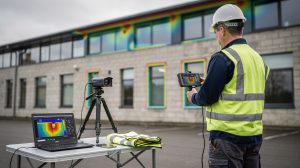
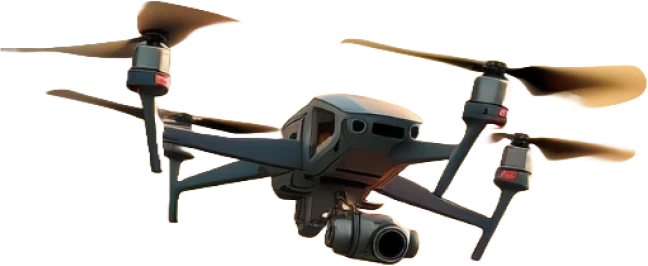
A thermal roof inspection for your commercial property follows a straightforward process that takes less than an hour from start to finish. Weather conditions and your building’s operational needs determine the scheduling window, since thermal scans work best when outdoor temperatures stay above 50 degrees Fahrenheit with clear skies and no recent rain that would leave surface moisture and confuse the readings. An FAA-certified drone pilot arrives with high-resolution infrared cameras mounted on DJI platforms, captures thermal imagery across your entire roof surface, and processes the data into detailed heat maps overlaid on orthomosaic images that show both temperature variations and physical roof landmarks.
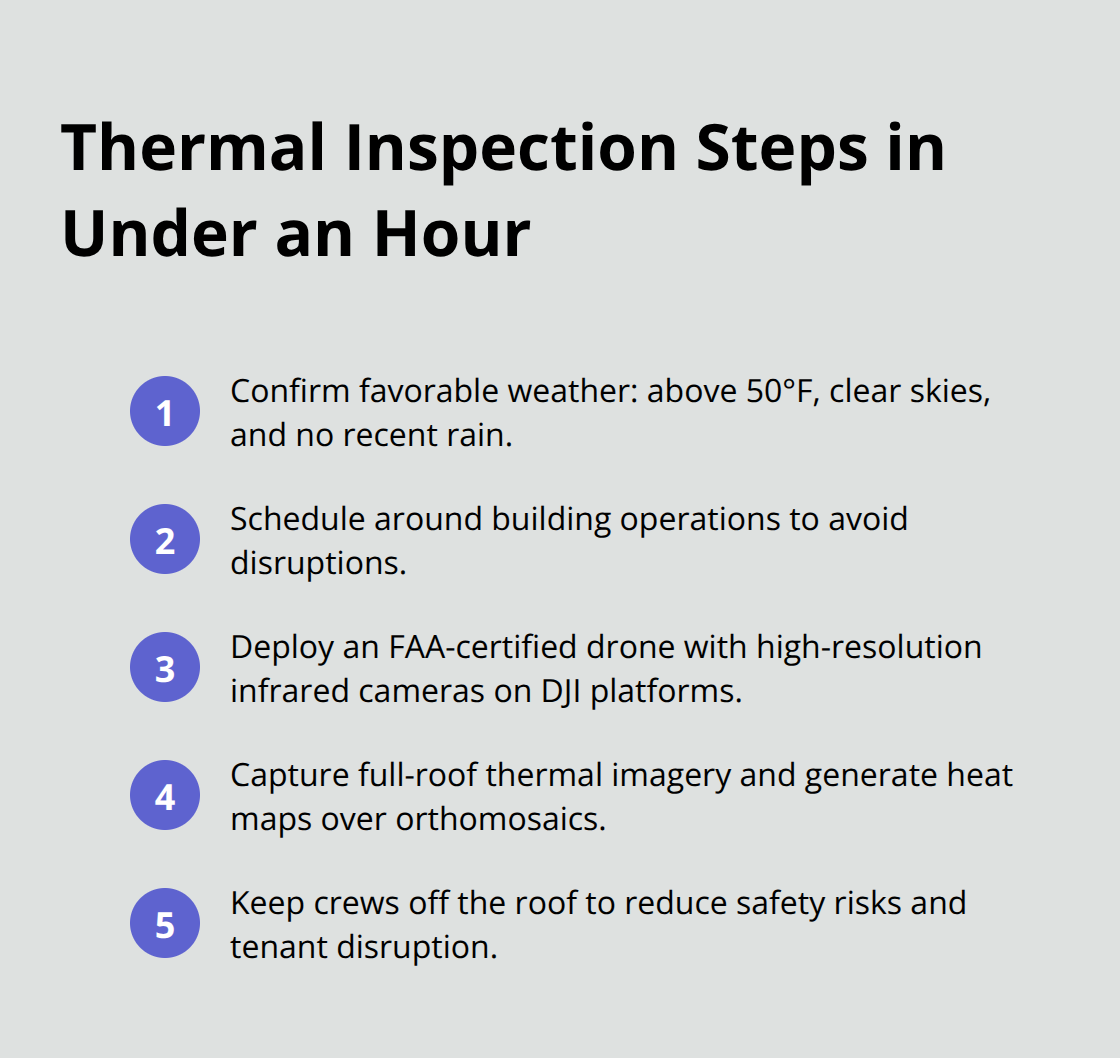
The flight happens from above your building, which eliminates the safety risks and operational disruptions that come with ground-level inspections where workers climb onto roofs and potentially disturb tenants or ongoing business activities.
Understanding Your Thermal Data and Measurements
The thermal report you receive contains radiometric outputs that carry actual temperature data across your roof, which means you get hard numbers showing exactly how many degrees hotter or colder specific areas are compared to the surrounding membrane. This quantitative approach replaces visual heat map colors alone with precise measurements that support real repair decisions. The report identifies insulation gaps through temperature differences typically ranging from 5 to 15 degrees Fahrenheit between compromised and healthy sections, moisture pockets that appear as thermal anomalies caused by water saturation, and air leak locations where conditioned air escapes your building envelope.
From Raw Data to Actionable Repair Guidance
Your thermal report transforms raw thermal data into actionable repair guidance, with maps clearly marking problem zones so your maintenance team or roofing contractor knows exactly where to focus efforts and budget allocation. A professional thermographer interprets the thermal maps in the context of your specific roof type and building characteristics, then recommends verification steps like non-penetrating moisture meter testing to confirm moisture sources before any reconstruction begins. This verification protects you from addressing thermal artifacts caused by equipment placement or material differences under the roof.
Targeted Repairs That Reduce Costs
Rather than recommending a full roof replacement, the thermal data guides targeted repairs that address only the zones actually causing energy loss or moisture problems. This approach reduces material waste and repair costs significantly compared to blanket roof overhauls. Most commercial property owners use these reports for budget planning, prioritizing repairs based on severity and energy impact, while others submit them directly to insurance companies as evidence supporting claims for storm damage or water intrusion, which accelerates settlement approval and reduces your out-of-pocket costs.
Final Thoughts
Thermal imaging protects your commercial property by revealing what your eyes cannot see, and the cost of ignoring hidden roof problems compounds monthly through wasted energy and accelerates through moisture damage. A commercial roof thermal check identifies these issues while they remain affordable to fix, giving you the data needed to make smart maintenance decisions instead of reactive ones. Your bottom line depends on catching insulation failures, moisture pockets, and air leaks before they become expensive disasters.
The 25 percent of heat that escapes through your roof represents real money leaving your building every single month, and targeted repairs based on thermal data stop that waste immediately (often recovering the inspection cost within a year through reduced energy bills alone). Insurance companies accept these reports as evidence, which accelerates claim approvals and reduces your out-of-pocket costs when weather events damage your roof. Early detection extends your roof’s lifespan, prevents cascading problems like mold growth and structural decay, and protects your assets from preventable loss.
The inspection itself takes less than an hour and requires no one to climb onto your roof or disrupt your operations. IE Drone Services uses FAA-certified drones with high-resolution infrared cameras to deliver thermal building and roof inspections across the Inland Empire. Contact us today to schedule your commercial roof thermal check and stop guessing about what’s happening beneath your roof surface.