Energy waste costs property owners thousands of dollars annually. At IE Drone Services, we use thermal imaging to identify exactly where heat escapes from buildings, giving you the visual proof you need.
An energy leak assessment with infrared technology reveals problems that remain invisible to the naked eye. This data becomes essential when filing insurance claims or planning renovation work.
How Infrared Cameras Reveal Energy Leaks
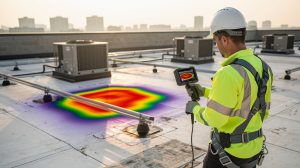
Thermal imaging works by capturing infrared radiation that all objects emit based on their temperature. When heat escapes through walls, windows, doors, or roof sections, those areas radiate at different temperatures than surrounding surfaces. An infrared camera detects these temperature differences and displays them as color-coded images, turning invisible energy loss into visible patterns. This happens in real time, meaning you see exactly where your building bleeds energy as the camera scans the structure.
Why Infrared Beats Traditional Detection Methods
Traditional air-leak detection methods like blower-door testing are intrusive, time-consuming, and expensive. Buildings leak air accounting for roughly 4 quads of primary energy loss annually across the United States. Thermal imaging identifies these leaks without pressurizing your building or disrupting occupants. A certified thermographer can scan a residential property in hours and a commercial building in a single day, compared to the days or weeks traditional diagnostics require.
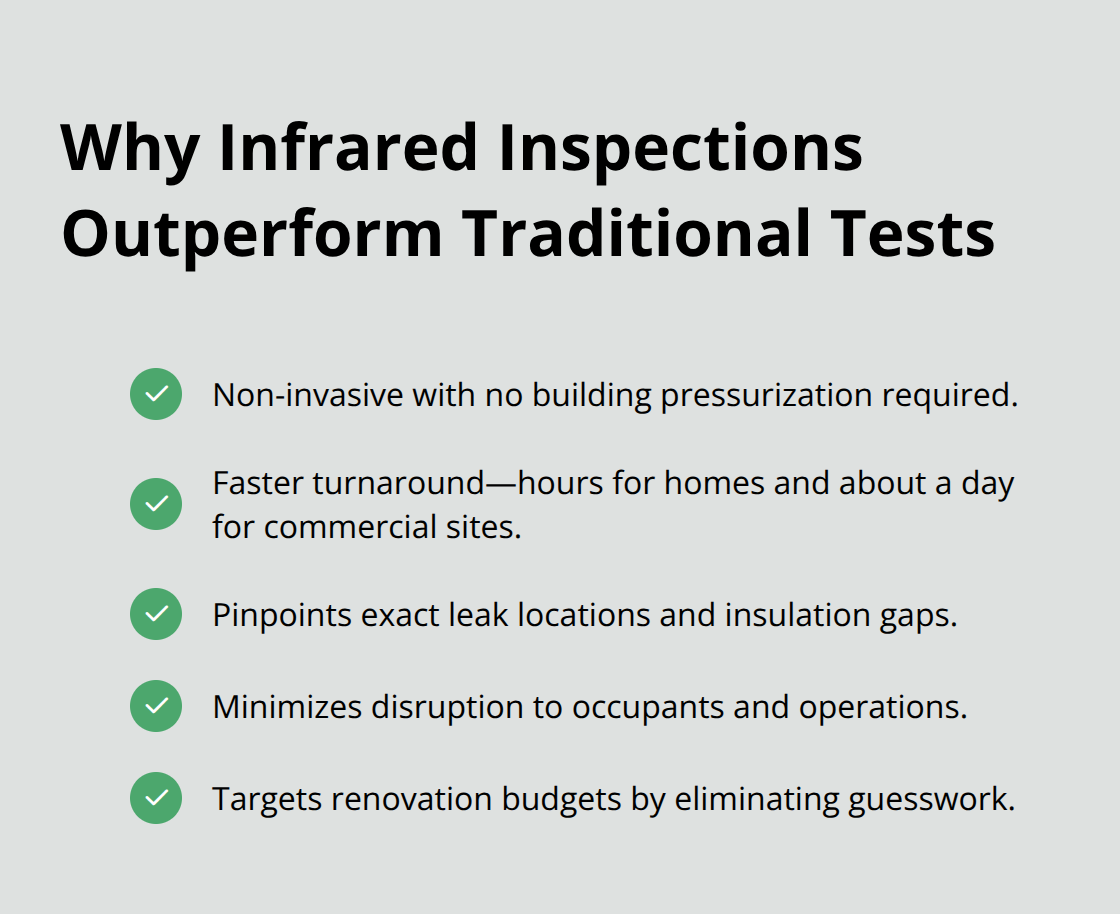
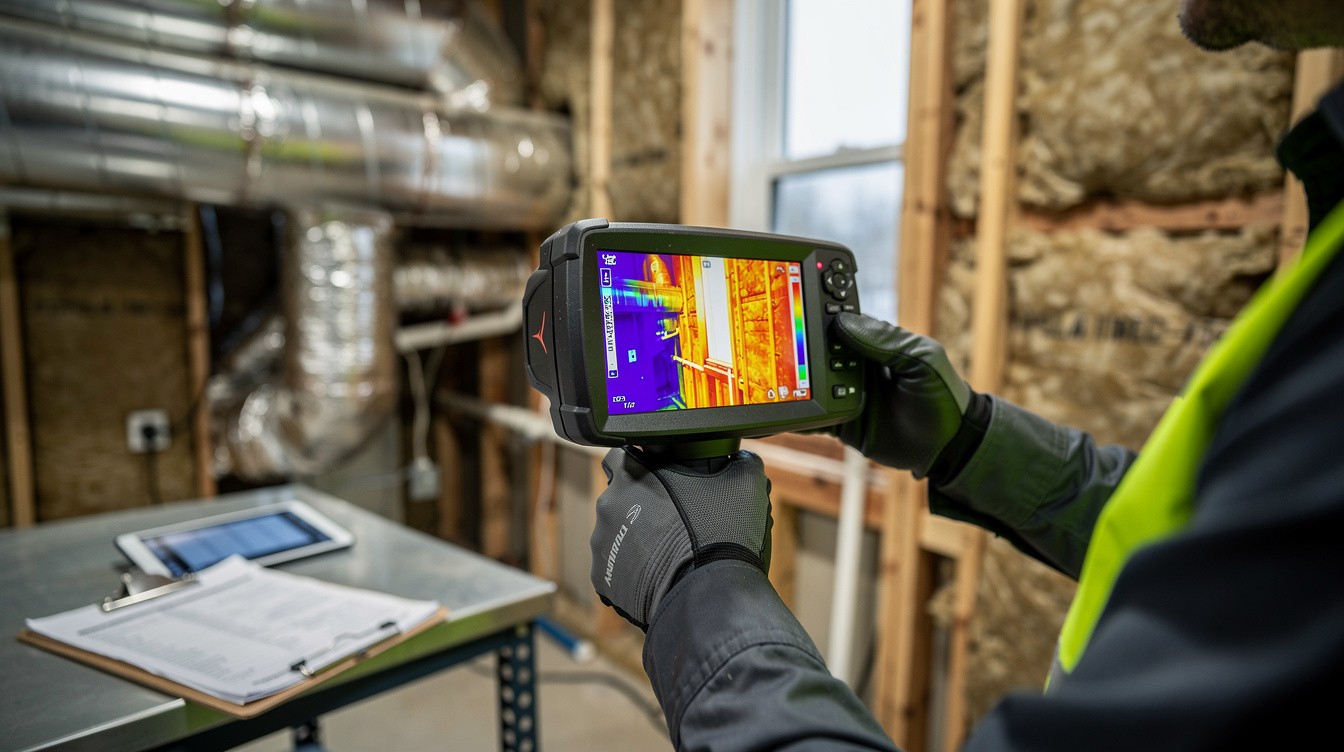
Unlike smoke tests or blower-door equipment, infrared assessment requires no invasive setup or specialized pressurization fans. The camera pinpoints exact locations of insulation gaps, air leaks around windows, and thermal bridges that cause heat transfer, eliminating guesswork about where to invest renovation money.
Aerial Perspectives Reveal Hidden Problems
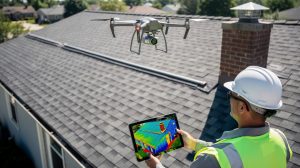
Ground-level inspections miss critical areas where energy loss occurs. Roof sections, upper-wall cavities, and hard-to-reach corners often hide the worst leaks. Aerial thermal imaging captures these problem zones from angles that traditional inspectors cannot access, providing a complete picture of where your property loses heat. This comprehensive view identifies patterns that ground-based cameras overlook entirely.
Reports Translate Thermal Data Into Action
Thermal imaging produces detailed reports with precise temperature readings and visual documentation of problem areas. These reports quantify energy loss severity, allowing you to prioritize repairs based on impact and cost-effectiveness. Insurance companies increasingly require documented evidence of electrical hotspots, moisture intrusion, and structural issues, and thermal imaging provides exactly that verification.
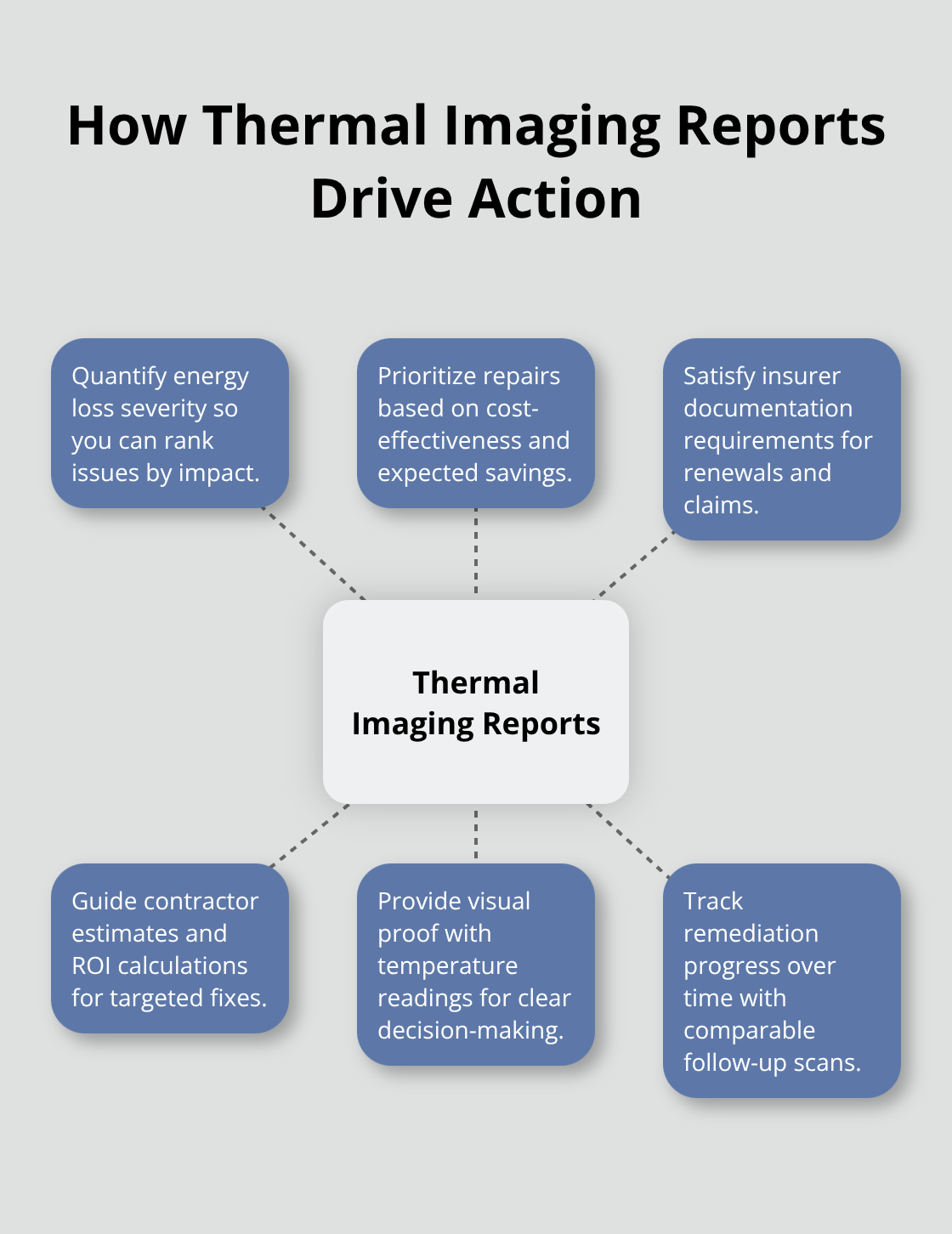
The visual data in these reports supports insurance claims by showing insurers the specific conditions affecting your property. When planning energy efficiency upgrades, contractors use thermal findings to calculate potential savings and recommend targeted improvements that actually reduce your energy bills rather than generic retrofits that might not address your specific leaks. With this precise information in hand, you move forward to the next critical step: understanding why property owners and insurance companies now demand these assessments as standard practice.
Why Property Owners and Insurance Companies Demand These Assessments
Energy Costs Force Action on Efficiency
Energy costs have become impossible to ignore. On space heating alone, Americans spend $73 billion each year, with costs to homeowners exceeding $29 billion annually. Property owners now treat energy efficiency as a financial necessity rather than a luxury. Thermal imaging assessments directly address this pressure by identifying where money literally escapes through walls, roofs, and poorly sealed openings.
Insurance Companies Now Require Documented Evidence
Insurance companies have shifted their stance dramatically over the past five years. They no longer accept vague descriptions of property conditions or generic maintenance claims. Insurers increasingly require documented evidence of active maintenance and risk prevention, particularly regarding electrical systems, moisture intrusion, and structural integrity. A thermal imaging report provides exactly what underwriters demand: verifiable visual proof that you understand your property’s actual condition and have taken measurable steps to address problems before they become catastrophic claims.
This documentation directly influences policy renewals and premium rates. Properties with current thermal assessments on file face lower risk classifications because the data proves you manage your building proactively rather than reactively.
Preventive Inspections Eliminate Costly Secondary Damage
Preventive inspections save money in ways that extend far beyond reduced energy bills. When you identify insulation failures, air leaks, and thermal bridges early, you prevent secondary damage like moisture accumulation and mold growth that costs exponentially more to remediate. Identifying and quantifying air leaks are commonly done through thermography or smoke tracking combined with a blower door test, helping you pinpoint exactly where energy escapes.
Thermal imaging assessments allow you to evaluate occupied buildings without the invasive pressurization required by traditional blower-door testing, meaning you can assess properties without disrupting tenants or operations. Contractors use thermal findings to calculate precise ROI for specific repairs, helping you avoid throwing money at generic upgrades that might not address your actual problem areas.
Lower Risk Classification Improves Policy Terms
Insurance companies view buildings with documented thermal assessments as lower-risk investments, which can result in more favorable policy terms and reduced premiums. For property owners facing rising operational costs and insurance pressures, thermal imaging assessment has become the practical baseline for demonstrating competent stewardship and securing better rates. Understanding your property’s thermal performance positions you to make informed decisions about which repairs deliver the greatest impact-a critical advantage when planning your next steps for assessment and remediation.
What Happens During a Thermal Assessment
Scheduling and Preparation for Maximum Accuracy
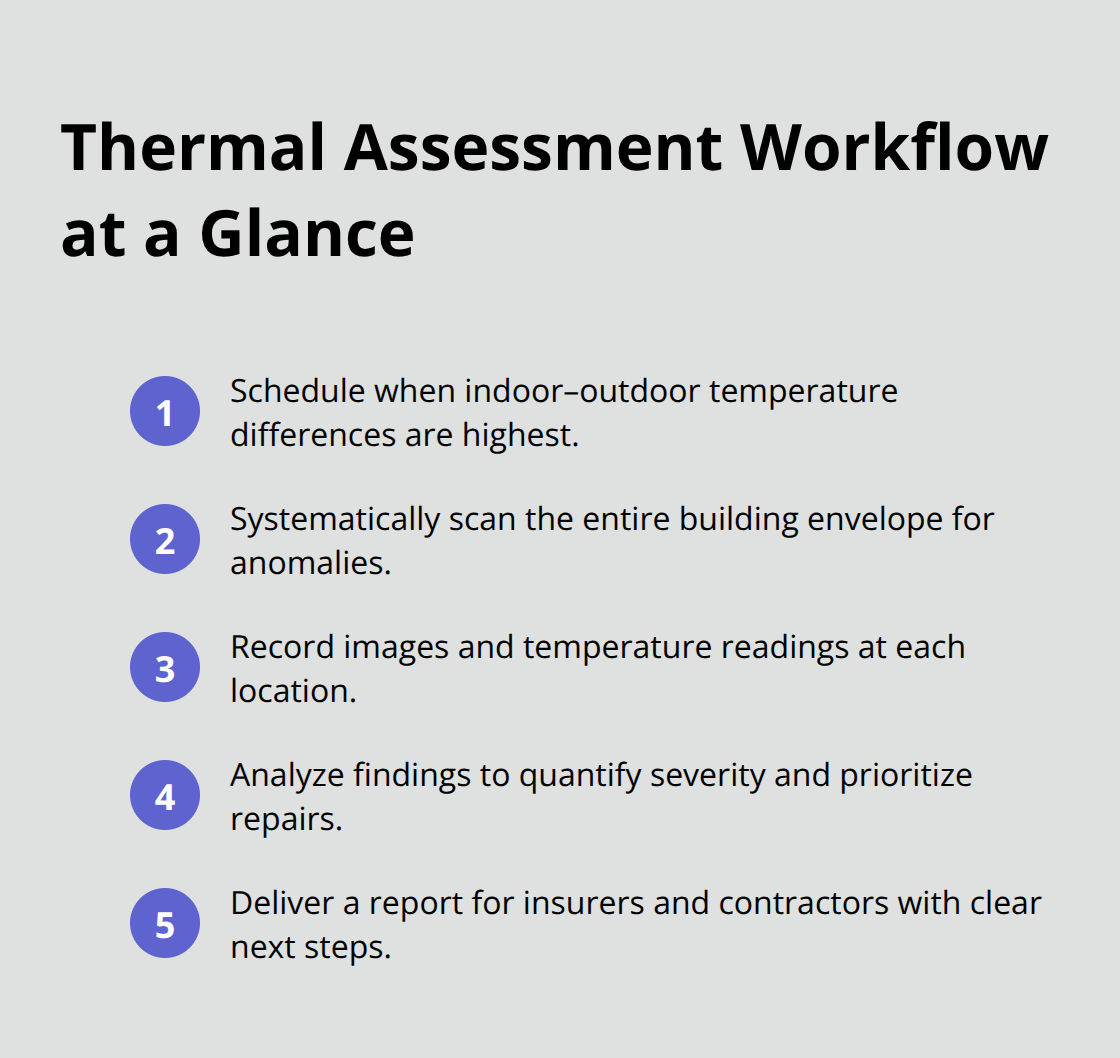
A thermal assessment starts with a certified thermographer arriving at your property with infrared equipment and a clear objective: capture temperature variations across your building envelope. Assessments work best when interior and exterior temperatures differ significantly, so thermographers schedule visits during early morning or late evening hours when these contrasts peak. This timing ensures the camera detects heat movement most effectively, revealing problems that might remain hidden during moderate temperature conditions. The thermographer arrives prepared to scan systematically across all critical areas of your property.
Capturing Thermal Data Across Your Property
The thermographer scans walls, roof sections, windows, doors, and foundation areas, documenting temperature patterns that reveal where heat escapes or enters. For residential properties, ground-level scanning takes two to four hours. For commercial buildings or properties where roof access reveals critical problem zones, aerial thermal imaging from a drone provides comprehensive coverage that ground inspections cannot match. The camera records precise temperature readings at each location, not just visual patterns. These readings quantify severity and help prioritize repairs based on actual impact rather than guesswork.
Analyzing Results and Producing Actionable Reports
Once imaging is complete, the thermographer analyzes thermal data and produces a detailed report that transforms raw camera footage into actionable intelligence. The report displays thermal images alongside visible-light photographs so you see exactly where problems exist in context. Temperature readings appear directly on images, showing insulation gaps as cold spots during winter assessments or hot spots during summer evaluations. Actionable recommendations follow each identified issue, specifying which repairs deliver the greatest energy savings and which can wait.
Documentation for Insurance and Contractor Use
For insurance purposes, reports document specific conditions affecting your property with visual proof that satisfies underwriter requirements for policy renewals and claims. Contractors use these reports to calculate precise ROI for repairs, allowing you to compare the cost of sealing an air leak against the annual energy savings that repair generates. This data-driven approach eliminates vague recommendations and focuses investment on repairs that actually reduce your energy bills. Reports typically include priority rankings, estimated energy loss percentages by location, and specific contractor recommendations for remediation, giving you everything needed to move forward with confidence.
Final Thoughts
Thermal imaging transforms how property owners and insurance companies approach energy efficiency and risk management. An energy leak assessment with infrared technology gives you visual proof of exactly where your building loses money, eliminating guesswork and replacing it with actionable data. This clarity matters because it lets you prioritize repairs based on actual impact rather than generic recommendations that may not address your specific problems.
The reports you receive from a thermal assessment serve dual purposes: they satisfy insurance company requirements for documented evidence of property condition and maintenance, which directly influences your policy terms and renewal rates, while simultaneously guiding contractors and renovation decisions by quantifying energy loss and calculating precise return on investment for each repair. Properties with documented thermal assessments demonstrate competent stewardship to insurers, often resulting in lower risk classifications and more favorable policy terms. For property owners facing rising energy costs and insurance pressures, thermal imaging assessment has become the practical baseline for understanding building performance and securing better rates.
Getting your property assessed starts with contacting an FAA-certified provider equipped with high-resolution infrared cameras and expertise in building envelope analysis. IE Drone Services delivers thermal building inspections and energy-leak detection using DJI platforms with infrared capabilities, providing faster assessment and precise data to improve property efficiency. Contact IE Drone Services today to schedule your thermal assessment and gain the clear, actionable insights your property needs.