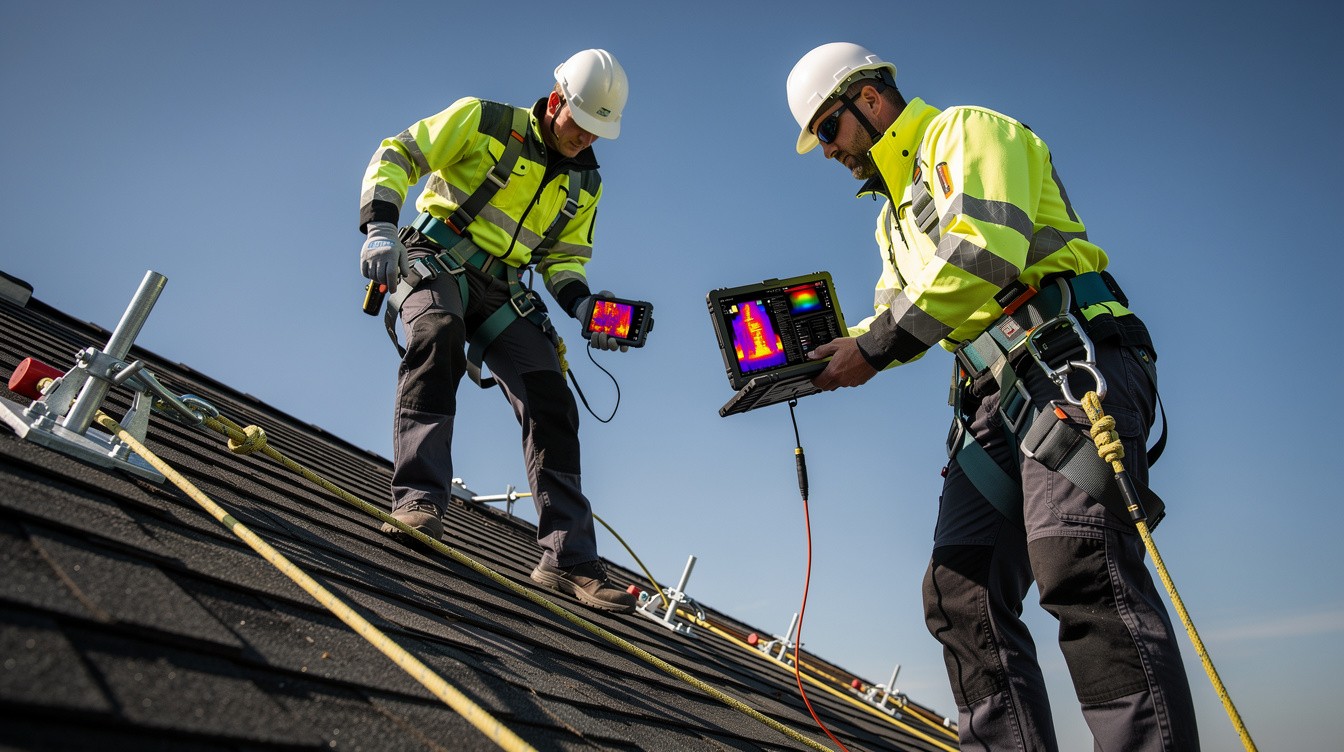
Roof thermography safety isn’t just about following checklists-it’s about protecting your team while gathering the data you need to make smart building decisions.
Traditional roof inspections put workers at serious risk. Falls from heights remain one of the leading causes of workplace injuries, and manual thermal assessments expose your crew to unnecessary hazards. At IE Drone Services, we’ve seen firsthand how outdated inspection methods compromise both safety and accuracy.
This guide walks you through proven safety protocols and shows you how modern drone-based thermal inspections eliminate ground risks entirely.
Why Thermal Roof Assessments Protect Your Team and Assets
Hidden Moisture Destroys Roofs Before You See the Damage
Thermal roof inspections reveal problems that traditional visual inspections cannot catch. Moisture trapped inside roofing systems spreads silently, destroying insulation and structural integrity long before visible damage appears on the surface. Thermal imaging detects these wet areas because moisture releases heat more slowly than dry materials, creating temperature differences that infrared cameras capture instantly. Moisture intrusion and undetected wet insulation cause most premature roof failures, yet teams often discover these issues only after thousands of dollars in damage accumulates.
Roof replacement costs run between $8 to $10 per square foot, and across the industry, billions in losses stem from problems that thermal imaging could have identified months or years earlier. When you catch moisture before it spreads, you prevent catastrophic failures that force emergency repairs and operational shutdowns.
Energy Loss Costs Money Every Single Day
Heat loss through roofs represents roughly a quarter of total heat escape in uninsulated buildings, directly impacting energy bills and operational costs. Thermal assessments pinpoint exactly where insulation has failed or gaps have formed, giving you precise data to guide targeted energy-efficiency improvements rather than guessing which areas need attention. Temperature patterns visible in thermal data show you the exact condition of insulation across every square foot of your roof.
This intelligence drives maintenance decisions that actually work. Instead of inspecting a roof visually and hoping nothing is wrong underneath, thermal data tells you the precise condition of insulation and moisture levels.
Insurance Companies Now Require Thermal Documentation
Insurance companies increasingly accept thermal inspection reports as supporting evidence for claims related to leaks and water intrusion, which means thermal documentation protects your organization legally and financially. This shift reflects growing industry recognition that thermal methods outperform traditional approaches.
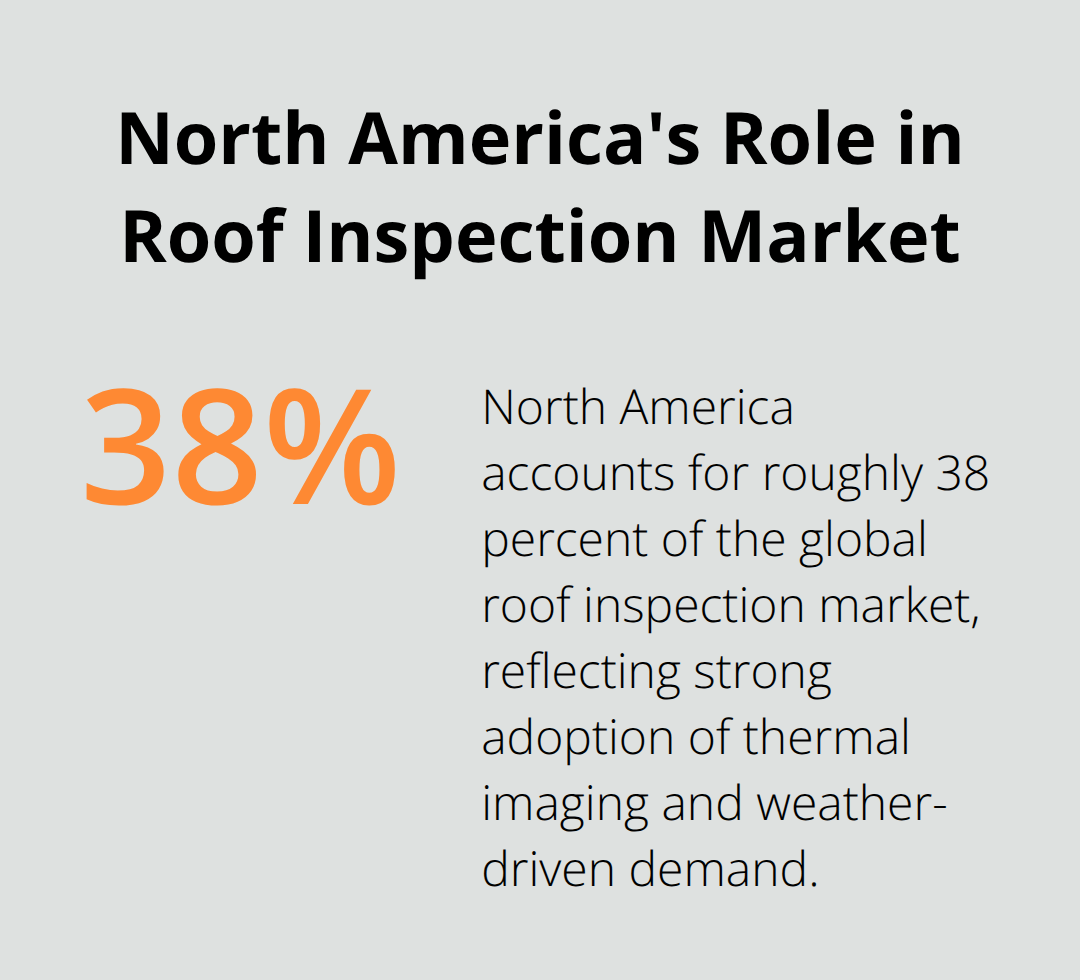
North America accounts for roughly 38 percent of the global roof inspection market, driven partly by severe weather and the growing adoption of thermal imaging as a standard assessment tool. The global roof inspection services market is projected to grow from $2.65 billion in 2025 to $4.22 billion by 2033, reflecting widespread recognition that thermal methods deliver superior results.
From Reactive Repairs to Proactive Risk Reduction
When you integrate thermal imaging into routine maintenance schedules, you shift from reactive repairs to proactive risk reduction, eliminating surprises and controlling costs before problems escalate into emergencies. Faster decision-making happens because you see temperature patterns that indicate problems, not assumptions. This data-driven approach transforms how teams manage roof health and prevents the costly surprises that drain budgets and disrupt operations.
The safety benefits extend beyond what the numbers show. Traditional roof inspections put workers at serious risk, but thermal assessments combined with modern inspection methods eliminate many of those hazards. Understanding how to conduct these assessments safely-and knowing when to rely on professional drone-based approaches-separates teams that protect their workers from those that still expose crews to unnecessary danger.
How to Set Up Safe Thermal Inspections That Protect Your Team
Assess Your Site Before Thermal Work Begins
Planning a thermal roof assessment requires deliberate preparation before anyone approaches the roof. A detailed site hazard assessment identifies fall risks, electrical hazards, roof access points, and structural weaknesses that could compromise safety during imaging work. Examine the attic and underside of the roof to understand insulation type, roof composition, and any heat sources beneath the surface that might affect thermal readings.
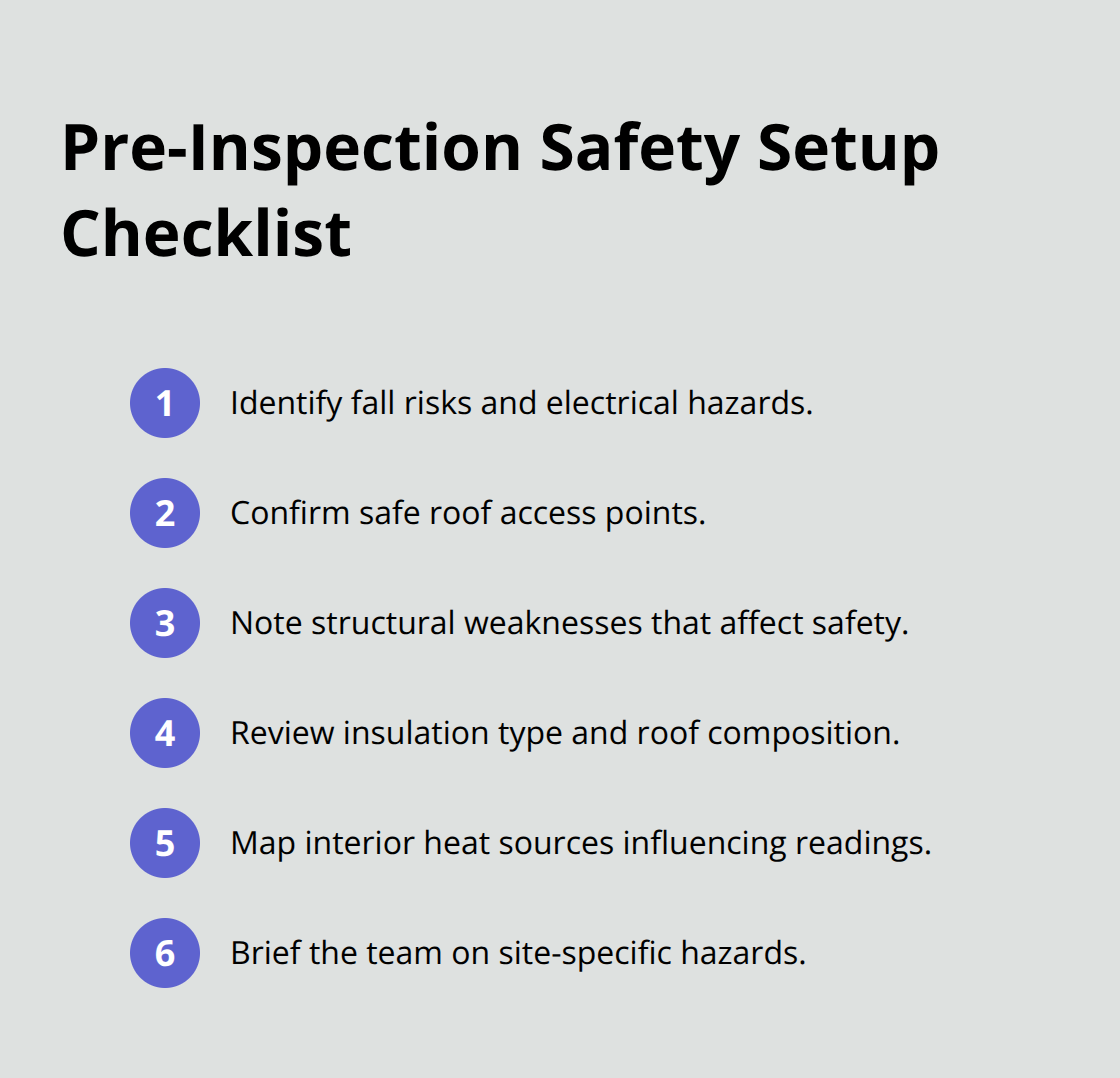
This groundwork prevents surprises and ensures your team knows exactly what conditions they will face.
Schedule Inspections for Optimal Weather and Thermal Conditions
Wind speed matters significantly for thermal accuracy-conditions above 15 mph distort infrared readings and make data unreliable, so schedule inspections when forecasts predict winds under 15 mph. Weather timing also influences thermal image quality. In warm months, dusk imaging leverages solar loading to maximize temperature differences between wet and dry roof areas, making moisture problems stand out clearly. In cold weather, a large temperature gap between indoor and outdoor spaces makes moisture differences more visible to thermal cameras. Clear, sunny conditions on the day before imaging improve the next day’s results, so plan accordingly.
Calibrate Equipment and Verify Thermal Data Accuracy
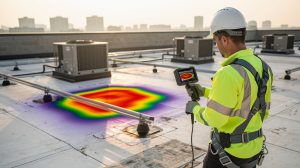
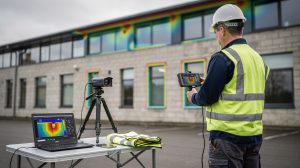
Equipment calibration separates reliable thermal data from misleading readings. Thermal cameras must be calibrated properly before deployment, and operators should verify suspected problem areas with a moisture meter to confirm what thermal images suggest. Set your infrared camera to cover large roof sections at an angle greater than 20 degrees from the roof surface to avoid distorted readings. Collect standard visual imagery alongside thermal data-this cross-check approach reveals issues neither dataset shows alone, like slipped tiles or weakened masonry.
Eliminate Ground Risk With Drone-Based Thermal Inspections
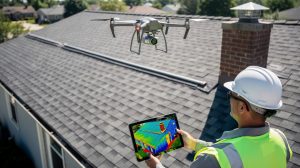
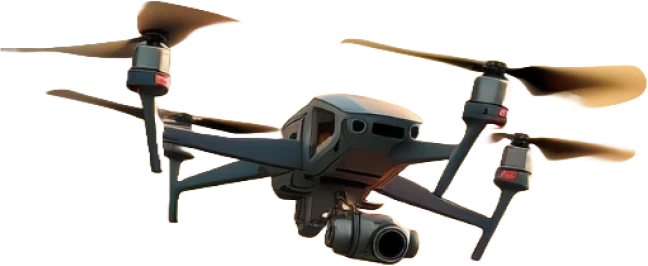
Fall protection protocols remain essential whenever personnel access roofs manually. However, drone-based thermal inspections eliminate this risk entirely by keeping your team on the ground while capturing precise thermal data from above. IE Drone Services uses FAA-certified drone operations with high-resolution infrared cameras to complete inspections safely without requiring workers to climb or balance on roofing materials. This method reduces safety risks dramatically while delivering the same actionable thermal intelligence that guides targeted repairs and maintenance decisions.
The difference between manual and drone-based approaches becomes clear when you consider what happens next-how teams actually use thermal data to prioritize repairs and prevent costly failures before they occur.
What Risks Threaten Thermal Roof Data and Worker Safety
Falls and Physical Hazards on Roofing Surfaces
Falls remain the dominant hazard in manual roof inspections, but they are far from the only threat teams face during thermal assessments. Workers climbing onto roofs expose themselves to slip hazards, unstable surfaces, and the simple reality that one misstep ends careers or lives. Thermal imaging equipment adds complexity because operators must balance camera operation with maintaining three points of contact on the roof, which divides attention precisely when focus matters most. The risk intensifies on steep pitches, wet surfaces, or aged roofing materials that have degraded grip.
Equipment Calibration and Data Accuracy Problems
Thermal cameras require calibration before deployment, and uncalibrated equipment delivers misleading temperature readings that send teams toward phantom problems or miss real damage entirely. Moisture meters must verify suspected wet areas because thermal images show temperature differences, not moisture directly-a cold spot might indicate shade rather than trapped water. This verification step separates accurate assessments from costly misinterpretations that waste resources on unnecessary repairs or fail to catch genuine damage.
Environmental Factors That Distort Thermal Readings
Wind speeds above 15 mph distort infrared readings through convective cooling that masks genuine thermal signatures, yet teams sometimes proceed with inspections during marginal conditions to meet scheduling pressures. Solar loading affects readings differently depending on time of day and season, so an inspection conducted at noon produces entirely different results than one performed at dusk, even on the same roof. Interior-to-exterior temperature differentials matter tremendously, which means inspecting a heated building in winter yields clearer thermal contrast than inspecting the same roof in summer when indoor and outdoor temperatures converge.
Why Manual Approaches Demand Compromise
Thermal roof assessments work best when conducted in controlled conditions with proper preparation and calibrated equipment, but manual approaches demand personnel on roofs regardless of conditions. Scheduling inspections for optimal weather windows requires discipline because pressure to complete work quickly often conflicts with waiting for winds under 15 mph or for dusk conditions that maximize thermal contrast. Equipment calibration demands discipline too, since it costs time upfront but prevents costly misinterpretation later. Moisture meters must be available on-site to verify thermal findings, adding another step that conscientious teams cannot skip.
Drone-Based Thermal Assessment Removes Primary Hazards
Drone-based thermal assessment eliminates the primary hazard entirely while removing environmental compromises that plague manual approaches. Operators can position the drone for optimal thermal contrast without balancing on unstable surfaces, which removes the fall risk and simplifies equipment management. The data quality actually improves because drone positioning captures large roof sections at consistent angles and distances, reducing the thermal distortion that occurs when handheld cameras vary in position or angle throughout an inspection.
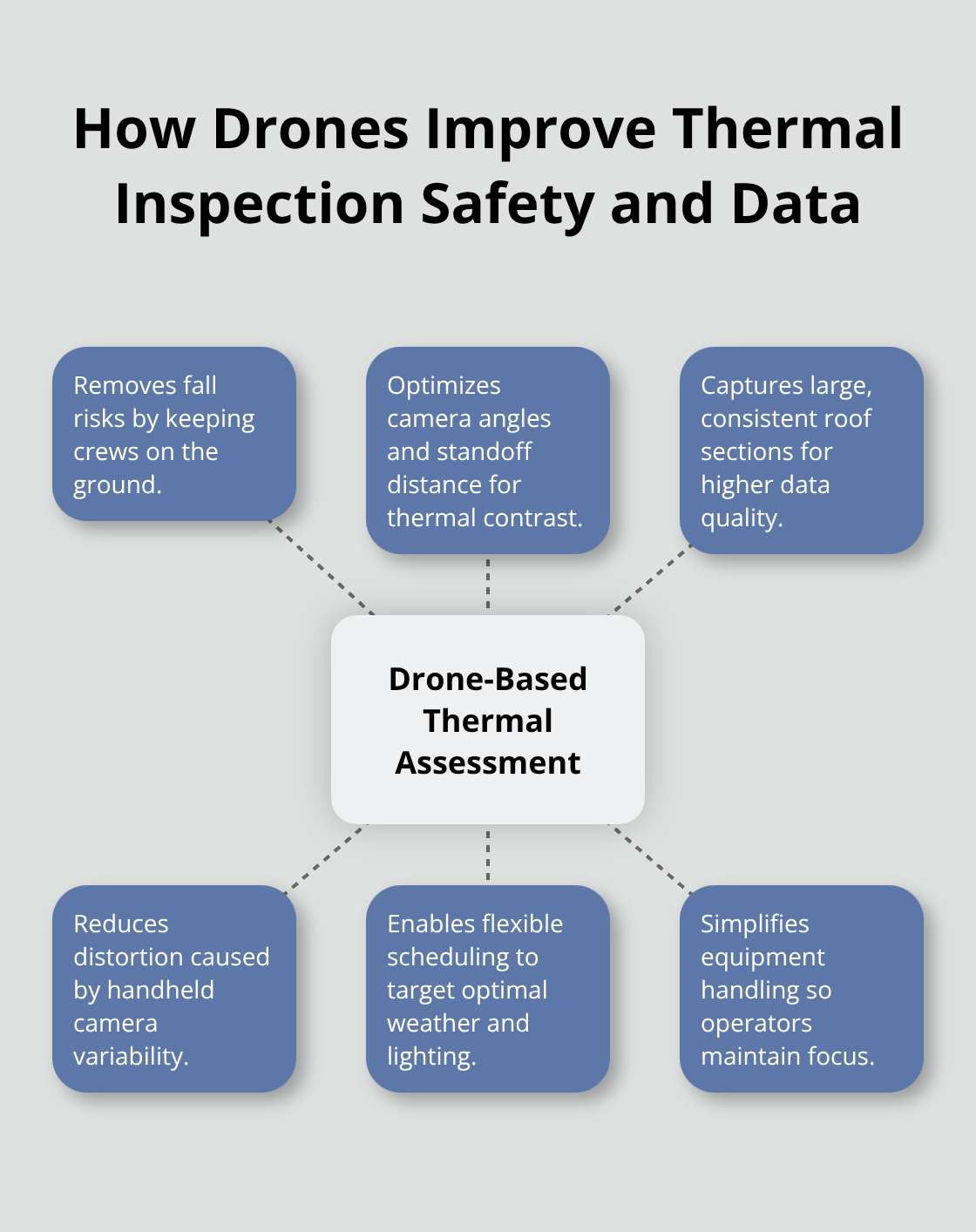
This method allows scheduling flexibility and delivers superior results compared to manual thermal work conducted under time pressure or marginal weather conditions.
Final Thoughts
Safe thermal roof assessment practices rest on three core principles: proper planning, equipment calibration, and honest recognition of when manual approaches create unnecessary risk. Drone-based thermal inspections eliminate fall risks while actually improving data quality because operators position cameras for consistent angles and distances without balancing on unstable surfaces. This approach removes the compromise between safety and accuracy that manual thermal work demands, and your team stays on the ground where they belong.
At IE Drone Services, we conduct thermal building and roof inspections using FAA-certified drone operations with high-resolution infrared cameras designed specifically for detecting energy leaks and moisture intrusion. Our approach removes the hazards that plague manual assessments while delivering the precise data that drives maintenance decisions and protects your assets. Professional drone-based thermal assessment gives you superior results on your schedule without exposing crews to fall risks or conducting inspections during marginal weather conditions.
Contact IE Drone Services to schedule a thermal roof inspection that protects your team while revealing the hidden conditions that threaten your building. We discuss your roof assessment needs and show you how drone-based thermal imaging transforms how you manage roof thermography safety and asset protection.