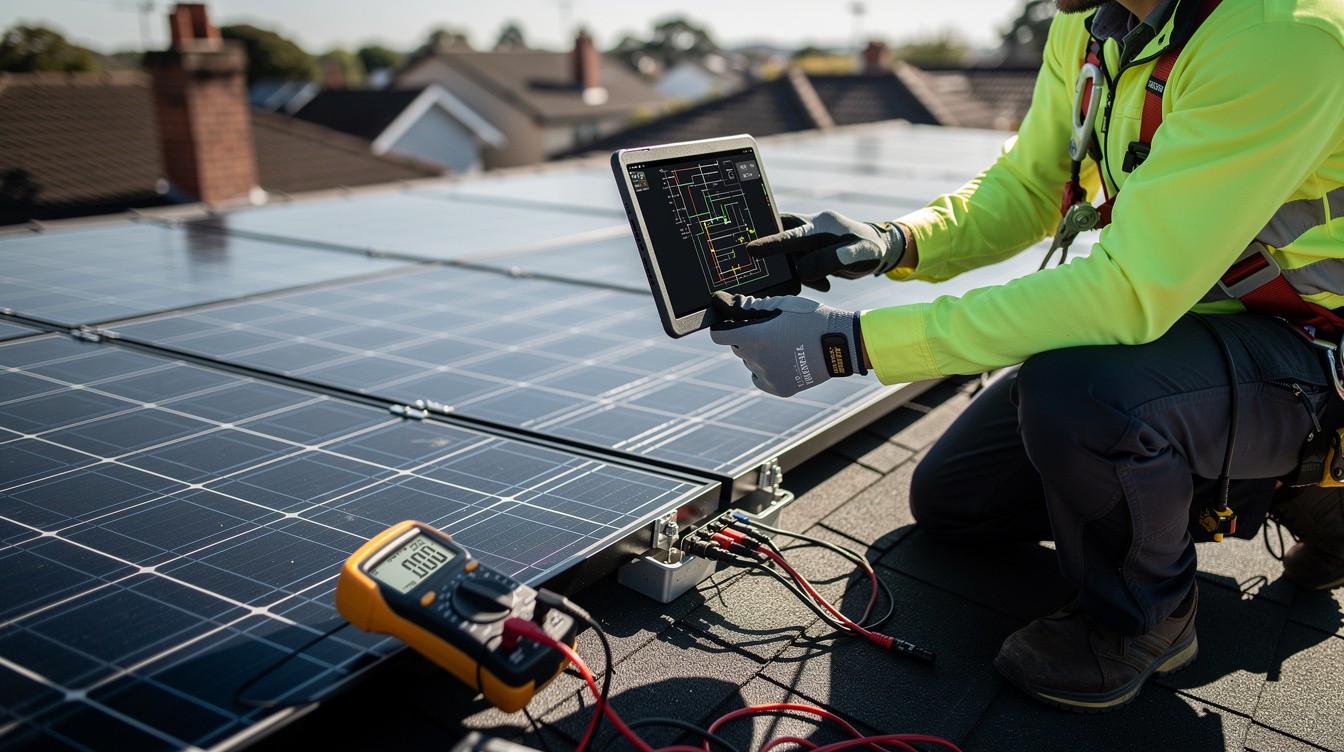
Solar panels are a solid investment, but most property owners never look at what’s happening on their roofs. Without regular inspection, you won’t spot damage, efficiency drops, or problems that could void your warranty.
At IE Drone Services, we’ve seen firsthand how a solar panel roof inspection catches issues before they become expensive repairs. The right inspection method gives you clear visibility into your system’s actual performance.
Why Your Solar Panels Need Professional Inspection
Dirt and debris reduce solar panel efficiency by 15 to 25 percent compared to clean panels, according to research in the solar maintenance field. But dirt is only the surface problem. Hidden electrical faults, loose wiring, inverter failures, and structural damage to your roof won’t show up in your energy bill until they’ve already cost you thousands. Most homeowners discover these issues too late, after performance has tanked or a warranty claim gets denied because the system wasn’t properly maintained.
What Professional Inspections Reveal
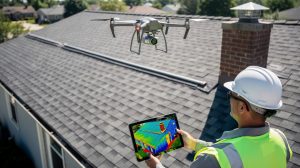
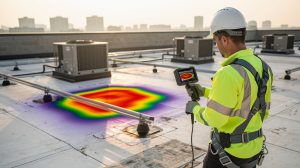
Professional inspections catch what you can’t see from the ground. High-resolution and infrared cameras mounted on drone platforms identify energy loss, roof deterioration, and electrical complications that a ground-level visual check completely misses. Thermal imaging reveals hot spots caused by faulty wiring or failed cells, while aerial assessment shows how shading, debris, or structural damage affects your entire system. The inspection produces exact data on current efficiency and realistic projections for future energy output, so you know whether your system performs as promised or loses money.
The Inverter Problem You Can’t Ignore
An inverter typically lasts 10 to 15 years, while solar panels commonly last 25 years or more. Mid-life inverter failures are common and deserve inspection before they fail completely. A failed inverter stops your energy production and can damage other components, voiding warranties if you can’t prove you maintained the system properly. Annual inspections create a documented maintenance record that protects your warranty coverage and proves you took reasonable steps to protect your investment. Without that record, manufacturers have grounds to deny claims when problems surface.
Performance Data Tells the Real Story
Seasonal variation and weather affect output naturally, but a 5 percent drop in production under similar conditions often signals a fixable problem beyond normal aging. Comparing your current energy production against historical data or regional benchmarks helps you distinguish normal variation from genuine equipment failure. Professional inspections measure actual performance against the system design specifications and identify the root cause of any shortfall. That data drives smarter maintenance decisions and prevents you from replacing components that work fine while ignoring the real culprit. Property owners who track performance monthly catch problems within weeks rather than months, recovering energy production quickly and extending system lifespan.
Inspection Reports Protect Your Bottom Line
Inspection reports establish baseline performance data, so you spot when output drops below expectations and address issues before they compound into major failures. This documented history becomes essential when you sell the property-buyers want proof that the system received proper care and performs reliably. The report also supports warranty claims by showing you maintained the system according to manufacturer requirements. Without professional documentation, you lose leverage in disputes and face higher repair costs when problems emerge.
The data from a thorough inspection points directly to what needs attention next, whether that’s cleaning, electrical repairs, or roof work. Understanding these specific issues prepares you for the inspection methods that can address them most effectively.
Common Issues Found During Solar Inspections
Panel Degradation Accelerates Without Detection
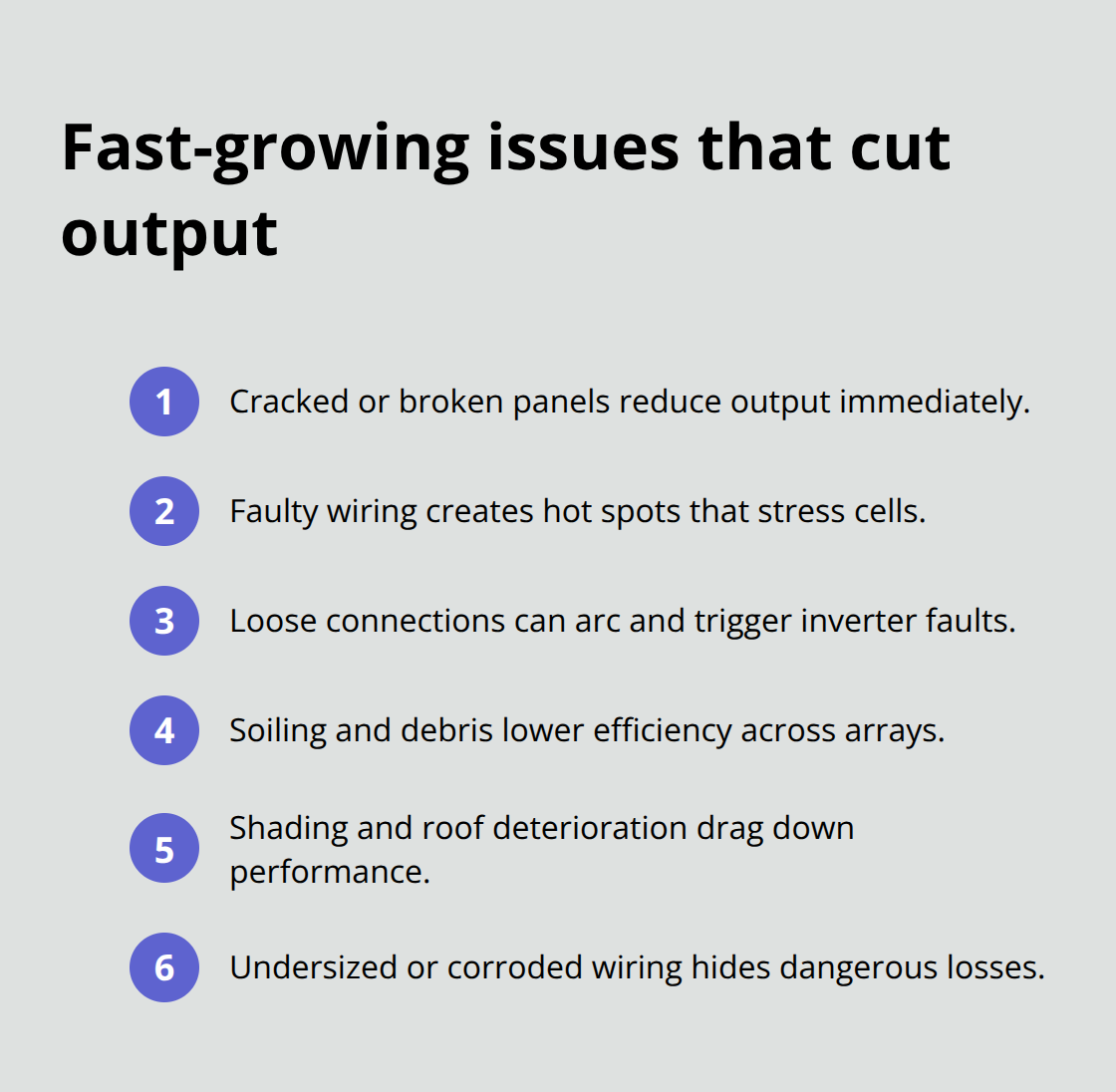
Solar panels degrade faster than most property owners realize, and the degradation accelerates when underlying problems go undetected. Normal aging causes about 0.5 to 1 percent efficiency loss per year, but a 5 percent drop in a single year signals something specific is wrong. Cracked or broken panels reduce output immediately and invite moisture intrusion that compounds damage over time. Faulty wiring creates hot spots that stress solar cells and shorten panel lifespan, while loose connections generate arcing that can trigger inverter faults or fire hazards.
Most property owners don’t catch these issues until energy production has tanked by 15 to 25 percent, at which point repairs cost significantly more. The longer you wait, the more expensive the fix becomes.
Roof Structural Problems Threaten Your Investment
The roof itself deteriorates in ways that threaten your entire solar investment. Structural weakening under panel weight, water penetration around mounting hardware, and deterioration of flashing and seals allow moisture to reach electrical components and wood framing. These problems rarely announce themselves loudly. Instead, they quietly compound month after month, reducing your returns while you believe your system performs as designed.
Electrical Complications Hide in Plain Sight
Electrical complications emerge from undersized wiring, failed charge controllers, improper grounding, corroded connectors, and inverter failures that go undiagnosed because the system still produces some power. A failed inverter stops your energy production and can damage other components, voiding warranties if you cannot prove you maintained the system properly. These hidden faults won’t show up in your energy bill until they’ve already cost you thousands.
How Professional Inspections Expose Root Causes
Professional inspections uncover exactly what’s happening because they measure performance against your system’s specifications and identify root causes rather than symptoms. Thermal imaging reveals hot spots invisible to the naked eye, while aerial assessment shows structural damage, debris accumulation, and shading that ground-level checks miss completely. A licensed solar technician will test inverter components, diagnose grid faults, check wiring integrity, and verify that all connections meet code requirements.
Real-time performance data compared against historical production and regional benchmarks pinpoints whether output loss stems from soiling, shading, equipment failure, or design mismatch. Documentation of these findings protects your warranty by proving you maintained the system properly, which manufacturers require before honoring claims. Property owners who schedule inspections annually catch problems within weeks rather than months, preventing the compounding damage that transforms a minor repair into a system replacement.
The inspection report becomes your roadmap for what needs attention first and what can wait, allowing you to budget repairs strategically and recover energy production before losses accumulate further. Understanding these specific issues prepares you for the inspection methods that can address them most effectively.
Modern Inspection Methods and Technology
Thermal Imaging Reveals Hidden Energy Loss
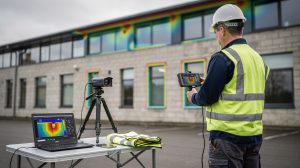
Thermal imaging reveals energy loss on solar systems because it uses infrared cameras to detect heat patterns across solar panel surfaces, revealing temperature variations that indicate potential electrical faults, failed cells, and connection problems invisible to the human eye. A thermal camera mounted on a drone captures infrared data across your entire roof in minutes, identifying hot spots caused by faulty wiring or degraded panels before they damage surrounding components. High-resolution infrared cameras on FAA-certified drone platforms scan solar arrays and pinpoint exactly where energy is lost. The thermal data translates directly into actionable repair priorities, so you address the most expensive problems first rather than guessing which components need attention.
Drone-Based Aerial Assessment Covers Ground Faster
Aerial assessment from drone platforms reveals structural damage, debris accumulation, roof deterioration around mounting hardware, and shading obstacles that ground-level inspections completely miss. A drone survey covers a 10,000-square-foot roof in under 30 minutes, capturing images and thermal data that would take a technician hours to collect manually from a ladder or rooftop access. This speed advantage means you receive inspection results faster and can act on findings before problems worsen.
Real-Time Data Analysis Identifies Root Causes
Real-time data analysis identifies root causes by measuring and analyzing your photovoltaic system output relative to expected performance benchmarks. Modern inspection reports compare your current energy output against your system design specifications and regional production benchmarks, showing whether output loss stems from soiling, equipment failure, design mismatch, or structural problems. This precision eliminates guesswork and prevents you from replacing functional components while the real culprit goes unaddressed. Property owners who use drone-based inspections recover energy production faster because the data identifies root causes rather than symptoms, allowing technicians to execute targeted repairs instead of replacing entire systems.
Documentation Protects Warranty Claims and Future Sales
Documentation from a professional inspection creates the maintenance record that manufacturers require before honoring warranty claims, protecting your investment when problems surface years after installation. The inspection report also establishes baseline performance data, so you track whether output drops below expectations in future years and catch degradation before it compounds into major failures. This documented history becomes essential when you sell the property-buyers want proof that the system received proper care and performs reliably.
Final Thoughts
A solar panel roof inspection gives you the clarity you need to protect your investment and maximize returns. Without professional assessment, you operate blind-unaware of efficiency losses, hidden damage, or electrical faults that compound into expensive repairs. The inspection data reveals exactly what happens on your roof, whether output loss stems from soiling, equipment failure, or structural problems, so you address root causes instead of guessing.
Property owners who schedule regular inspections catch problems within weeks rather than months, preventing the compounding damage that transforms minor repairs into system replacements. The documented maintenance record protects your warranty by proving you maintained the system according to manufacturer requirements, which becomes essential when you file claims or sell the property. Thermal imaging and drone-based assessment cover your entire roof in minutes, identifying hot spots and structural issues that ground-level checks completely miss.
Contact IE Drone Services today to schedule your solar panel roof inspection and gain the clarity you need to protect your investment.