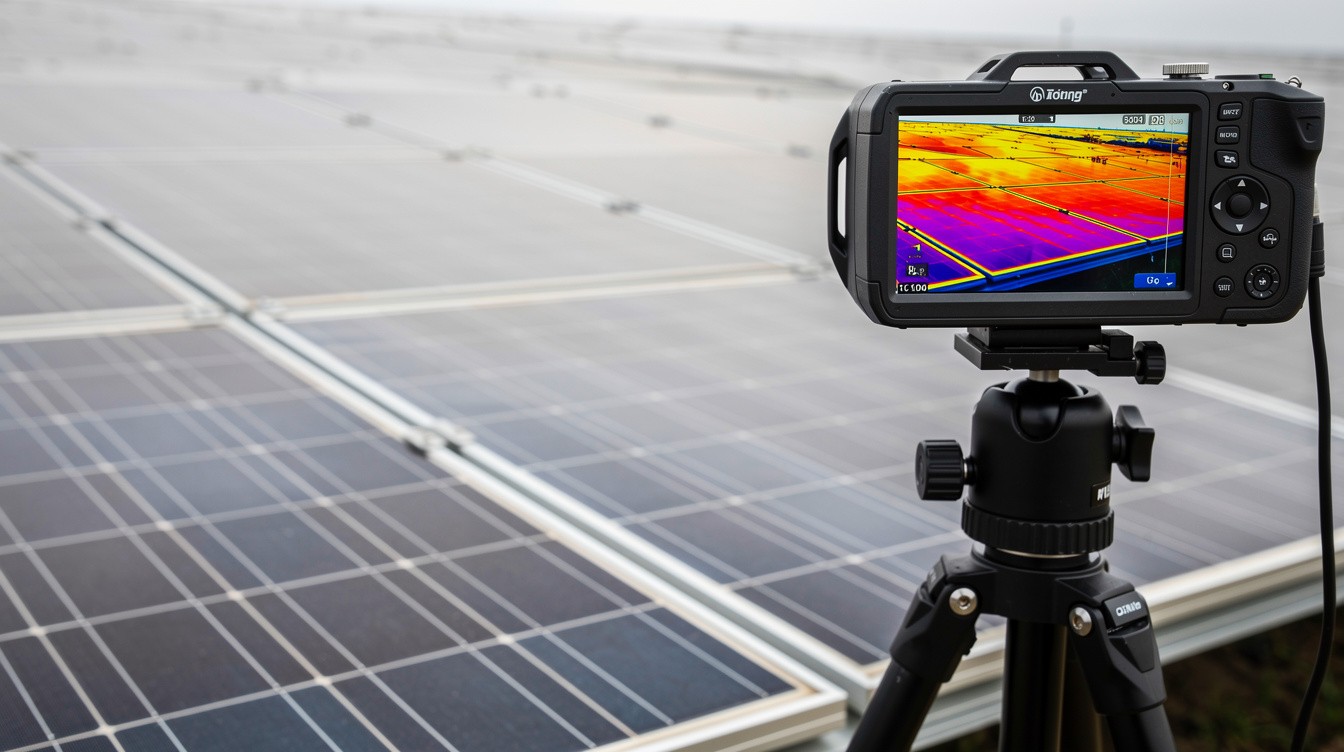
Solar panels lose efficiency silently. Defects, dirt, and degradation cut into your returns without warning, and you won’t know until your energy output drops.
Solar PV thermal imaging reveals what your eyes can’t see. At IE Drone Services, we use infrared technology to spot problems early, quantify performance losses, and show you exactly where maintenance pays off.
What Actually Breaks Solar Panels and How Thermal Imaging Catches It
Silent Failures That Thermal Imaging Reveals
Solar panels fail for concrete reasons, and most failures happen invisibly. Bypass diodes fail without warning. Connections loosen gradually. Cells crack from thermal stress or impact. Delamination spreads under moisture. None of these problems announce themselves through visual inspection alone. A panel can look perfect while losing 20 percent of its output. This is why thermal imaging matters. Infrared cameras detect temperature differences as small as 0.1°C across panel surfaces, revealing what standard visual inspections miss entirely.
Hot spots indicate conductor cracks, delamination, or localized resistance that increases heat and reduces performance. When a cell or string runs hotter than surrounding cells, that temperature difference tells a specific story about what’s failing underneath.
Temperature Thresholds That Signal Real Problems
Panel temperature differences signal real defects requiring immediate action, while differences between 5–10°C warrant close monitoring. Combiner boxes showing temperature differences above 2°C need attention and further testing of strings, torque, and connections. Inverters require evaluation by comparing adjacent units to confirm proper cooling and identify underperforming equipment. These thresholds come from InfraTec’s thermal imaging standards and represent the difference between catching problems early and discovering them after significant revenue loss.
Six Failure Patterns That Thermal Imaging Identifies
Thermal imaging identifies six common failure patterns that destroy returns. Hot spots on individual cells indicate overcurrent conditions or failing bypass diodes. Uniform hot strings compared to cooler strings suggest connection problems, torque mismatches, or shading affecting specific groups. Junction box heat signatures reveal loose connections or corroded terminals. Inverter cooling issues show as concentrated heat around housing vents. Soiling appears as cooler areas disrupting otherwise uniform panel temperatures.
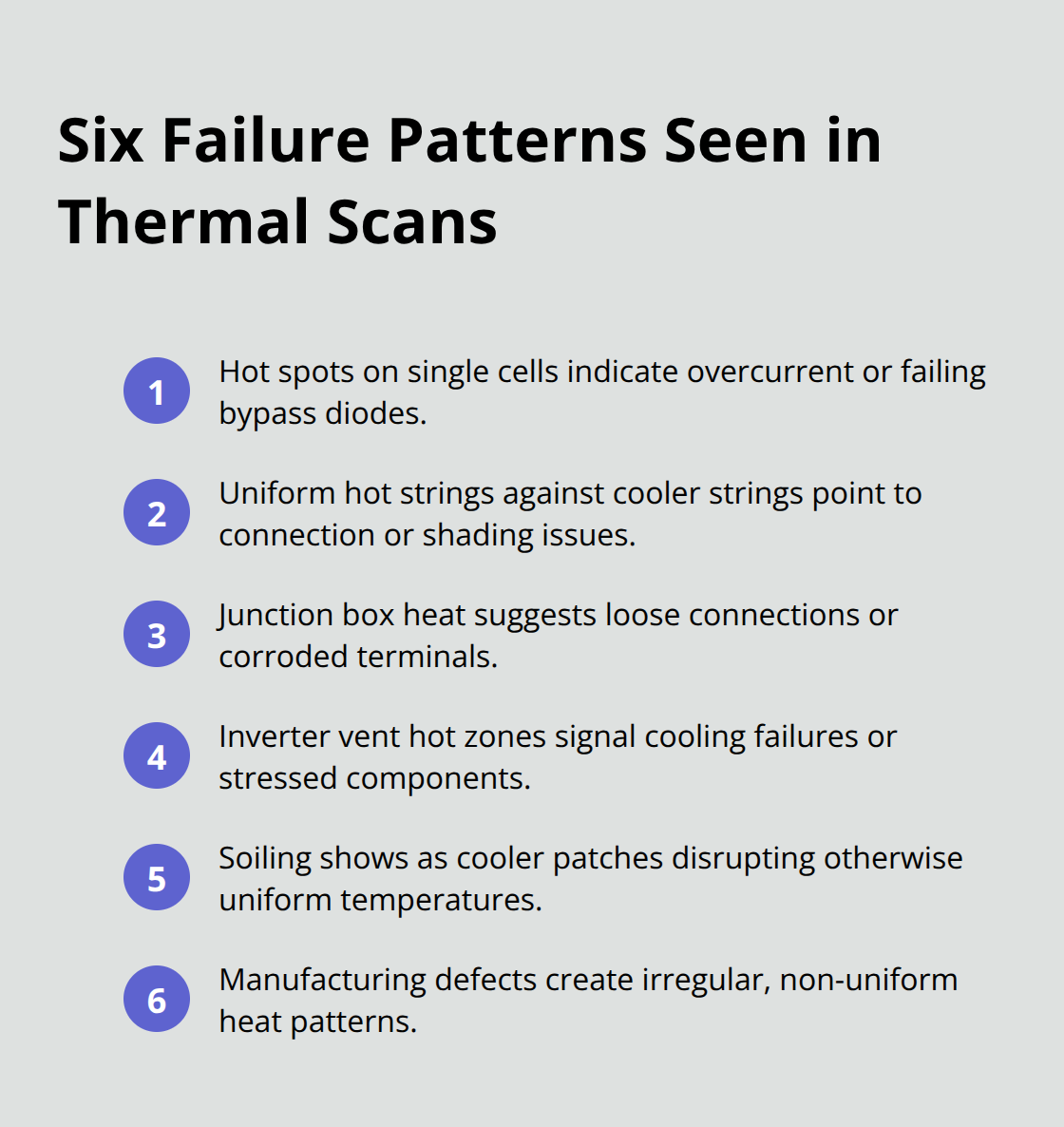
Manufacturing defects like poor soldering or lamination problems create irregular heat patterns invisible to the eye.
Optimal Conditions for Accurate Detection
The practical advantage lies in timing. Inspections work best when irradiance exceeds 600 W/m², weather is stable, and systems operate without faults. These conditions create the temperature contrasts needed to distinguish real problems from false positives caused by bird droppings or temporary dirt. Capturing thermal data from multiple angles with irradiance readings recorded at scan time enables accurate diagnosis and warranty documentation.
How Early Detection Prevents Catastrophic Failures
A loose MC4 connector that shows 15°C hotter than surrounding connections can be tightened before it melts. A failing bypass diode creating a hot spot can be replaced before the entire string stops producing. A cracked cell generating localized heat can be documented for warranty claims before moisture ingress causes secondary damage. The cost of one professional thermal inspection pays for itself through a single prevented failure or one avoided week of downtime on a commercial system. These interventions require precise thermal data and expert analysis-the foundation for the performance improvements we’ll examine next.
How Thermal Imaging Turns Maintenance into Measurable Returns
The Real Cost of Undetected Defects
A single failing bypass diode detected during a thermal scan costs roughly $500 to replace, yet that same diode left unchecked degrades an entire string worth $3,000 to $5,000 in lost annual output. This reflects the economics of solar maintenance across commercial installations. When thermal inspections identify defects, you quantify exactly which problems cost you money and which maintenance actions deliver the fastest payback. A junction box showing 8°C above ambient temperature often indicates a corroded connection causing 15 to 20 percent power loss in that string. Tightening that connection or replacing the corroded terminal costs under $200 and restores full output immediately.
Thermal data transforms maintenance from guesswork into precision work. You know what to fix, how urgent the fix is, and what revenue recovery you’ll gain.
Energy Loss That Compounds Silently
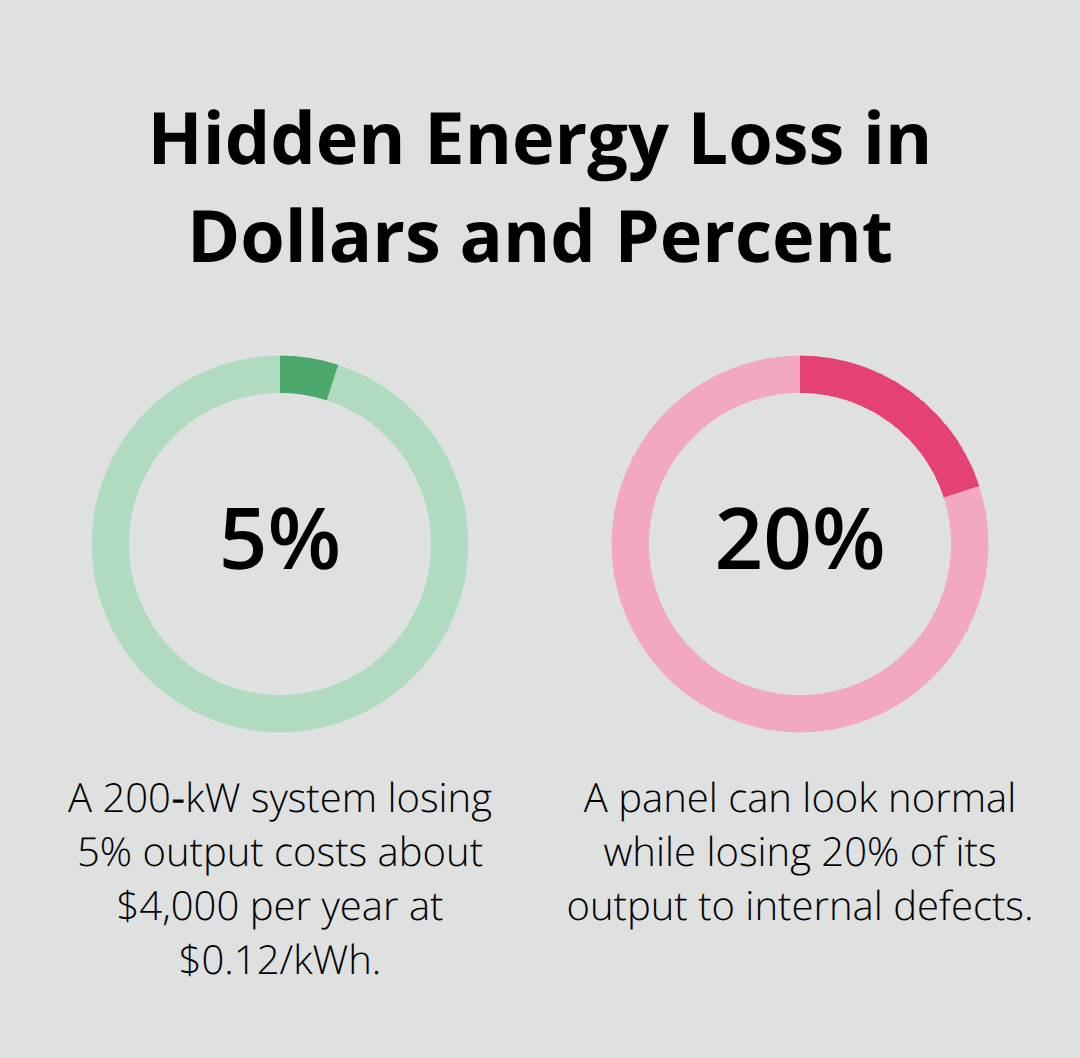
Energy loss compounds silently across commercial arrays. A 200-kilowatt system losing 5 percent output to undetected defects loses roughly $4,000 annually in revenue at typical electricity rates of $0.12 per kilowatt-hour. Over five years, that single 5 percent loss costs $20,000 in foregone income. Thermal imaging catches these losses before they accumulate.
Faults on solar cells and photovoltaic systems can be displayed thermographically using infrared cameras. Most commercial solar operators conduct thermal inspections annually or every two years, yet the first inspection typically reveals multiple defects that, once corrected, prevent years of creeping performance decline.
Inspection Frequency and Long-Term ROI
Initial inspections within the first year of operation establish a performance baseline and catch manufacturing defects before warranty periods expire. Conduct annual inspections for the next three years to track degradation patterns. After year three, inspections every two years prove sufficient for most installations unless environmental conditions accelerate degradation. Coastal or desert climates warrant more frequent checks due to corrosion and thermal cycling stress.
The inspection itself costs between $1,500 and $4,000 depending on array size and accessibility, yet a single corrected defect typically recovers that investment within months on systems above 50 kilowatts. This payback timeline makes thermal imaging one of the highest-return maintenance investments available to solar operators.
Moving From Detection to Action
Thermal data alone creates no value-action does. The next section examines how to interpret thermal reports, identify which findings demand immediate attention, and work with qualified professionals to execute repairs that protect your investment and maximize performance.
Getting Thermal Imaging Right
Thermal imaging accuracy depends entirely on execution, and most operators get the basics wrong. Infrared cameras cannot distinguish real defects from environmental noise without proper conditions. Irradiance must exceed 500 W/m², which means inspections scheduled during peak sun hours between 10 AM and 3 PM on clear days produce usable data. Cloudy conditions, early morning, or late afternoon readings create false negatives where real defects hide in insufficient temperature contrast. System faults must be absent during scanning because a tripped breaker or offline inverter masks the electrical load needed to generate heat signatures. Wind speed above 15 miles per hour cools panel surfaces artificially and degrades thermal accuracy. Stable weather means no sudden cloud cover interrupts your scan sequence.
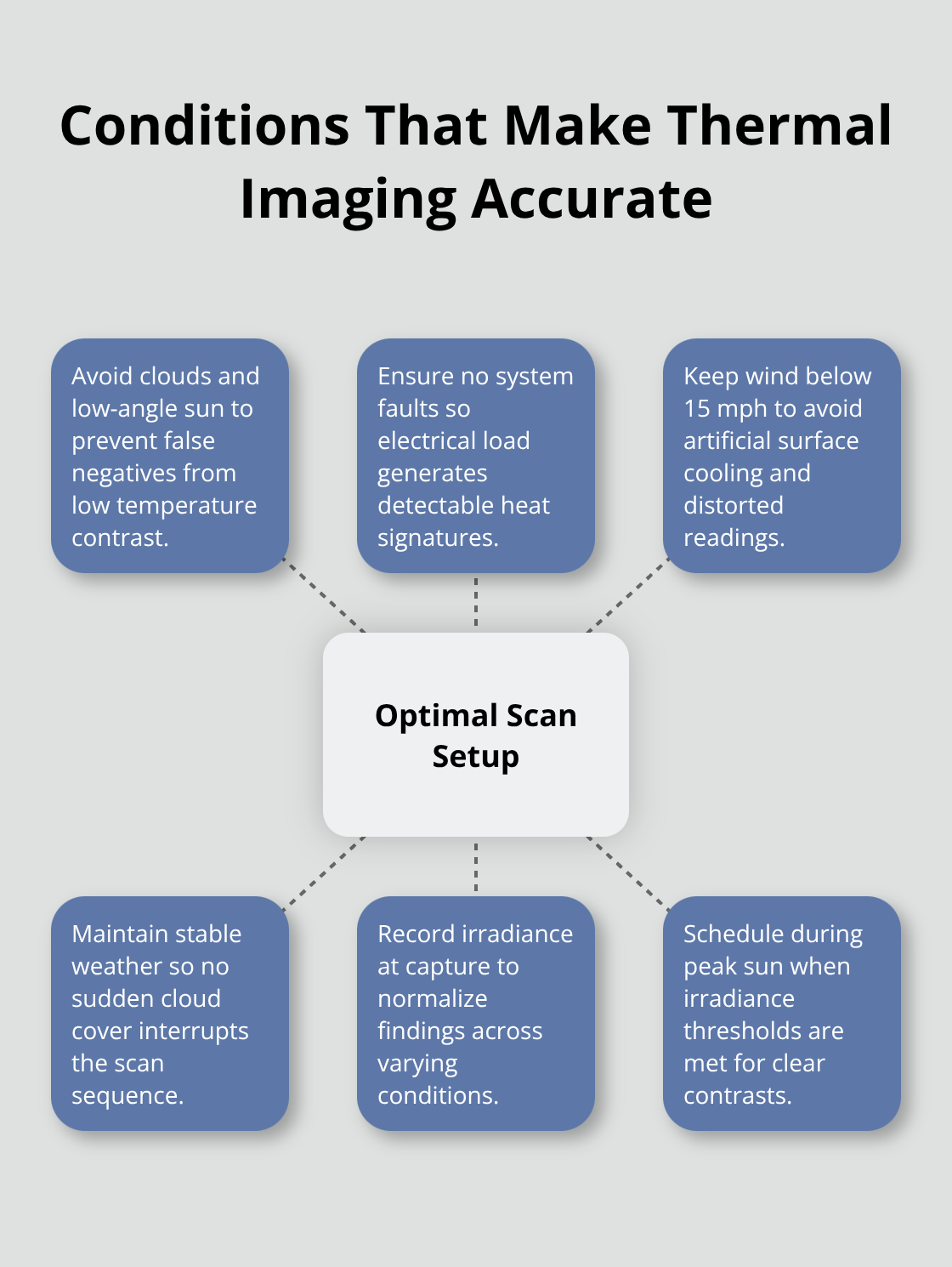
Recording irradiance at the exact moment you capture each thermal image proves critical for later analysis because the same defect produces different temperature signatures at 400 W/m² versus 800 W/m². This single data point separates professional-grade reports from unusable thermography.
Reading Thermal Reports With Precision
Thermal reports demand scrutiny beyond colorful images. Panel temperature differences indicate problems requiring immediate action, while smaller differences warrant monitoring and repeat scans. Combiner box temperature differences above 2°C signal connection or torque problems needing electrical testing of individual strings. Inverters require comparison against adjacent units under identical irradiance conditions because a unit running 5°C hotter than its neighbor indicates cooling failure or internal component stress. Reports should include thermal images from multiple angles because a hot spot visible from one direction disappears from another angle, confirming whether the issue is a cell defect or temporary soiling. Baseline maps from your first inspection become invaluable for comparing future scans and distinguishing new problems from existing conditions.
Why Drone-Based Inspections Outperform Ground Methods
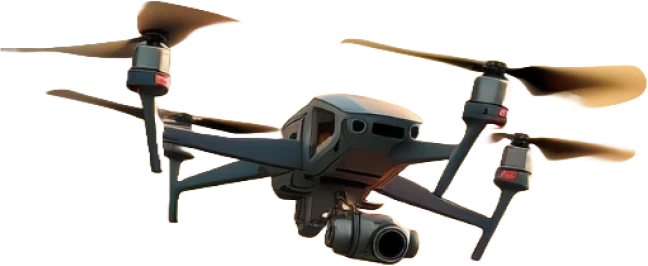
Professional drone operators bring speed and precision that ground-based inspections cannot match. A 200-kilowatt array takes eight to twelve hours to inspect thoroughly from the ground but two to three hours from the air, reducing site disruption and labor costs substantially. Drone-mounted thermal cameras deliver high-resolution imagery across every panel simultaneously rather than sampling individual sections. FAA certification matters because it confirms operators understand airspace rules, weather limitations, and safety protocols that protect your site and data integrity. Operators should provide detailed reports mapping thermal findings to your system layout, not generic images lacking context. Drone-based thermal inspection services use specialized equipment to deliver precise thermal data and actionable findings that guide maintenance priorities and support insurance documentation.
Final Thoughts
Thermal imaging transforms solar maintenance from reactive firefighting into predictive strategy. Systems inspected regularly catch defects before they cascade into major failures, preserve energy output, and protect your investment. A single corrected connection or replaced bypass diode prevents thousands in lost revenue, and temperature thresholds guide your decisions about which problems demand immediate action and which warrant monitoring.
Solar PV thermal imaging works because it quantifies what visual inspection cannot see. A panel that looks perfect may lose 20 percent of its output to internal defects, yet infrared cameras reveal these hidden problems with precision, enabling you to act before damage spreads. Inspection costs between $1,500 and $4,000, yet a single corrected defect typically pays for that investment within months on systems above 50 kilowatts.
Professional execution determines whether your thermal data becomes actionable intelligence or expensive noise. Drone-based inspections deliver speed and precision that ground methods cannot match, covering large arrays in hours rather than days while capturing high-resolution thermal imagery across every panel. Contact us at IE Drone Services to schedule your solar inspection and protect your system’s performance.