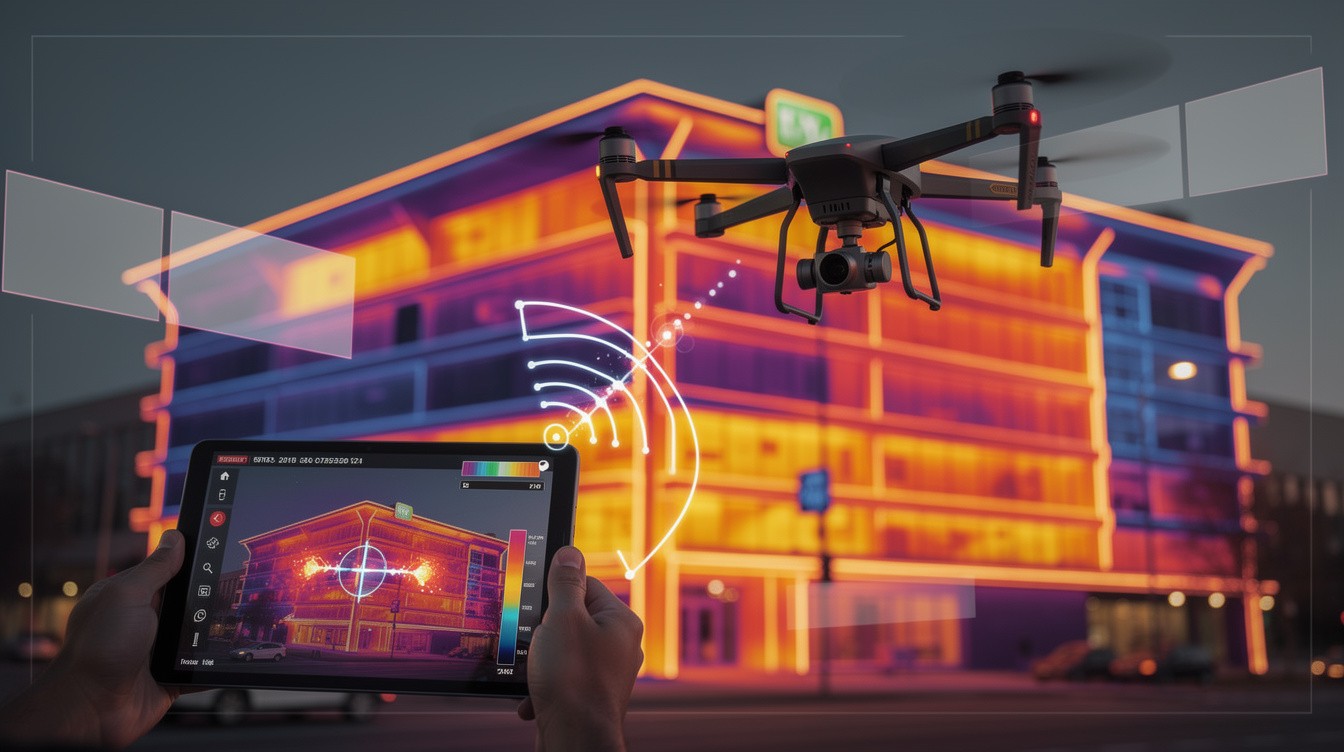
Most building problems hide where you can’t see them. Water damage, electrical faults, and energy waste stay invisible until they become expensive repairs.
We at IE Drone Services use thermal imaging to spot these issues before they worsen. Infrared drone inspections reveal temperature differences that expose hidden damage, failed insulation, and equipment failures in minutes instead of days.
How Thermal Cameras Detect Hidden Building Problems
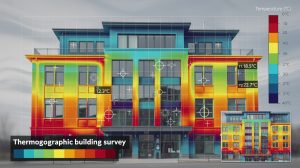
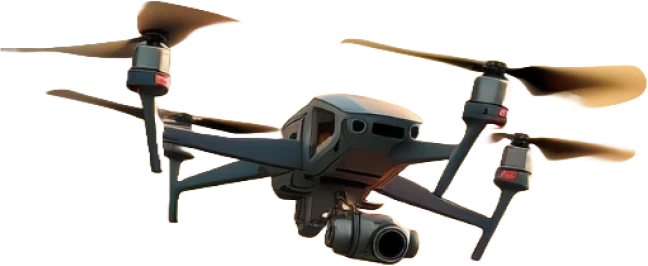
Thermal cameras mounted on drones capture infrared radiation that every object emits based on its temperature. Unlike visible light cameras, these infrared sensors detect heat patterns invisible to the human eye, converting temperature data into color-coded images where blue represents cool areas and red represents hot zones. The Zenmuse XT radiometric infrared camera records per-pixel temperature data across entire scenes, enabling precise identification of hotspots and cool spots that signal structural or mechanical issues. This radiometric capability matters because it provides actual temperature readings, not just visual thermal patterns. A standard thermal camera without radiometric data only shows relative heat differences and cannot reliably quantify temperature variations, making it unsuitable for serious building diagnostics. When mounted on a drone at consistent altitude and distance, these cameras survey large roof areas, building facades, and mechanical systems in a single flight, capturing data that would take ground crews hours or days to collect manually.
Temperature Patterns Reveal What Hides Beneath Surfaces
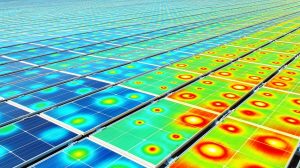
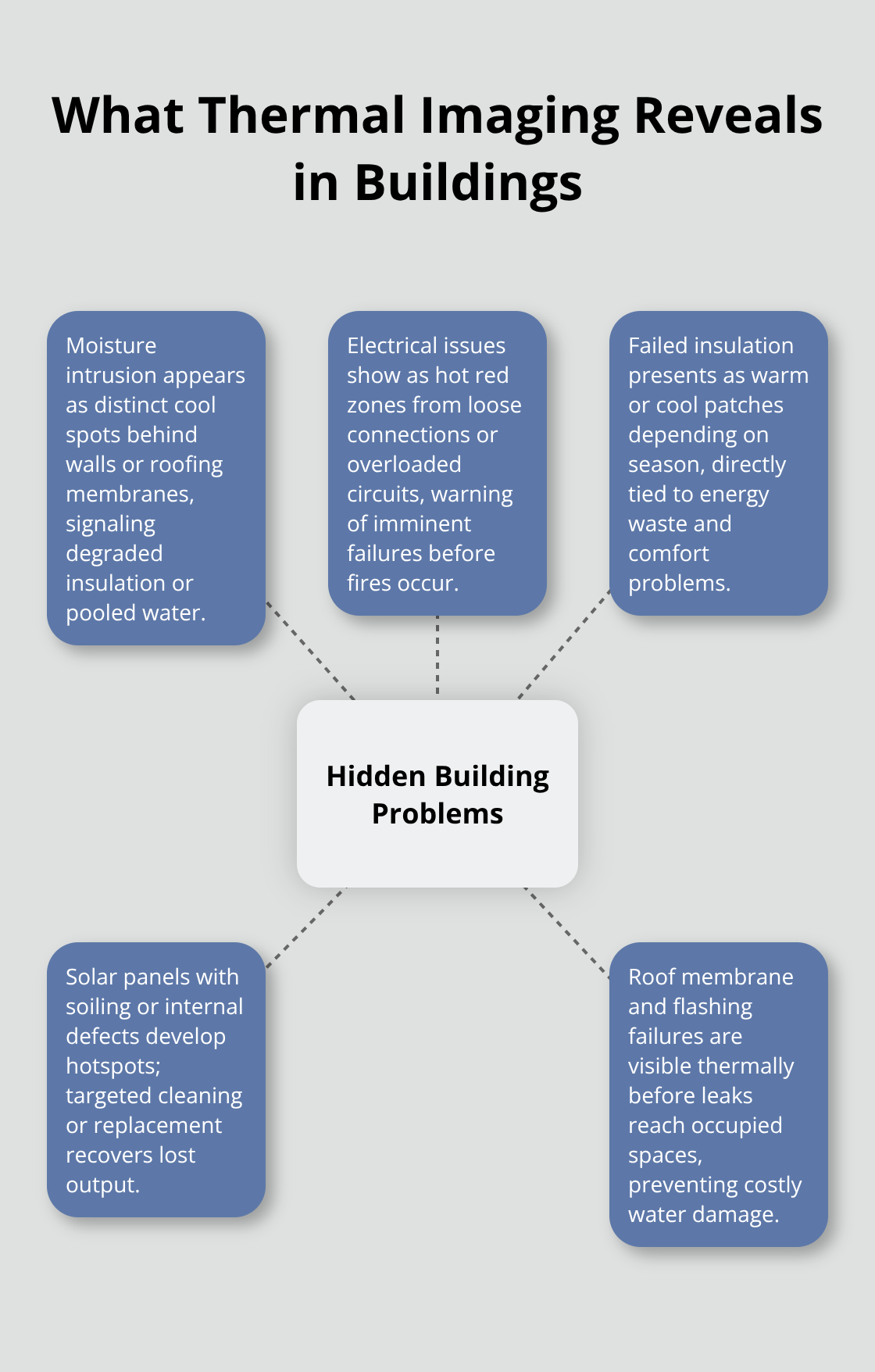
Moisture intrusion behind walls and roofing membranes creates distinct cool spots where water has degraded insulation or pooled in cavities. Electrical systems with loose connections or overloaded circuits generate heat signatures that appear as red zones in thermal images, warning of imminent failures before fires occur. Failed insulation in walls or attic spaces shows as warm patches during heating season or cool patches during cooling season, directly correlating to energy waste and indoor comfort problems. These temperature patterns pinpoint exact locations where moisture, energy loss, or equipment failure exists, enabling property managers and owners to prioritize repairs and avoid costly guesswork. A single thermal flight over a commercial building identifies dozens of energy leaks that traditional walk-throughs miss entirely. Solar panel inspections reveal degraded modules and hot spots caused by soiling or internal defects, helping facility managers target maintenance and recover lost energy output. Roof inspections detect membrane failures and flashing issues before they penetrate into occupied spaces, saving thousands in water damage claims.
Radiometric Data Provides Precision That Thermal Screening Cannot Match
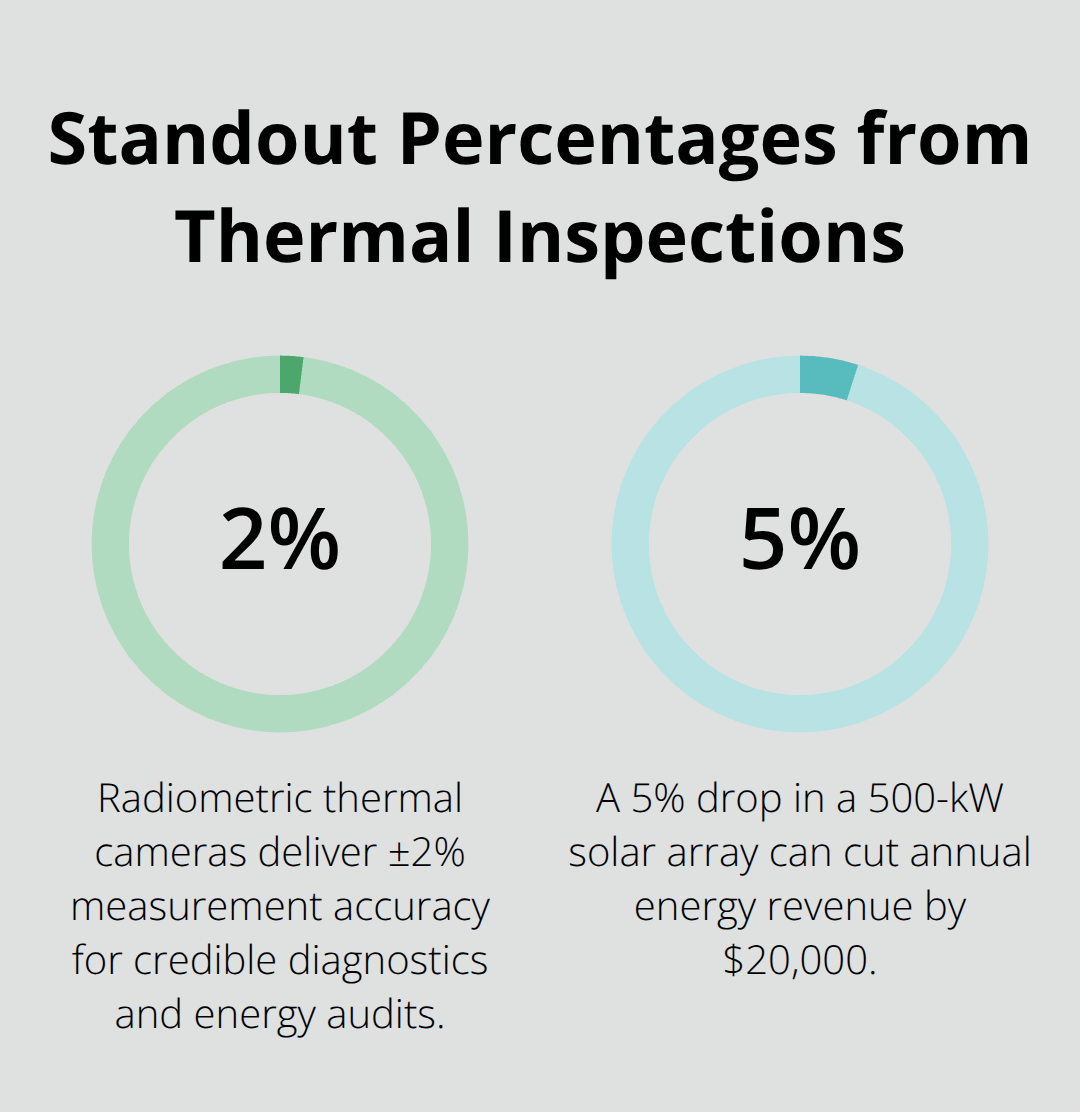
Radiometric data provides temperature measurements accurate within ±2 % / ±2 °C, meeting industry standards for building diagnostics and energy audits. Non-radiometric thermal cameras lack this precision and cannot support credible remediation decisions or energy-loss quantification. Inspectors using radiometric data measure exact temperature differentials across building envelopes, calculate heat loss rates, and document findings with defensible numbers for insurance claims or retrofit planning. Stable weather conditions and consistent outdoor temperatures maximize data reliability during thermal flights. Early morning or late afternoon flights often yield clearer thermal signatures because ambient conditions change more slowly. High-resolution thermal data combined with traditional RGB photography creates comprehensive documentation that correlates visible defects with thermal anomalies, eliminating ambiguity in reports and supporting faster property decisions.
What Happens Next: Turning Thermal Data Into Action
The thermal images and temperature readings you collect represent only the first step. The real value emerges when you interpret those patterns correctly and translate them into specific repair recommendations or energy-efficiency improvements. Property owners and managers need more than pretty thermal pictures-they need actionable insights that justify the cost of inspections and guide investment decisions. Understanding how to read thermal data, identify false positives, and connect temperature anomalies to actual building failures separates professional thermal inspections from amateur thermal imaging. The next section explores the concrete benefits that thermal drone inspections deliver and why they outperform traditional inspection methods for speed, safety, and cost.
What Results Can You Actually Expect From a Thermal Inspection
Energy waste in buildings costs money every single month, and thermal inspections pinpoint exactly where that waste happens. Commercial buildings lose energy through air leaks, failed insulation, and thermal bridging in walls and roofs. A single thermal flight identifies cool spots where insulation has degraded, warm zones around window frames where air infiltrates, and temperature differentials across roof membranes that signal moisture damage. Property owners then know the exact locations to seal, insulate, or repair, turning thermal data into specific dollar amounts saved on utility bills.
Building envelope problems rarely announce themselves visually. Water damage hides behind intact drywall for months before mold appears, and electrical faults stay hidden until equipment fails catastrophically. Thermal imaging catches these failures while they remain localized and fixable. Loose electrical connections generate heat signatures higher than surrounding components, appearing as bright red zones in thermal images weeks or months before the connection melts or arcs.
Energy Leaks Reveal Themselves Through Temperature Patterns
Thermal data exposes exactly where your building wastes energy. Cool spots on walls indicate degraded insulation that allows heat to escape during winter months. Warm zones around window frames show air infiltration paths that your HVAC system works overtime to compensate for. Temperature differentials across roof membranes signal moisture damage that degrades insulation performance and shortens roof life. Property owners then direct repair budgets to the highest-impact areas instead of guessing where problems exist. Solar panels with degraded modules or internal defects show as hot spots during operation, and facility managers can replace only the failed cells instead of entire arrays, recovering thousands in energy output.
Speed and Safety Transform Inspection Economics
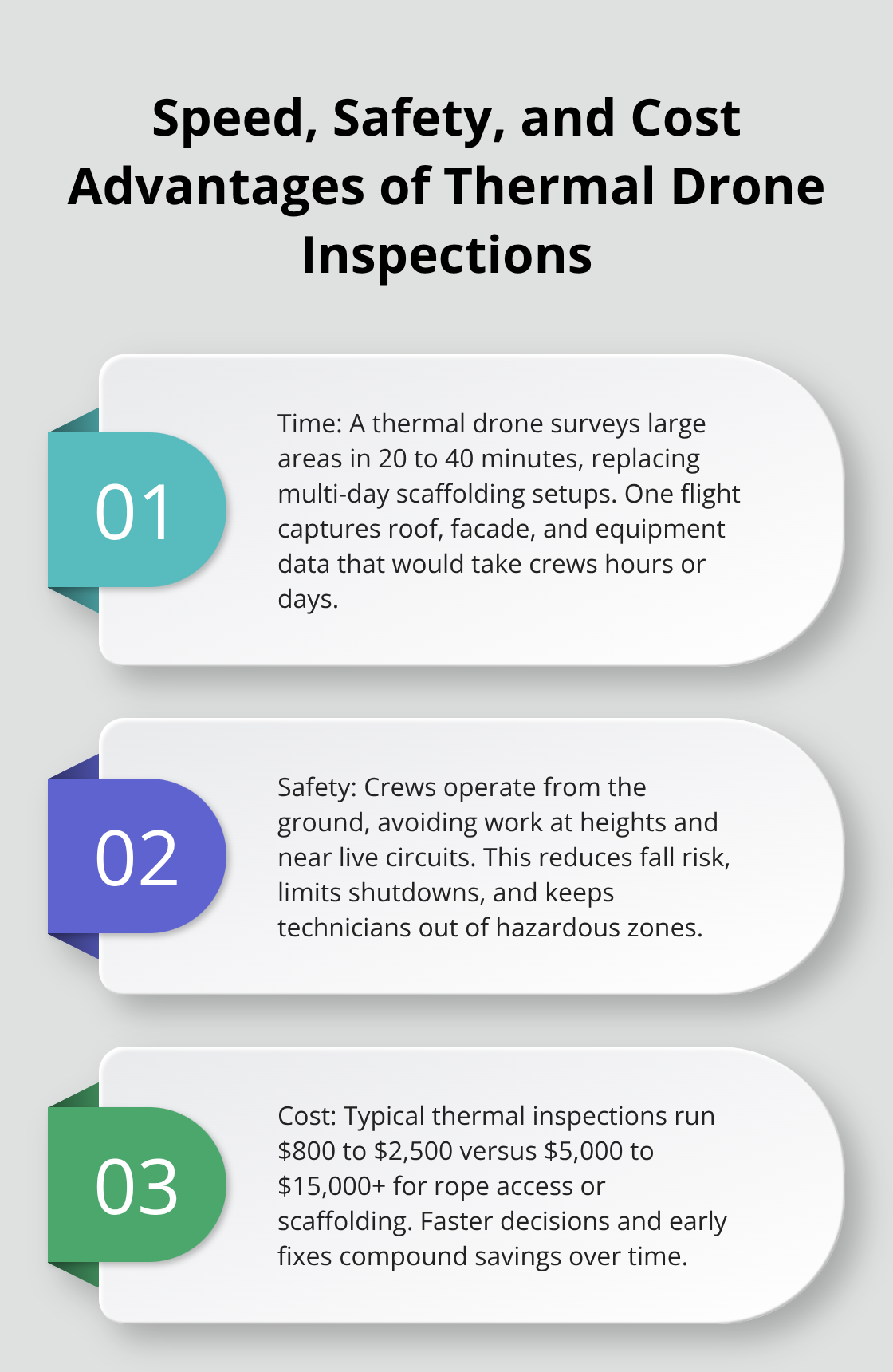
Traditional building inspections require scaffolding, climbing equipment, and workers on roofs or facades for hours. A thermal drone covers the same area in 20 to 40 minutes, eliminates the need for fall protection and height-related safety gear, and captures data that ground inspectors cannot access safely. Roof inspections on multi-story commercial buildings that once required two days of setup and labor now happen in a single flight, reducing project timelines and letting property managers make faster decisions about repairs or asset purchases.
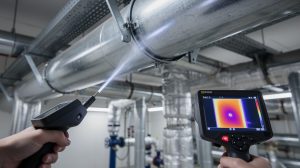
Electrical inspections inside equipment rooms or on rooftop HVAC units happen safely from the ground instead of requiring technicians to climb and work near live circuits. Post-fire or post-storm assessments complete in hours instead of days, showing property managers exactly where heat remains trapped, where structural damage exists, and where water has penetrated, enabling rapid mitigation decisions. The cost of a thermal inspection typically ranges from $800 to $2,500 depending on property size and complexity, while traditional rope-access or scaffolding inspections cost $5,000 to $15,000 or more. That economics gap widens dramatically when you factor in faster decision-making, reduced labor, and the ability to catch problems before they escalate into major repairs.
Temperature Readings Support Insurance Claims and Retrofit Decisions
Thermal data without interpretation remains useless. Property owners need clear reports that identify specific problems, quantify their severity, and recommend concrete next steps. Temperature measurements from radiometric cameras provide the credibility that energy audits, insurance claims, and retrofit proposals demand. A roof inspection report that shows specific cool spots where moisture has entered gains acceptance from insurance adjusters and supports claims more effectively than visual photos alone.
Energy-efficiency reports that calculate heat loss rates in BTU per hour guide investment decisions for insulation upgrades or window replacements, helping owners prioritize spending where it yields the highest returns. Electrical inspections that document overheating components with exact temperature readings convince facility managers to schedule maintenance before equipment fails during critical operations. Detailed reports that connect temperature data to specific building failures give property owners and managers the information they need to act with confidence.
The next section explores why thermal drone inspections outperform traditional methods and what makes them the smart choice for property assessment and energy management.
Where Thermal Inspections Deliver the Biggest Impact
Commercial buildings waste enormous amounts of energy through invisible envelope failures. Office complexes with aging HVAC systems, large roof areas, and hundreds of windows create perfect conditions for thermal problems to hide. A thermal drone inspection of a 100,000-square-foot commercial building identifies dozens of energy leaks, failed insulation patches, and electrical hotspots in under an hour, whereas traditional methods require multiple site visits spread across days. Facility managers then direct maintenance budgets to the highest-impact areas instead of spreading resources across guesses. Residential properties present different challenges. Homeowners rarely understand where their heating and cooling escape, and visual roof inspections miss water damage that sits beneath intact shingles. A thermal roof inspection reveals moisture intrusion patterns that appear as cool spots in winter or warm spots in summer, catching problems before they spread into attic spaces and create mold conditions. Insurance companies increasingly accept thermal data as evidence supporting water-damage claims, which accelerates settlement timelines and reduces dispute costs. Solar panel installations generate immediate ROI concerns because degraded modules or internal defects reduce energy output without obvious visual signs. Thermal imaging identifies hot spots caused by soiling, shading, or material failure, allowing facility managers to replace only failed cells instead of entire arrays. A single thermal flight over a 500-kilowatt solar installation uncovers performance losses that cost thousands annually in lost generation.
Commercial Properties Demand Speed and Precision
Large office buildings, manufacturing facilities, and multi-tenant complexes cannot afford extended inspection downtime. Thermal drone inspections complete in hours rather than days, eliminating disruption to tenant operations and reducing lost productivity costs. An electrical inspection of rooftop HVAC equipment happens safely from the ground instead of requiring technicians to climb and risk falls near live circuits. Post-fire assessments after equipment failures show exactly where heat remains trapped and where structural damage exists, enabling rapid mitigation decisions. The data quality matters equally. Radiometric thermal cameras provide temperature measurements accurate within ±2% per FLIR standards, meeting the precision required for energy audits and retrofit planning. Commercial property managers use these exact temperature readings to calculate heat loss rates, justify insulation upgrades to ownership, and prioritize capital expenditures where they yield the highest returns.
Residential and Roofing Applications Catch Problems Early
Homeowners discover roof leaks only after water stains appear on ceilings, which means damage has already spread through insulation and framing. Thermal imaging catches moisture intrusion weeks before visible damage emerges, reducing repair costs by thousands of dollars. A residential roof inspection identifies cool spots indicating water saturation, warm zones around flashing showing air leaks, and thermal bridging in valley areas where ice dams form. Homeowners then address problems at the earliest stage when repairs remain simple and affordable. Energy audits using thermal data show exactly where heat escapes during winter, enabling homeowners to prioritize weatherization spending. Window frames that show warm zones during heating season indicate air infiltration, and thermal bridging around wall studs reveals insulation gaps that HVAC systems work overtime to compensate for. These specific findings guide renovation decisions and help homeowners avoid expensive upgrades in areas that contribute minimally to energy waste.
Solar and Renewable Energy Systems Require Module-Level Visibility
Solar panel efficiency depends on every module performing at rated capacity, but soiling, shading, and internal defects reduce output without obvious external signs. Thermal imaging reveals hot spots indicating underperforming modules, allowing facility managers to schedule targeted cleaning or replacement instead of guessing which panels need attention. A 500-kilowatt solar array with even 5% performance loss generates $20,000 less annually in energy revenue. Thermal inspections that identify and correct module-level failures recover that lost output quickly and justify inspection costs within months.
Wind turbine inspections use thermal data to detect bearing failures, generator overheating, and electrical connection problems before they cascade into catastrophic equipment failure. Regular thermal monitoring enables predictive maintenance that keeps turbines operational and prevents costly downtime.
Final Thoughts
Thermal drone inspections outperform traditional methods on cost, speed, and safety by wide margins. Ground-based rope access or scaffolding inspections for commercial buildings cost $5,000 to $15,000 and consume days of labor and equipment rental, while a thermal drone inspection covers the same area in hours for $800 to $2,500. You eliminate fall risks, reduce project timelines, and obtain actionable data that guides real spending decisions instead of guesswork.
The actual advantage emerges when you act on what thermal data reveals. Temperature readings pinpoint exact locations where energy escapes, moisture has entered, or electrical components overheat, allowing property managers to direct repair budgets to the highest-impact areas and recover thousands in annual energy savings or prevent catastrophic equipment failures. Insurance adjusters accept radiometric thermal data as credible evidence supporting claims, which accelerates settlements, while homeowners catch roof leaks before water damage spreads into framing and insulation, and solar facility managers identify underperforming modules to recover lost energy revenue within months.
We at IE Drone Services hold FAA certification and operate high-resolution infrared cameras mounted on DJI platforms to deliver the precise thermal data your property needs. Whether you manage commercial buildings, residential properties, solar installations, or industrial equipment, infrared drone inspections provide the visibility that traditional methods cannot match-contact us today to schedule your thermal inspection and reveal what your building is hiding.