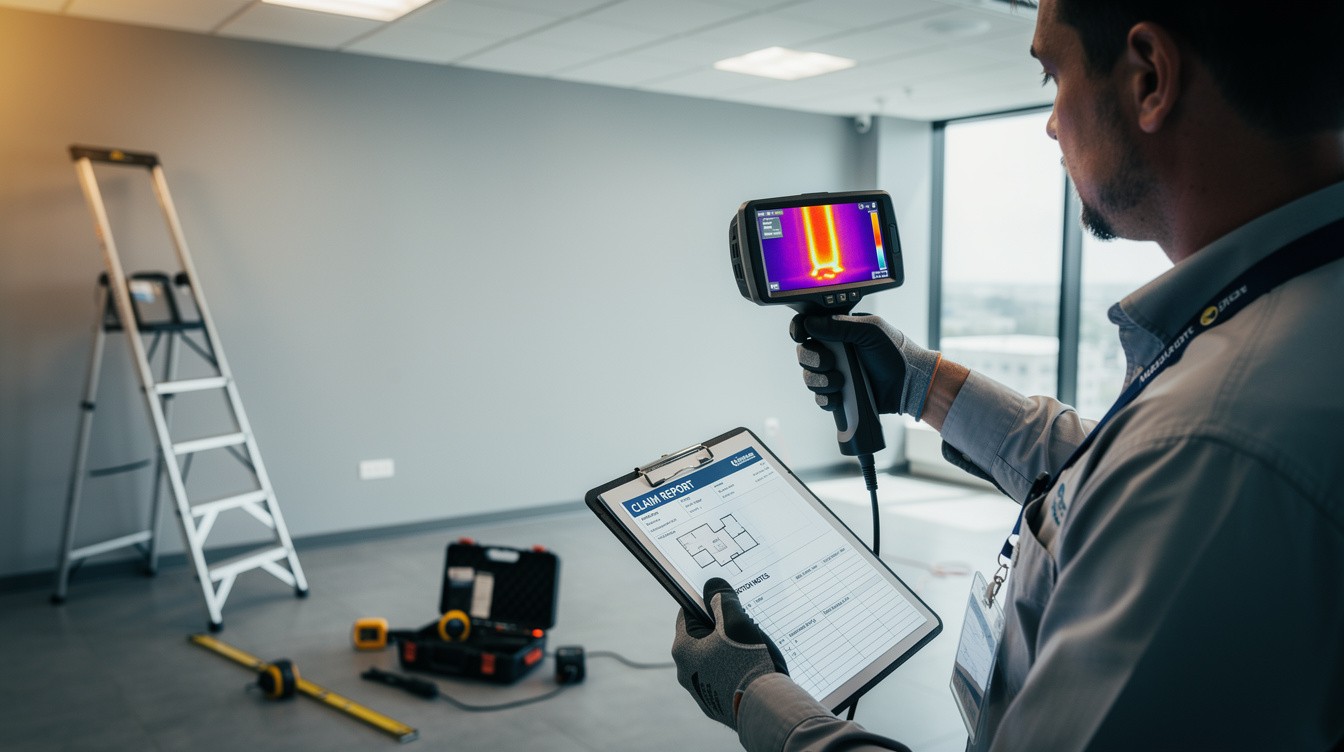
Insurance adjusters face a constant challenge: gathering reliable evidence quickly while managing tight schedules and rising costs. Traditional inspection methods often miss critical damage that later becomes expensive disputes.
We at IE Drone Services use thermal imaging to give adjusters the precise, documented evidence they need. Thermal inspections for claims reveal hidden problems in seconds, accelerate settlements, and eliminate guesswork from the assessment process.
Why Thermal Imaging Reveals What Eyes Cannot
Hidden Damage Stays Hidden with Traditional Methods
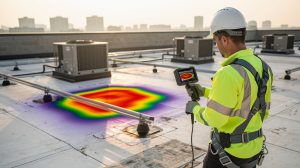
Traditional inspections rely on visual assessment and manual probing, which means adjusters miss hidden damage that exists behind walls, under roofing materials, and inside equipment. Water damage illustrates this problem clearly: a wall may look dry on the surface while moisture spreads inside the cavity, creating an invisible problem that costs thousands more to remediate later. Thermal imaging converts infrared radiation into color-coded temperature maps that expose these hidden issues instantly. A thermal camera shows temperature differences as warm and cool zones, making moisture patterns, electrical hotspots, and structural failures visible in seconds. This speed matters because adjusters operating on tight schedules cannot afford to miss critical damage during initial assessment.
How Thermal Data Cuts Costs and Time
The financial impact of switching to thermal inspections is substantial. A FLIR restoration case study found that integrating thermal imaging into moisture-mapping workflows reduced assessment costs by more than 40 percent, while simultaneously accelerating claim closure and improving documentation quality. Adjusters using thermal data complete inspections faster because they identify problem areas precisely rather than spending hours searching for damage with moisture meters alone.
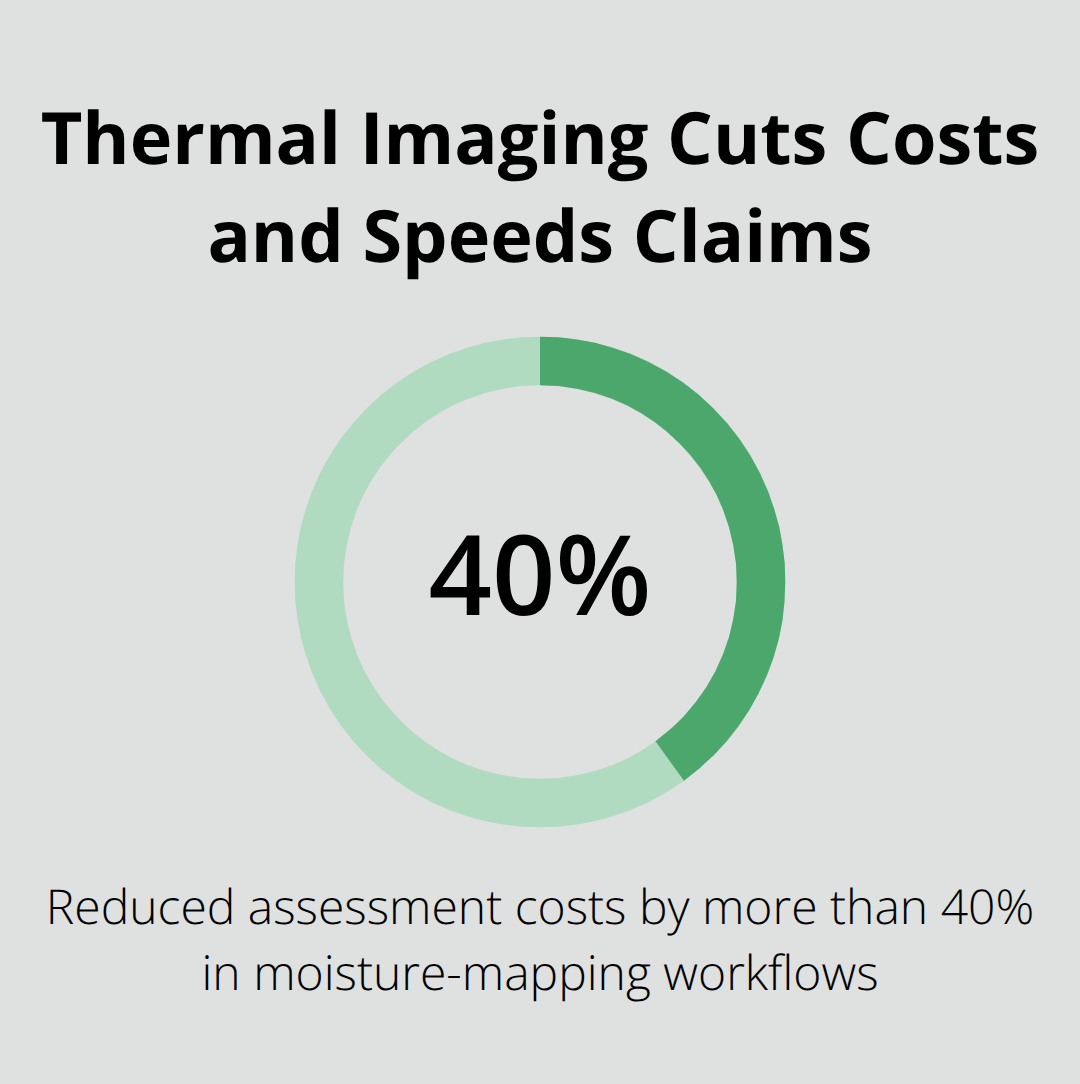
On-site time drops significantly because thermal screening covers large areas quickly, then targeted moisture verification confirms findings in specific hotspots.
Speed Translates to Better Outcomes
Traditional methods require multiple visits, extended drying-time tracking, and repeated manual checks. Thermal imaging compresses this timeline into a single, comprehensive assessment with objective evidence attached. The data is immediately actionable: adjusters can generate repair estimates on-site, document findings with clear thermal images alongside standard photos, and deliver professional reports to insurers and policyholders the same day. This speed translates directly to faster claim decisions, reduced administrative burden, and higher adjuster earnings. Precision evidence eliminates settlement disputes because thermal data provides undeniable proof of damage extent and location, removing the guesswork that typically triggers claims delays.
These advantages position thermal imaging as the standard for modern claims assessment. The next section examines how adjusters apply thermal inspections to specific damage types that appear most frequently in the field.
How Thermal Data Transforms Claims Assessment
Water Damage Reveals the Clearest Advantage
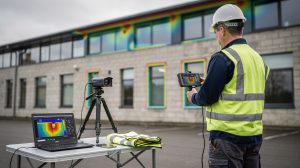
Water damage assessment shows thermal imaging’s strongest value for adjusters. When a pipe bursts or a roof leaks, moisture spreads rapidly through walls, ceilings, and subflooring where visual inspection cannot reach. Thermal cameras detect temperature differences that reveal moisture penetration and spread patterns. An adjuster using thermal imaging maps the full extent of water damage in minutes rather than hours of probing and moisture-meter testing. Thermal data provides objective proof of damage location and severity that eliminates disputes over whether remediation is necessary or complete. Adjusters who document findings with side-by-side thermal and standard photos give insurers and policyholders undeniable evidence of the problem, which accelerates claim approval and settlement.
The Practical Workflow That Works
The assessment process follows a straightforward sequence. First, scan the affected area with a thermal camera to identify temperature anomalies. Next, verify findings with moisture meters in specific hotspots. Then photograph both thermal and standard images for your documentation. Finally, include these images in your on-site report.
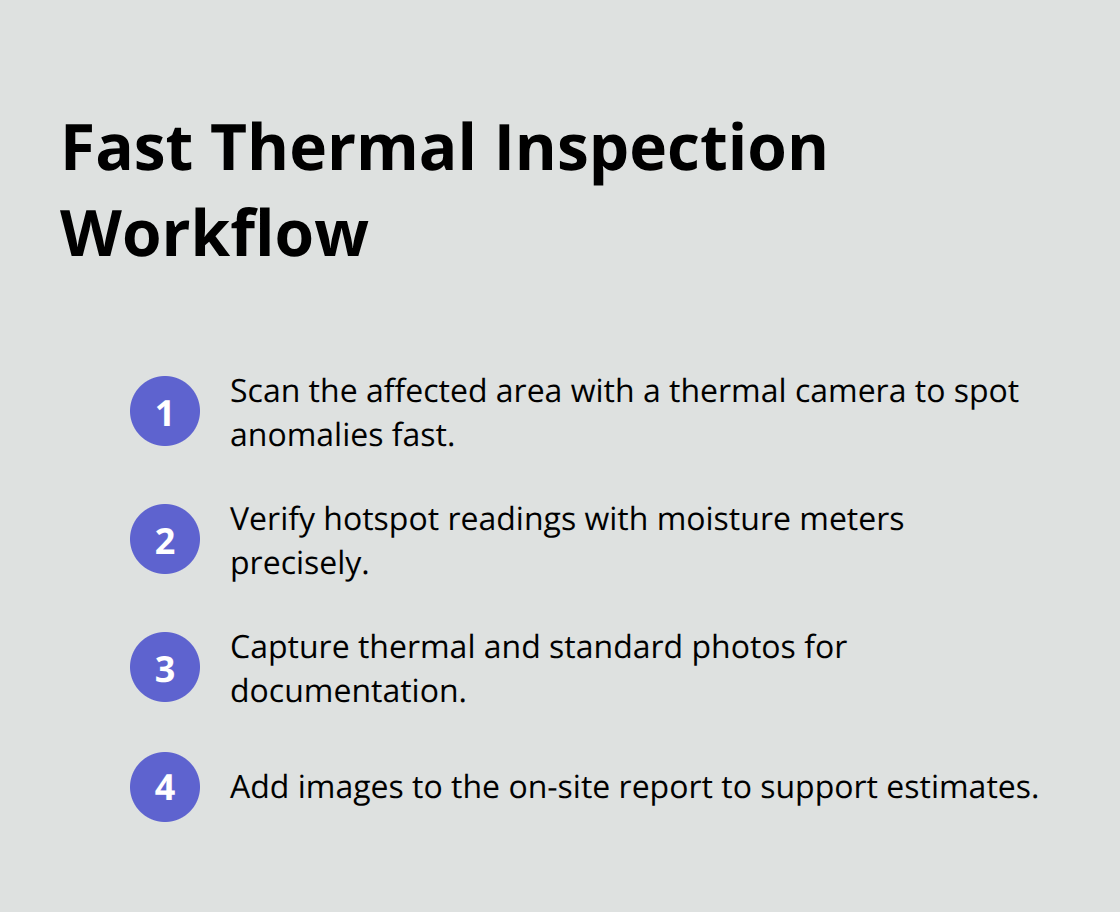
This approach reduces assessment time dramatically while producing professional documentation that justifies repair estimates and prevents callbacks. Adjusters who follow this workflow close claims faster because they eliminate the back-and-forth that typically delays settlements.
Electrical Hazards and Roof Damage Demand Speed
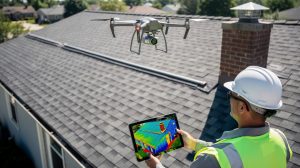
Electrical hazards and roof damage follow similar patterns where thermal imaging outperforms traditional methods. Thermal imaging reveals hotspots in electrical panels, connections, and mechanical equipment before failure occurs, allowing adjusters to recommend immediate remediation and prevent property loss. Roof damage from storms presents another critical application: thermal scanning detects moisture trapped under shingles and in attic spaces, showing the true extent of weather damage without requiring roof penetration or extensive manual inspection. Adjusters who integrate thermal data into storm-damage assessments close claims faster because thermal evidence confirms damage scope objectively, reducing the need for follow-up inspections or expert opinions.
Performance Gains That Matter
The speed and precision of thermal inspections directly improve your bottom-line performance by increasing claim closures and reducing administrative overhead. Thermal data eliminates settlement disputes because it provides undeniable proof of damage extent and location, removing the guesswork that typically triggers claims delays. The next section explores how specific property types and damage scenarios benefit most from thermal inspection protocols.
Where Thermal Inspections Deliver the Biggest Impact
Building Envelope Failures Expose Hidden Water Intrusion
Building envelope failures represent one of the most expensive blind spots in claims assessment. Weather damage to roofs, walls, and foundations creates moisture penetration that spreads invisibly through cavities, insulation, and structural components. Adjusters using traditional methods often miss the full extent of building envelope compromise because water intrusion leaves no visible surface evidence until significant damage accumulates. Thermal imaging exposes moisture patterns behind walls and under roofing materials instantly, allowing adjusters to quantify damage scope accurately on the first visit. A roof leak may appear as a small wet spot in an attic, but thermal scanning reveals the true moisture distribution across rafters, decking, and insulation, showing whether remediation requires targeted repair or full section replacement. This distinction directly impacts repair estimates and settlement timelines.
Storm Damage Assessment Demands Immediate Documentation
Storm damage assessment depends entirely on speed and documentation accuracy. Adjusters who deploy thermal cameras immediately after severe weather can document wind damage, hail impact zones, and water intrusion patterns before secondary damage compounds the claim. Thermal data provides objective evidence that validates whether damage warrants total loss designation or partial repair, eliminating disputes with insurers and property owners over settlement amounts. The speed of thermal assessment prevents moisture from spreading further into structural cavities, which would increase remediation costs and extend claim timelines significantly.
Electrical Hazards Require Swift Identification
Electrical hazards demand equally swift thermal assessment because these problems escalate rapidly once identified. Thermal imaging reveals electrical hotspots in panels and connections that indicate imminent failure risk, allowing adjusters to recommend immediate shut-down procedures that prevent property loss and liability exposure. These temperature anomalies correlate directly to fire risk and equipment degradation, making thermal documentation essential for claim validation and settlement justification.
Mechanical Equipment Failures Show Clear Temperature Signatures
Mechanical equipment malfunctions show clearly through thermal scanning as temperature anomalies in motors, compressors, and ductwork that correlate directly to energy loss and system inefficiency. Adjusters who integrate thermal data into mechanical damage claims provide insurers with actionable evidence that justifies replacement versus repair decisions, accelerating claim closure and preventing costly callbacks. The practical advantage extends beyond speed to credibility: thermal images provide undeniable proof of damage location and severity that eliminates the subjective interpretation that typically delays settlement negotiations.
Thermal Evidence Accelerates Claim Closure
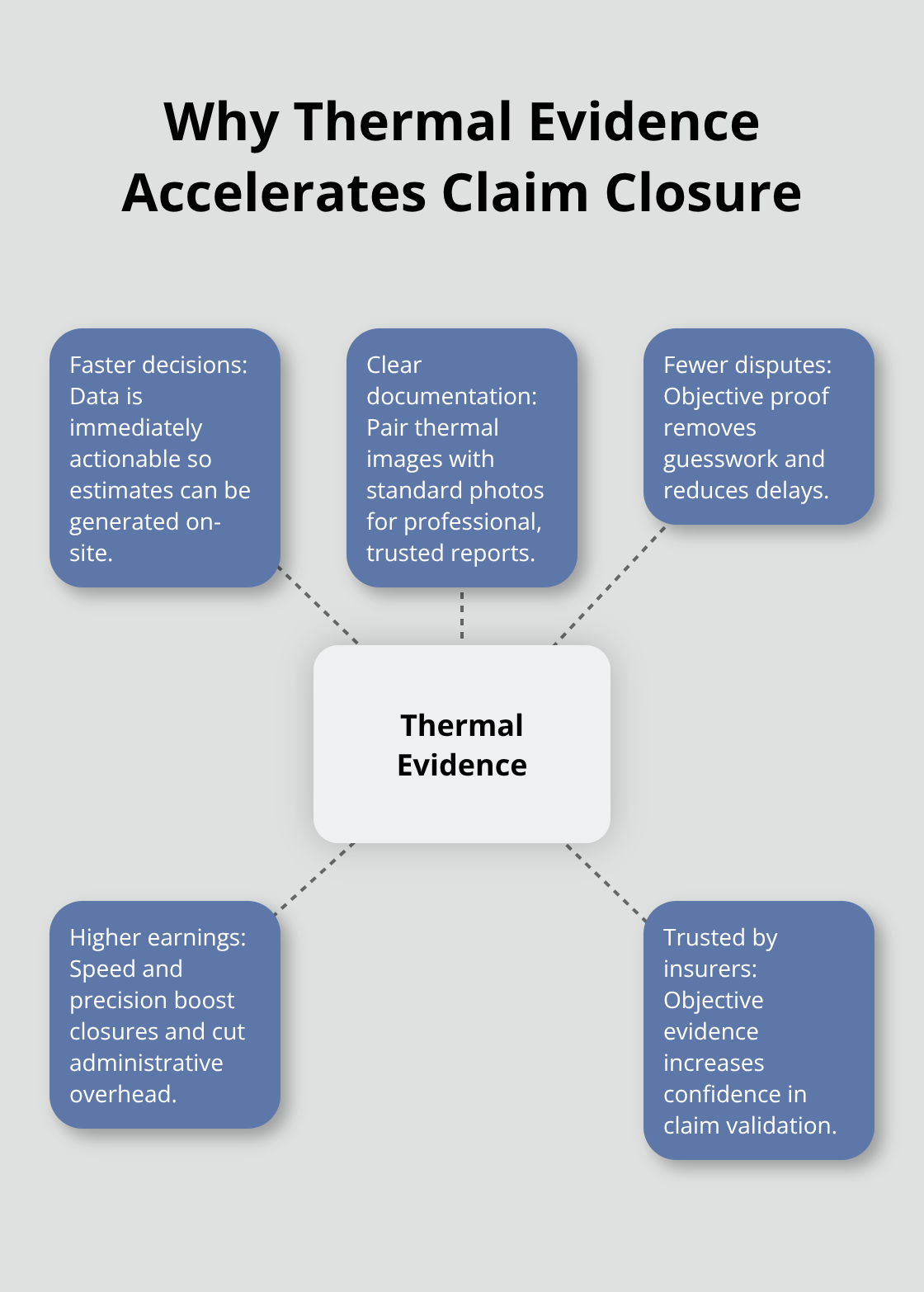
Adjusters who consistently document claims with thermal data close more files faster because insurers trust objective evidence over verbal assessment or standard photographs alone. IE Drone Services delivers thermal building and roof inspections with high-resolution infrared cameras that capture the precise data adjusters need for faster, more accurate assessments. This combination of speed and documentation quality transforms how adjusters approach property damage claims across all damage types.
Final Thoughts
Thermal inspections for claims eliminate the uncertainty that slows down settlements and inflates costs. Thermal imaging reveals hidden damage in seconds, compresses assessment timelines, and produces objective evidence that insurers trust immediately. Adjusters who adopt thermal data close claims faster because they replace guesswork with documented proof of damage location, extent, and severity.
The financial case is clear: thermal imaging reduces assessment costs by over 40 percent while accelerating claim closure and improving documentation quality. This speed advantage translates directly to higher earnings for adjusters managing multiple files simultaneously. More importantly, thermal evidence eliminates settlement disputes because temperature maps provide undeniable proof that removes subjective interpretation from the negotiation process.
Water damage, electrical hazards, roof failures, and mechanical equipment malfunctions all reveal themselves through thermal scanning in ways traditional methods cannot match. IE Drone Services is an FAA-certified drone company in the Inland Empire equipped with high-resolution and infrared cameras for thermal building and roof inspections. Contact us today to integrate thermal inspections into your assessment workflow and start closing claims with undeniable evidence.