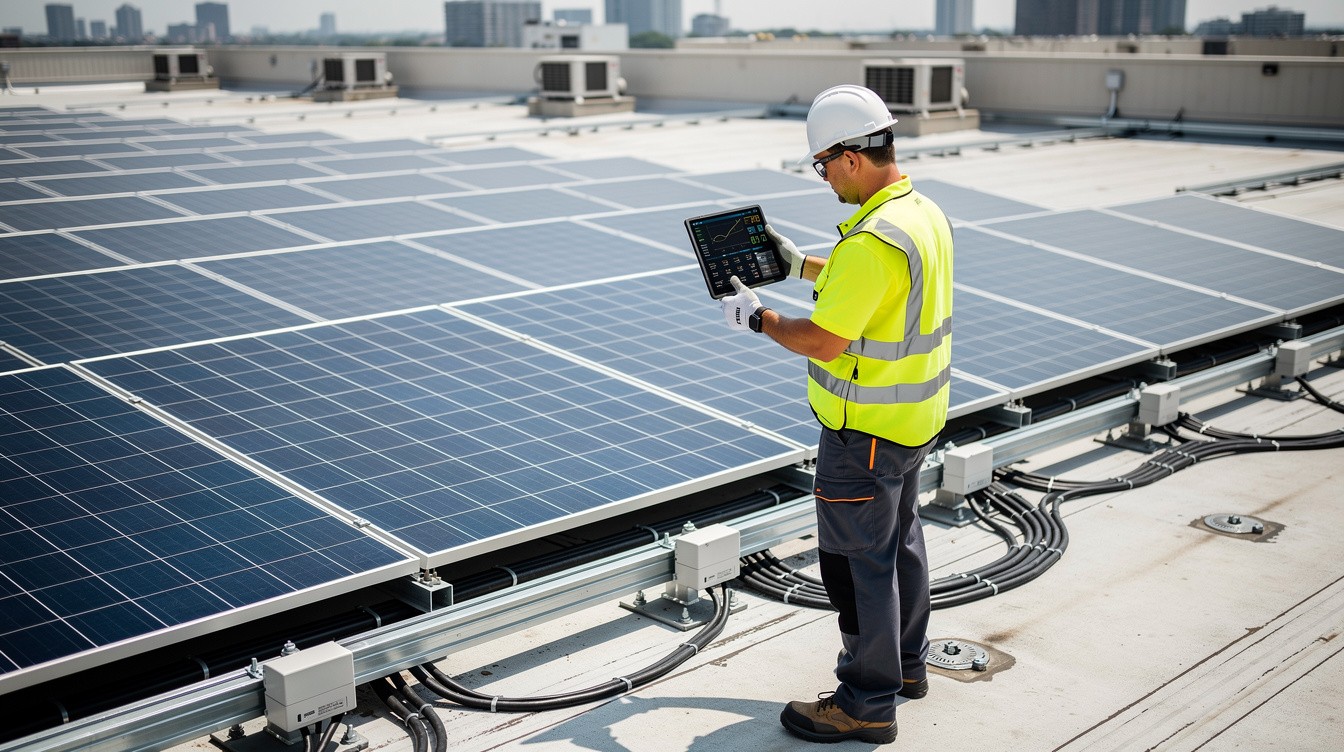
Commercial solar panel inspections are no longer optional for businesses serious about protecting their investment. At IE Drone Services, we’ve seen firsthand how regular inspections catch problems before they tank your energy output and ROI.
Most facility managers wait until something breaks to take action. That’s expensive and unnecessary.
Why Commercial Solar Inspections Protect Your Bottom Line
Commercial solar systems lose an average of 0.5% to 0.8% of their output annually due to soiling, degradation, and equipment failures. For a 100-kilowatt system generating roughly 130,000 kilowatt-hours per year, that translates to over 1,000 lost kilowatt-hours annually-costing facilities between $150 and $300 depending on local electricity rates. Most facility managers don’t catch these losses until they review annual production reports, which means months of underperformance slip by undetected. Regular inspections catch problems in weeks, not months, which directly impacts your return on investment.
Performance Losses Hide in Plain Sight
Energy output degradation doesn’t announce itself. A panel with a micro-crack produces power, but at reduced capacity. Hot spots caused by cell-level failures generate heat that accelerates degradation in surrounding panels. Soiling from dust, bird droppings, and industrial fallout accumulates gradually, reducing light transmission to the cells. None of these issues trigger system shutdowns-your facility continues operating normally while your investment underperforms.
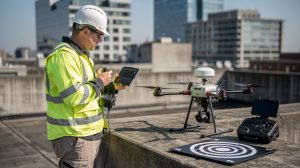
Solar panel thermography reveals hot spots that standard visual checks miss entirely. High-resolution aerial photography identifies physical damage, corrosion on mounting hardware, and soiling patterns that ground-level inspections cannot detect. These inspection methods produce data that translates directly into maintenance priorities and repair schedules.
Insurance and Warranty Claims Require Documentation
Commercial solar warranties typically require documented maintenance records and regular inspections to remain valid. Insurance carriers increasingly demand proof of system condition before approving claims for weather-related damage. A hailstorm hits your facility, and your insurer denies the claim because you lack pre-storm inspection documentation.
Thermal and aerial inspections create timestamped records that establish system condition before incidents occur. When damage happens, you have evidence of what existed beforehand. This documentation protects warranty coverage and strengthens insurance claims, potentially recovering tens of thousands of dollars in repair or replacement costs. Professional inspection reports with thermal data and high-resolution imagery meet insurance and warranty requirements, giving you documentation that holds up during claims processes.
What Advanced Inspection Methods Reveal
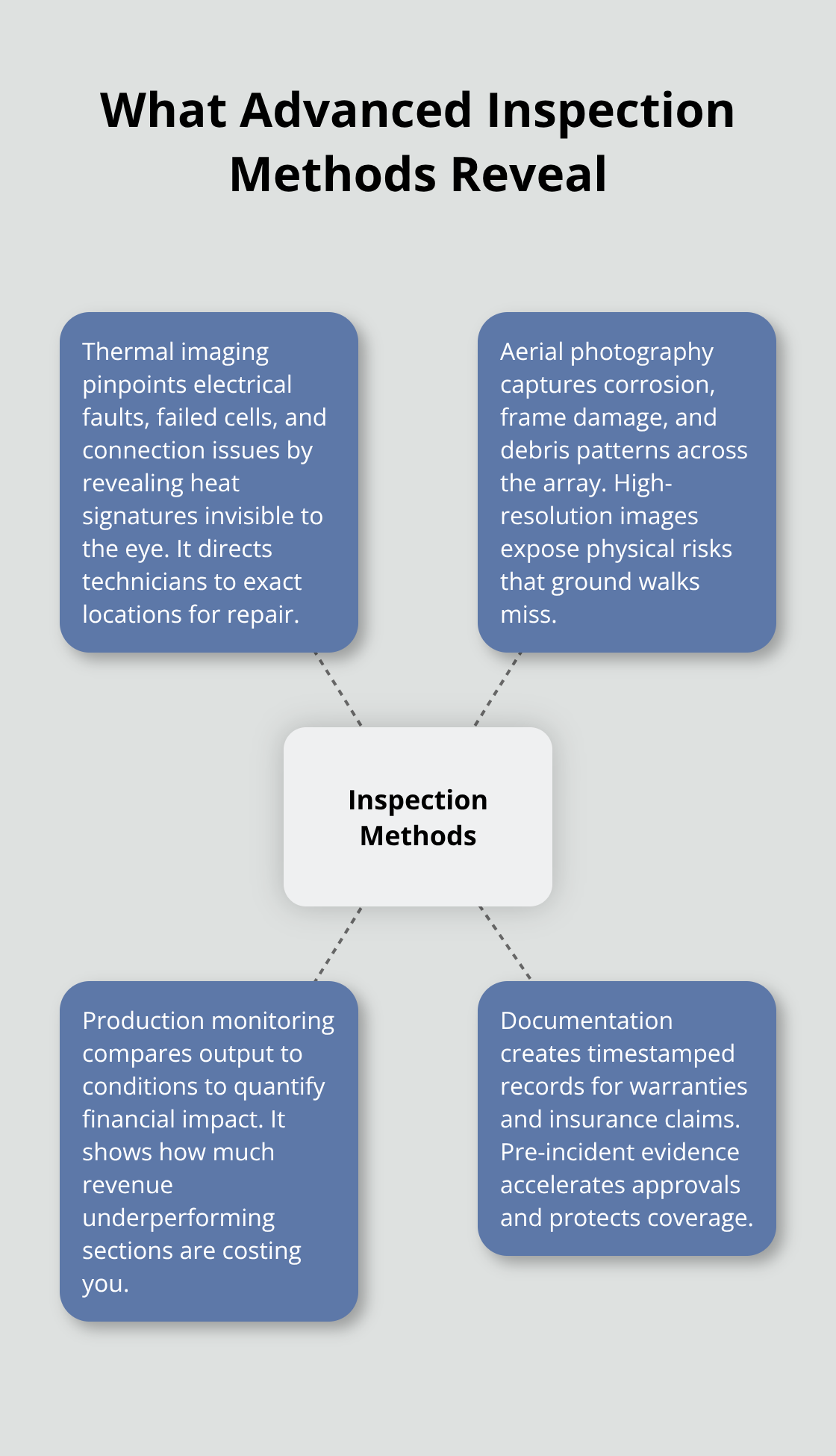
Thermal cameras detect temperature variations across your array that indicate electrical faults, cell failures, and connection problems. Aerial photography captures mounting hardware corrosion, panel frame damage, and debris accumulation that threaten system longevity. Together, these methods provide the complete picture your facility needs to prioritize maintenance spending and prevent costly downtime.
The data from these inspections guides your next maintenance decisions and reveals which systems warrant immediate attention versus routine monitoring.
How Technology Transforms Solar System Inspections
Thermal Imaging Pinpoints Electrical Failures
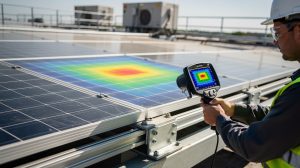
Thermal imaging cameras detect temperature anomalies across your solar array with precision that visual inspections cannot match. When a photovoltaic cell fails internally, it generates excessive heat while producing little to no power. Standard equipment inspections miss these failures entirely because the panel still connects to your system. Thermal cameras capture infrared data showing exactly which cells underperform, which sections of your array have connection issues, and where hot spots threaten surrounding panels.
A facility manager reviewing thermal data can see a temperature spike on a specific panel string and know immediately that electrical resistance causes power loss. This specificity matters because it eliminates guesswork from maintenance decisions and points technicians directly to problem areas that require repair or replacement. The thermal data transforms maintenance from reactive (waiting for failure) to strategic (targeting known problems).
Aerial Photography Reveals Hidden Damage
Aerial photography using high-resolution cameras reveals physical damage that ground-level walks cannot detect. Hail damage creates small fractures in glass that reduce output gradually over months. Corrosion on aluminum mounting hardware weakens structural integrity without triggering visible warning signs. Bird droppings and dust accumulation follow patterns across your roof that determine which sections lose the most output.
Aerial inspections capture these conditions in timestamped images that document system status before weather events occur and establish baseline performance data for future comparisons. When combined with real-time monitoring systems that track kilowatt-hour production against weather conditions, thermal and aerial data reveals exactly how much revenue each identified issue costs your facility annually.
Quantifying Revenue Loss from System Defects
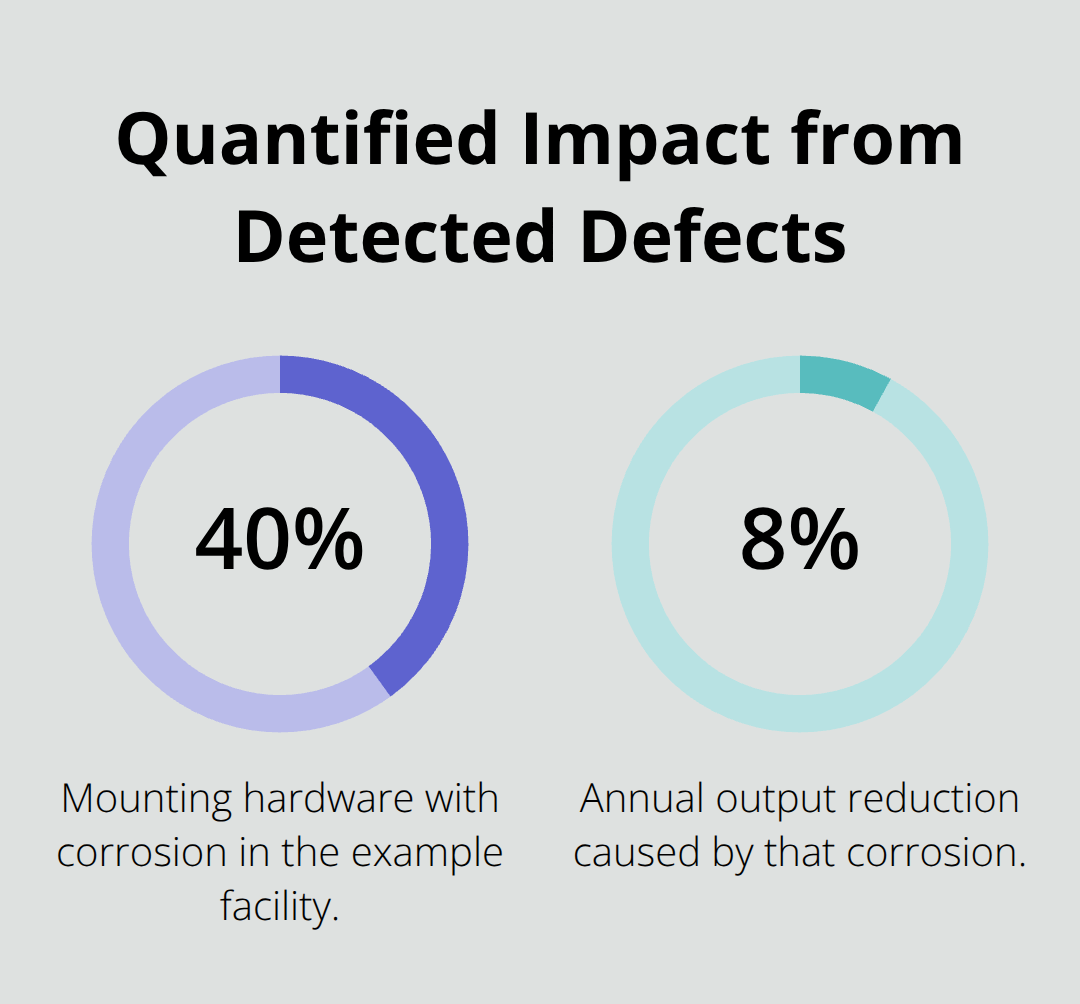
A facility with a 250-kilowatt rooftop system might discover that corrosion on 40 percent of its mounting hardware reduces output by 8 percent annually, translating to approximately 10,400 lost kilowatt-hours and $1,200 to $1,600 in foregone revenue. That quantified loss justifies immediate maintenance spending and transforms inspection findings into financial decisions backed by concrete numbers rather than assumptions.
These inspection methods work together to create a complete picture of your system’s actual performance versus its potential performance. Thermal data identifies electrical problems, aerial imagery documents physical conditions, and production monitoring quantifies financial impact. This combination gives your facility the evidence needed to prioritize repairs and allocate maintenance budgets effectively. Understanding what your system actually costs you when problems go unaddressed sets the stage for identifying which common issues appear most frequently across commercial installations.
Common Issues Found During Solar Inspections
Panel Degradation and Soiling Reduce Output Silently
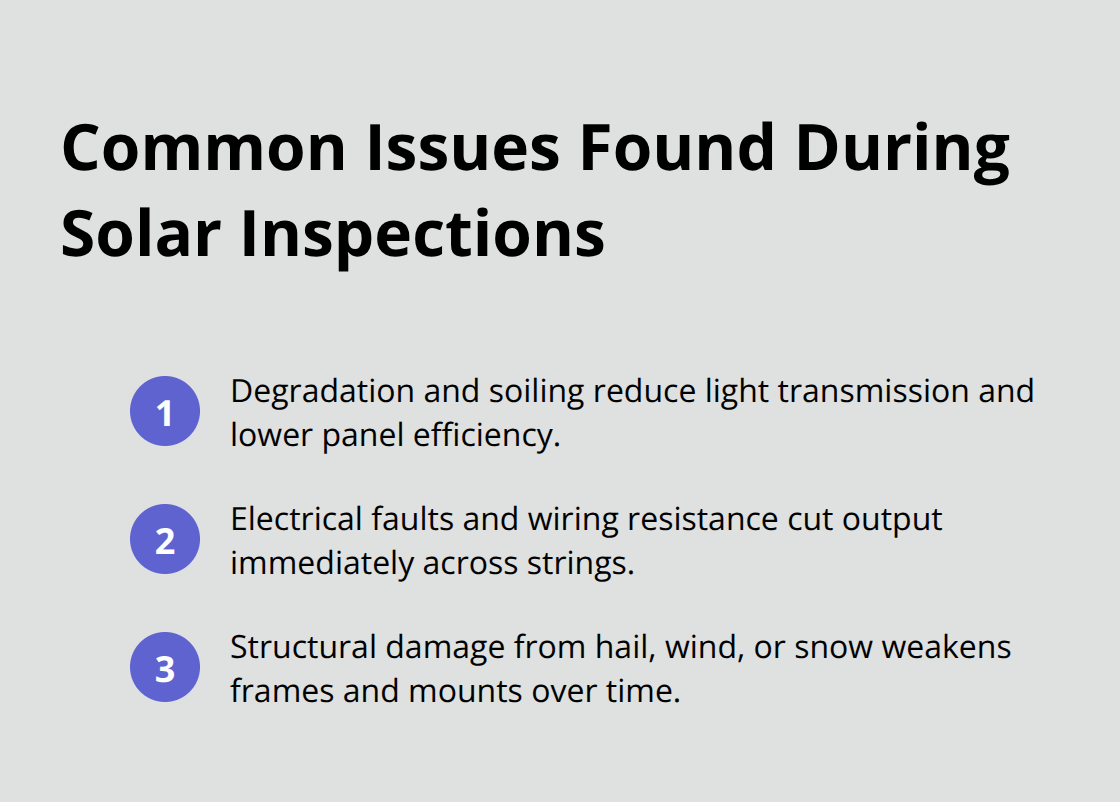
Panel degradation and soiling represent the most common issues we find during commercial solar inspections, and they compound over time in ways that surprise facility managers. Dust, bird droppings, pollen, and industrial fallout reduce light transmission to your cells, with solar panel degradation typically ranging between 0.3% and 0.8% per year depending on your location and climate. Desert facilities accumulate soiling faster than coastal regions, and facilities near manufacturing plants experience more aggressive contamination. The problem accelerates because dirty panels generate slightly more heat, which speeds degradation of the cells themselves. A panel that starts at 95 percent efficiency after five years might drop to 88 percent efficiency after ten years if soiling remains unchecked.
Thermal imaging reveals which sections of your array accumulate the most debris, allowing your maintenance team to prioritize cleaning schedules based on actual conditions rather than assumptions. Infrared cameras identify temperature variations that indicate early-stage degradation, showing you exactly which panels warrant replacement versus cleaning. This specificity prevents unnecessary spending on panels that still perform adequately while protecting your investment in panels showing genuine wear.
Electrical Faults and Wiring Problems Cause Immediate Revenue Loss
Electrical faults and wiring problems represent the fastest-growing issue category across commercial installations and cause immediate revenue loss. A single failed cell in a string can reduce output from that entire string, yet the panel continues producing enough power to avoid triggering system alarms. Corroded connections, loose terminals, and undersized wiring create electrical resistance that generates heat and reduces current flow. Approximately 15 to 20 percent of commercial solar systems have at least one section with connection problems that thermal imaging reveals instantly.
These faults hide because your system continues operating normally while underperforming significantly. Thermal cameras detect the heat signature that electrical resistance creates, pinpointing problem areas with precision that visual inspections cannot match. This data transforms maintenance from reactive to strategic, pointing technicians directly to sections requiring immediate attention.
Structural Damage from Weather Events Weakens Systems Gradually
Structural damage from weather events including hail, high winds, and heavy snow accumulation weakens panel frames and mounting hardware without immediately disrupting power generation. Hail impact fractures in tempered glass develop into stress cracks that expand over months, reducing output gradually. Corrosion on aluminum mounting hardware progresses invisibly until structural failure occurs, potentially creating safety hazards on rooftops.
Aerial inspections document mounting hardware condition, identify frame damage, and reveal debris accumulation patterns that determine maintenance priorities. When you combine thermal data showing electrical problems with aerial imagery documenting physical conditions, you get a complete picture of what actually requires immediate attention versus what can wait. This data-driven approach prevents overspending on repairs while protecting your system from accelerating damage.
Final Thoughts
Commercial solar panel inspections transform maintenance from reactive firefighting into strategic planning that protects your facility’s energy investment. Systems that receive regular inspections catch problems within weeks instead of months, preventing thousands of dollars in lost revenue from degradation, soiling, and electrical faults that operate silently beneath normal system function. If your system has operated for more than two years without a professional inspection, thermal imaging and aerial photography should become your immediate priority to reveal exactly what your system costs you annually in lost output.
Documented pre-damage inspection records protect your warranty coverage and strengthen insurance claims when weather events occur. Thermal data quantifies electrical problems, aerial imagery documents physical conditions, and production monitoring reveals financial impact. Together, these methods transform your maintenance decisions from assumptions into concrete numbers that guide spending and prevent expensive repairs.
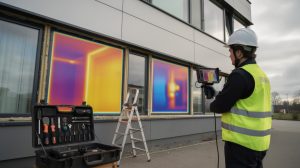
We at IE Drone Services use DJI platforms with high-resolution and infrared cameras to deliver the precise, actionable data your facility needs for commercial solar panel inspection. Our thermal building and roof inspections identify performance issues before they compound into expensive repairs. Contact IE Drone Services to schedule your inspection and get the documentation that protects your investment while maximizing your system’s actual output.