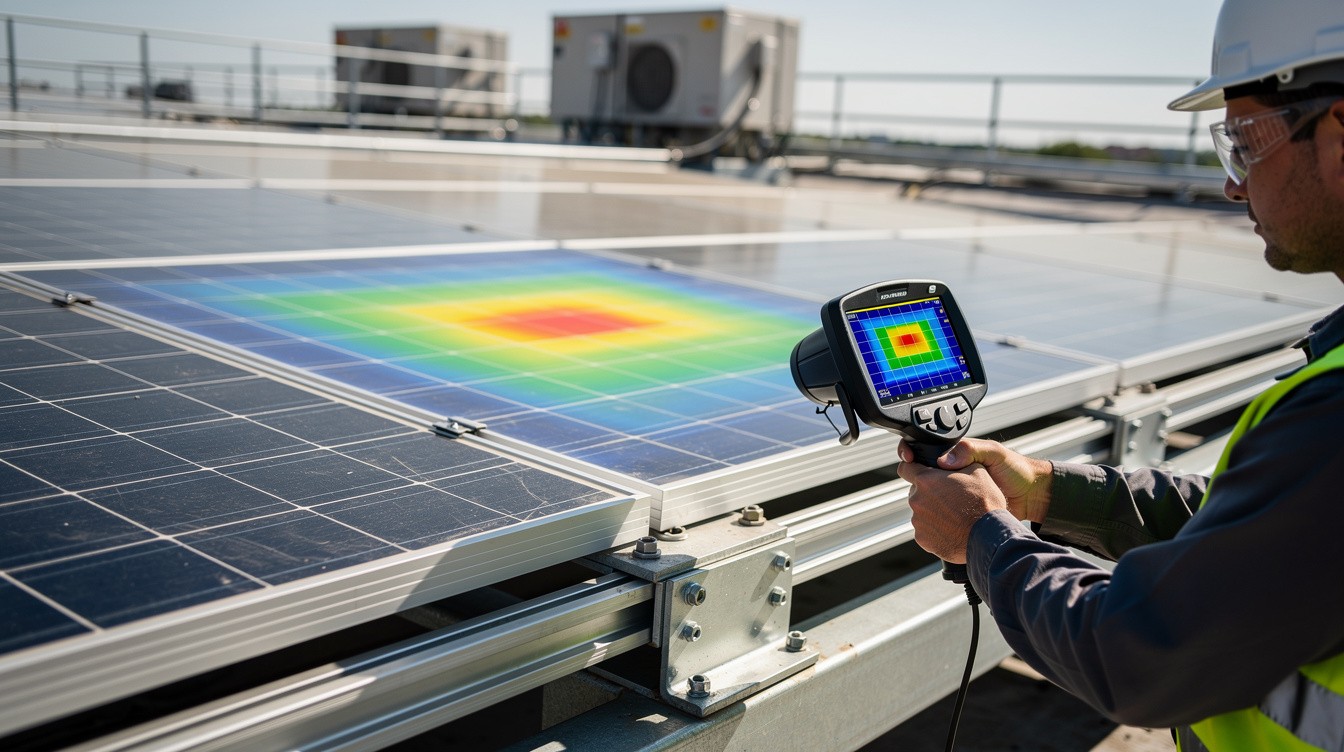
Solar panels that look fine on the surface often hide serious problems underneath. Thermal imaging reveals what traditional monitoring misses-hot spots, electrical failures, and performance drops that cost you thousands in lost energy production.
At IE Drone Services, we’ve seen firsthand how PV system thermal imaging catches issues before they become expensive repairs. This guide shows you exactly how thermal imaging works, why it beats standard monitoring methods, and how often you should inspect your arrays.
What Thermal Imaging Reveals About Solar Panel Health
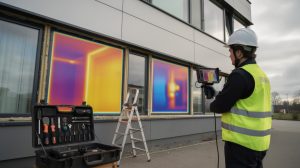
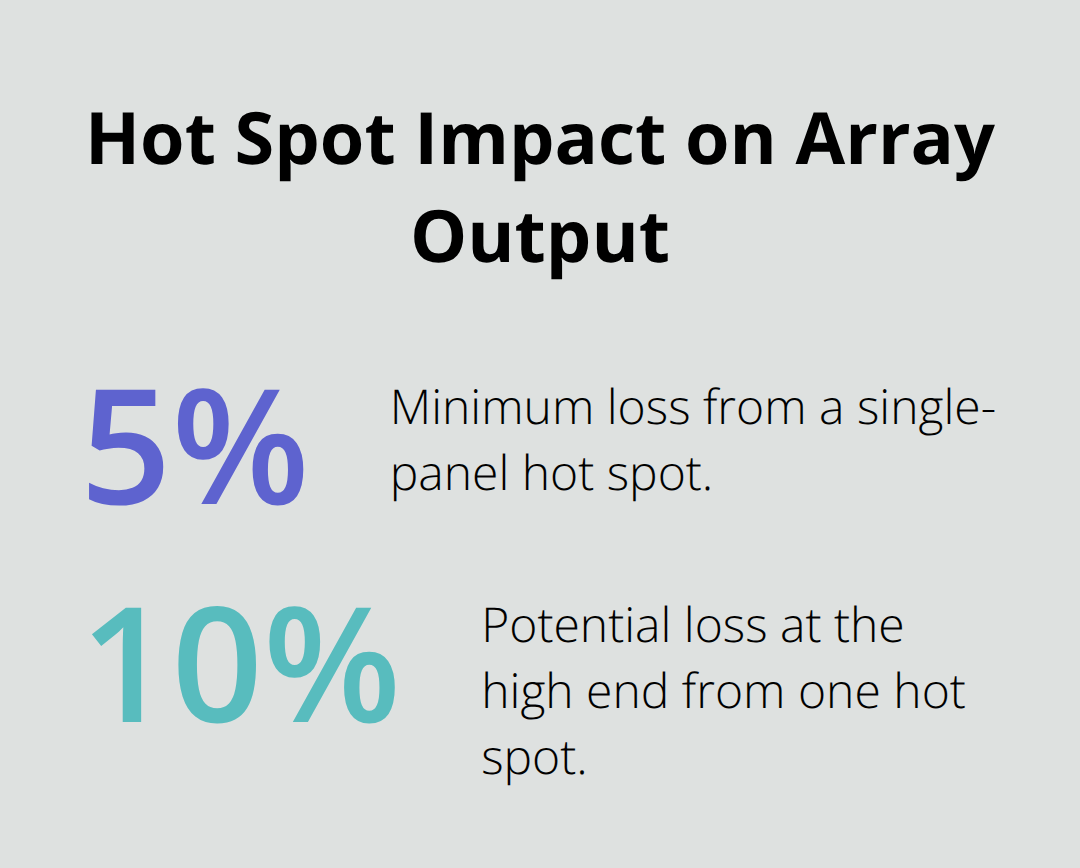
Thermal imaging exposes problems that electrical monitoring systems completely miss. When a solar panel underperforms, it generates excess heat at the problem site. Infrared cameras detect these temperature variations with precision, showing you exactly which modules are failing and why. A hot spot on one panel can reduce your entire array’s output by 5-10%. Traditional electrical monitoring tells you that your system is producing less power than expected, but thermal imaging shows you the specific panel causing the loss within minutes.
Pinpointing Module Failures Before They Spread
Hot spots develop for several reasons, and thermal imaging distinguishes between them with remarkable accuracy. Bypass diode failures create localized heat patterns that grow worse over time if left unaddressed. A failed bypass diode typically costs $200-500 to replace when caught early, but can lead to $5,000+ in panel degradation if the failure progresses unchecked. Solder joint failures, delamination, and internal cracks also produce distinct thermal signatures that show up clearly on infrared scans.
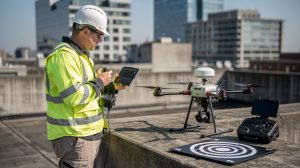
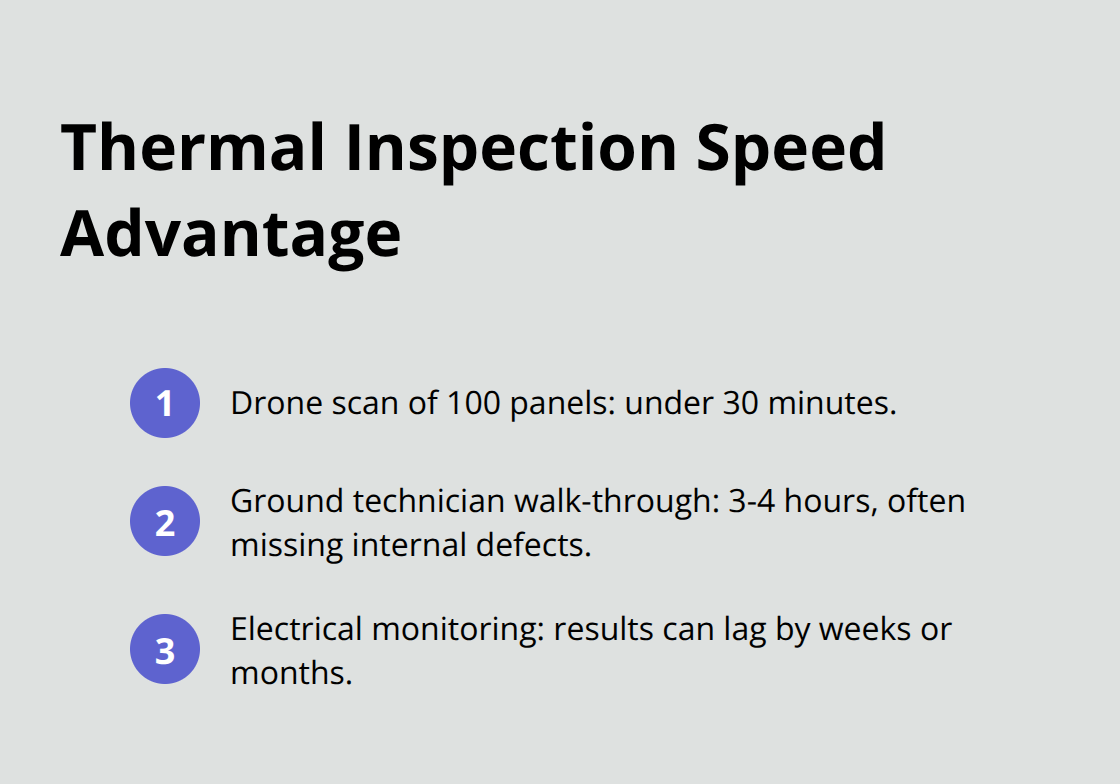
The speed of detection matters enormously here. A drone-based thermal inspection covers a 100-panel array in under 30 minutes, while a technician walking the ground would need 3-4 hours and still miss internal defects. Electrical monitoring systems lag behind thermal detection (sometimes by weeks or months) because they measure aggregate output rather than individual module performance.
Acting on Data Before Losses Multiply
The financial argument for thermal imaging is straightforward and compelling. A degrading panel loses approximately 0.8% of its output capacity annually once problems begin, according to field studies by solar maintenance companies. If your array generates $50,000 in annual revenue, that 0.8% annual loss equals $400 per panel per year in lost income.
Catching and fixing a bypass diode failure before it spreads across multiple panels prevents cascading damage that can affect neighboring modules. Thermal data provides actionable intelligence that lets you prioritize repairs by severity and plan maintenance during optimal weather windows. Ground-based electrical monitoring requires you to wait for performance trends to emerge over weeks, while thermal imaging delivers results immediately.
Why Timing and Method Matter for Accurate Results
Thermal inspections produce the most reliable data when conducted under specific conditions. Panels should operate under load (generating power) during the scan, and ambient temperatures should remain stable to prevent false readings. Cloud cover and extreme heat both compromise infrared accuracy, making early morning or late afternoon inspections ideal for most climates.
The choice between drone-based and ground-level thermal cameras significantly impacts what you actually discover about your array. Drone platforms reach panels mounted at height without requiring ladders or scaffolding, reducing safety risks and inspection time. Ground-level cameras work for smaller installations but struggle with angle limitations and cannot access panels on steep roofs or tall structures. The data quality and coverage speed you gain from aerial thermal imaging directly influence how quickly you can act on problems before they multiply across your system.
Why Electrical Monitoring Misses What Thermal Imaging Catches
Aggregate Data Hides Individual Panel Failures
Electrical monitoring systems measure total output from your entire solar array, telling you that production dropped but not where or why. A utility-scale array with 500 panels might show a 3% overall efficiency loss, but that number obscures the real problem: two panels with bypass diode failures and three panels with internal cracks drag down the entire system’s performance. Electrical data arrives hours or days after the problem develops because monitoring equipment logs trends over time. Thermal imaging flips this approach completely.
An infrared scan identifies the exact underperforming modules within minutes, showing temperature differences between a healthy panel and one with internal damage. Traditional monitoring requires you to triangulate problems through performance analytics and historical data; thermal imaging shows you the malfunction directly on screen.
Temperature Signatures Reveal What Electrical Systems Cannot
The accuracy difference translates into real money. Electrical systems often misattribute performance losses to environmental factors like dust or shade, leading technicians to clean panels or trim trees when the actual problem is a failed component that only thermal imaging reveals. Thermal imaging detects panel faults like hotspots, bypass diode failures, and delamination step by step.
Ground-level electrical monitoring might take two weeks to confirm a performance degradation; a thermal inspection confirms the problem location and severity in a single afternoon. You act immediately instead of waiting for data trends, which means repairs happen before cascading failures damage neighboring panels and multiply your costs exponentially.
Speed and Precision Drive Better Maintenance Decisions
Thermal cameras capture what electrical systems fundamentally cannot: the precise location and severity of each problem module. High-resolution infrared technology scans arrays quickly and safely, capturing thermal data that electrical systems simply cannot provide. The difference in response time matters enormously-waiting weeks for electrical trends to emerge costs you thousands in lost production and accelerated panel degradation.
This speed advantage becomes critical when problems spread across your array. The moment you identify a failed bypass diode or internal crack through thermal data, you can schedule repairs before that malfunction cascades to neighboring panels. Electrical monitoring leaves you reactive; thermal imaging makes you proactive.
When Should You Run Thermal Inspections and How
Optimal Timing and Environmental Conditions
Thermal imaging produces reliable results only under specific environmental conditions, and poor timing wastes money and delivers false data. Panels must operate under load during the scan, which means your array needs to generate power actively. This rules out inspections during heavy cloud cover, rain, or at night when panels sit dormant. Early morning or late afternoon inspections work best in most climates because ambient temperatures stabilize while panels still receive sufficient sunlight to operate at meaningful power levels. Midday heat creates thermal noise that can mask real problems, especially in desert climates where ground temperatures exceed 120 degrees Fahrenheit.
Wind speed matters significantly-gusts above 15 miles per hour introduce temperature fluctuations that compromise infrared accuracy. Schedule inspections when weather forecasts show stable conditions, calm winds, and clear skies. This attention to environmental factors separates accurate thermal data from useless scans that waste your inspection budget.
Inspection Frequency for Different Array Sizes
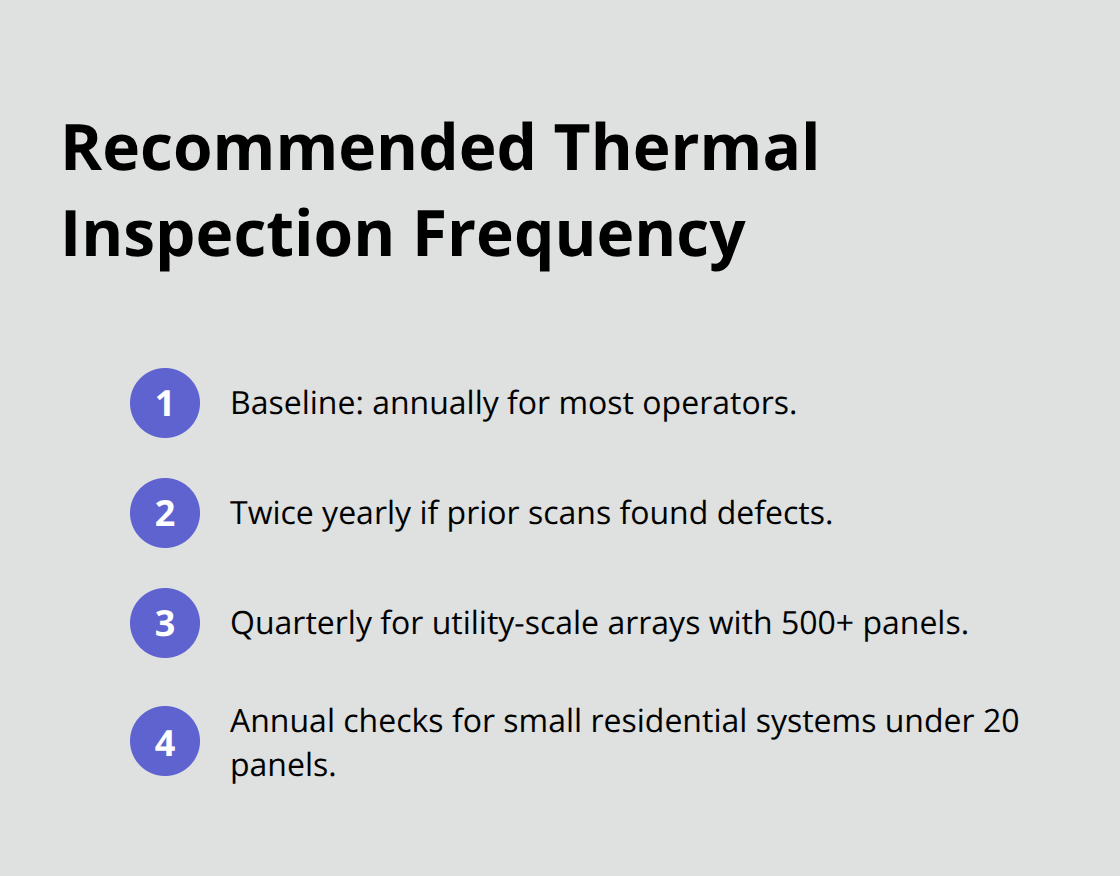
Most solar operators should conduct thermal imaging inspections annually as a baseline maintenance practice, then increase frequency to twice yearly if previous scans identified any defects. Utility-scale arrays with 500+ panels benefit from quarterly inspections because problems spread faster across larger installations and the cost of missed degradation multiplies exponentially. Small residential systems under 20 panels can operate safely on annual inspections unless performance data suggests otherwise.
The financial logic is straightforward: a degrading panel loses approximately 0.5–0.8% of its output capacity annually once problems begin. Frequent inspections catch failures before that compounding loss accelerates across your entire array.
Drone-Based Inspections Versus Ground-Level Cameras
Drone-based thermal inspections outperform ground-level cameras decisively for most installations. A drone reaches rooftop and elevated panels safely without requiring ladders, scaffolding, or workers at height, which eliminates the safety risks that ground inspections introduce. Coverage speed demonstrates the practical advantage clearly-a drone completes a 100-panel array in 25-35 minutes while a technician on the ground needs 3-4 hours and still cannot access panels mounted on steep pitches or tall structures.
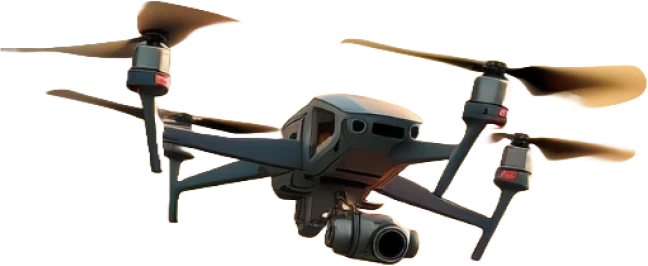
High-resolution infrared sensors on modern drones capture thermal data with precision that ground-level cameras struggle to match, especially when panels sit at distance or angle. IE Drone Services uses DJI platforms equipped with high-resolution infrared cameras specifically because this combination delivers the speed, accuracy, and safety that solar array owners need for effective maintenance. Ground-level thermal cameras make sense only for small residential installations where cost concerns override efficiency gains. For commercial and utility-scale operations, drone-based thermal imaging is the only approach that captures complete array data without leaving blind spots or safety gaps.
Why Complete Data Prevents Costly Oversights
The data you collect directly influences maintenance timing and repair prioritization. Incomplete or inaccurate thermal scans lead to missed problems that compound into expensive failures. A failed bypass diode typically costs $200-500 to replace when caught early, but can lead to $5,000+ in panel degradation if the failure progresses unchecked. Thermal imaging that covers your entire array prevents these cascading failures from spreading across neighboring modules and multiplying your repair costs exponentially.
Final Thoughts
Thermal imaging reveals problems that electrical monitoring systems completely miss, and PV system thermal imaging transforms how you maintain solar arrays. Hot spots, bypass diode failures, and internal cracks cost you thousands in lost production when left undetected, but catching a failed bypass diode early costs $200-500 to repair while ignoring it leads to $5,000+ in panel degradation. Annual or twice-yearly thermal inspections prevent this compounding loss and keep your array operating at peak efficiency.
Drone-based thermal imaging covers large arrays in 25-35 minutes with complete accuracy, while ground-level approaches miss panels and consume hours of technician time. Environmental conditions must remain stable-early morning or late afternoon inspections under clear skies deliver reliable data that actually guides your maintenance decisions (electrical monitoring tells you something is wrong; thermal imaging shows you exactly what and where). The timing and method of your inspections matter enormously for preventing cascading failures across your system.
Schedule a professional thermal inspection before problems multiply across your installation. We at IE Drone Services are FAA-certified drone specialists equipped with high-resolution infrared cameras designed specifically for solar array inspections, and our thermal imaging captures the precise data you need to prioritize repairs and protect your investment. Contact IE Drone Services today to schedule your array inspection and start making maintenance decisions based on actionable thermal data.