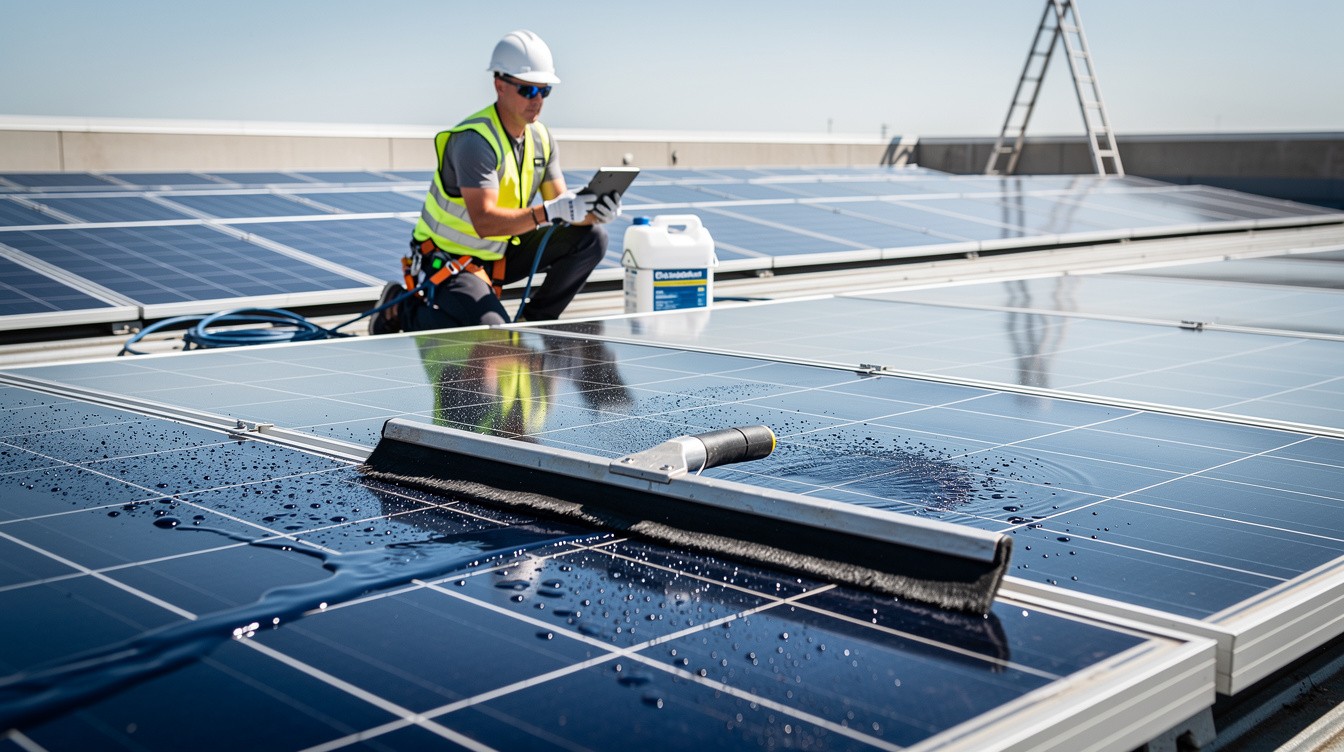
Your solar panels are losing money every day they sit dirty. Dust, debris, and weather buildup reduce energy output by measurable amounts, and most system owners never realize it’s happening.
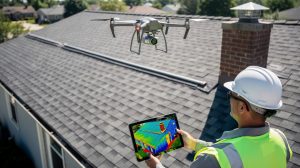
A professional solar panel cleaning inspection reveals exactly what’s costing you. At IE Drone Services, we use thermal imaging and specialized equipment to identify performance issues before they become expensive problems.
What Causes Solar Panels to Lose Efficiency
Dirt accumulation on your panels is relentless and quantifiable. Dust, pollen, bird droppings, and mineral deposits cut energy output by 5 to 25 percent depending on your location and how long since the last cleaning.
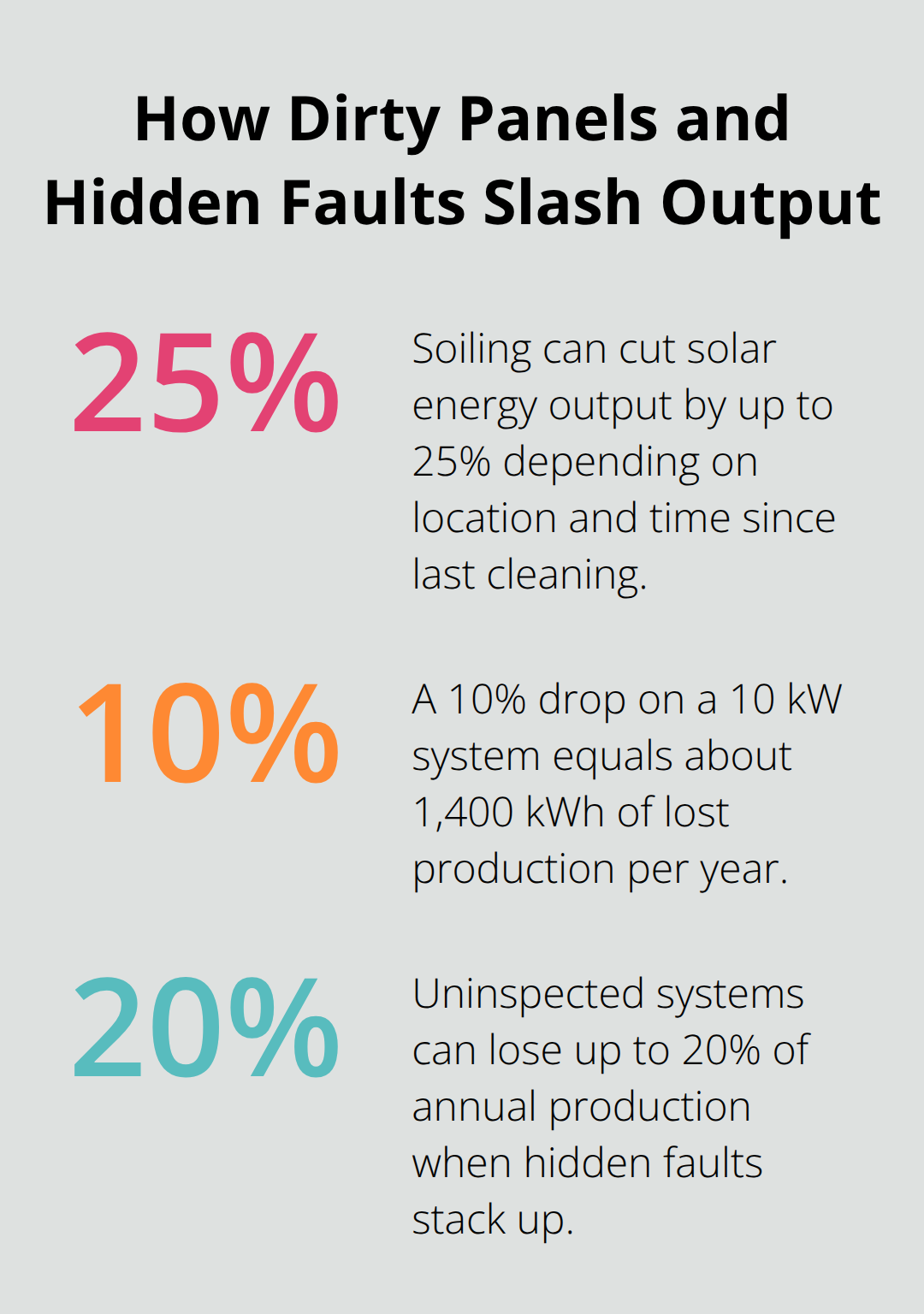
Florida’s climate accelerates this problem dramatically: spring pollen, summer mineral deposits from storms, and coastal salt air create buildup far faster than drier regions. A 10 kW residential system producing roughly 14,000 kWh annually loses about 1,400 kWh per year if soiling cuts output by just 10 percent. That translates directly to money vanishing from your electricity savings month after month. Most system owners never monitor this loss closely enough to notice it happening, which means they accept degraded performance as normal.
How Weather Speeds Up Panel Degradation
Storm damage, heavy snow, and salt spray don’t just dirty your panels-they expose underlying problems that reduce efficiency long after the weather clears. Post-storm conditions create mounting stress, loose connections, and seal failures that drain performance silently. Thermal imaging reveals hidden defects by detecting temperature variations across panel surfaces, enabling targeted repairs before failures cascade into major system failures. Professional inspections verify racking torque, flashing seals, and roof penetration integrity to prevent leaks and catch storm readiness issues early. Without this verification, small damage compounds into bigger problems that cost far more to fix later.
Why Waiting for Rain Isn’t Enough
Rain removes light dust but leaves sticky residues like bird droppings, pollen, and sap untouched. Relying on natural rainfall means accepting performance losses that your system was designed to avoid. A sustained drop in energy output not explained by cloud cover or seasonal variation signals that cleaning is overdue. The financial case is straightforward: on a 10 kW system, a 10 to 15 percent efficiency gain from cleaning often pays for itself in a single billing cycle when you’re losing hundreds of dollars monthly to preventable soiling. Thermal imaging combined with detailed performance analysis pinpoints exactly where your system underperforms and what actions restore output fastest-information that guides your next maintenance decision.
What Your Dirty Panels Cost You Every Month
Skipping solar panel cleaning isn’t a minor oversight-it’s a decision to lose thousands of dollars over your system’s lifetime. National Renewable Energy Laboratory data show that soiling losses range from 1.5 percent up to more than 25 percent depending on location and cleaning frequency. On a 10 kW system producing roughly 14,000 kWh annually, even a conservative 10 percent loss means 1,400 kWh of unproduced energy per year. At typical residential electricity rates, that translates to between $200 and $400 in lost savings annually, depending on your utility’s rate structure. Over a 25-year system lifespan, neglecting regular cleaning costs you $5,000 to $10,000 in pure energy revenue. Dirty panels don’t just reduce output-they create hot spots that accelerate panel degradation and shorten equipment life. Uninspected systems can lose up to 20 percent of annual production when hidden faults stack up over time, turning a modest cleaning problem into a serious efficiency crisis that requires expensive repairs.
Florida’s Accelerated Soiling Problem
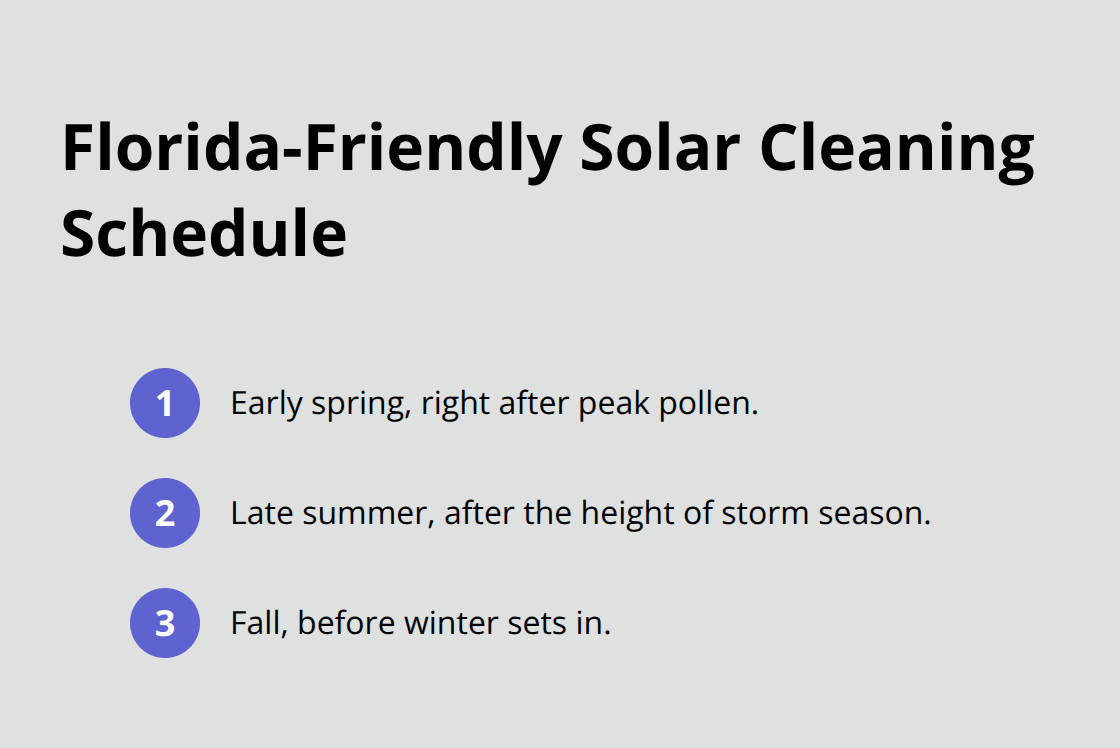
Florida’s climate makes this problem acute. Spring pollen, summer mineral deposits from storms, and coastal salt air accelerate buildup far faster than inland or drier regions. Most homeowners clean panels once yearly, but that schedule underestimates Florida’s actual needs. A practical frequency is roughly three cleanings per year: early spring after pollen season, late summer after storm season, and fall before winter. If you haven’t cleaned panels in the last six months, you lose money each month.
The longer panels remain dirty, the harder it becomes to restore them-stubborn mineral deposits and organic grime require specialized solutions that cost more than routine maintenance.
Monitoring Performance Reveals Hidden Losses
Your inverter output tells the real story about panel condition. Compare actual production against projected output to identify when cleaning becomes necessary far better than visual inspection alone. A sustained drop in energy output not explained by weather patterns signals that performance restoration is overdue. Professional inspections with thermal imaging detect which panels underperform most severely, allowing targeted cleaning that maximizes your return on investment rather than treating all panels equally. Thermal imaging reveals temperature variations across panel surfaces that indicate performance problems invisible to the naked eye. This data-driven approach eliminates guesswork and focuses your maintenance spending where it matters most.
The Cost of Waiting Compounds Quickly
Each month of delay extends your payback period and reduces lifetime returns. A 10 to 15 percent efficiency gain from cleaning often pays for itself in a single billing cycle when you’re losing hundreds of dollars monthly to preventable soiling. Professional inspections verify racking torque, flashing seals, and roof penetration integrity to prevent leaks and catch storm readiness issues early. Without this verification, small damage compounds into bigger problems that cost far more to fix later. The financial case is straightforward: restoration costs far less than accepting permanent efficiency losses.
Understanding what dirty panels cost you is only half the equation. The other half involves knowing exactly what professional inspection and cleaning can restore-and how to measure that improvement with precision.
How Professional Inspection Restores Hidden Performance
Thermal Imaging Detects What Eyes Cannot See
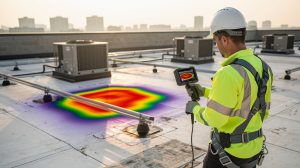
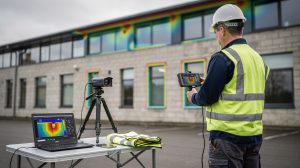
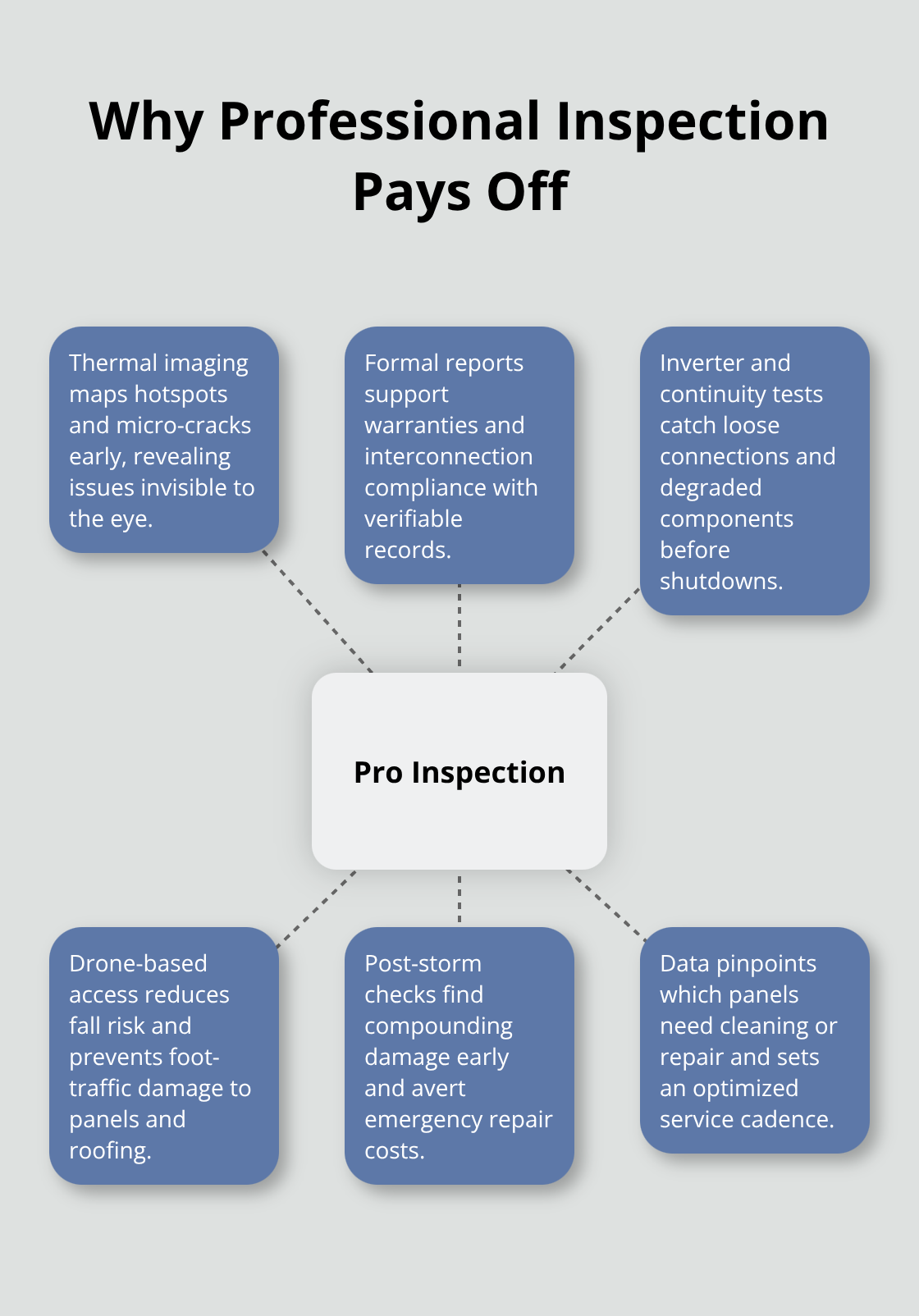
Temperature variations across panel surfaces reveal hotspots, micro-cracks, and performance degradation long before they trigger visible failures or major output drops. High-resolution infrared cameras capture thermal data that identifies exactly which panels underperform and why. This precision beats ground-level visual inspection decisively because hotspots indicate internal damage, manufacturing defects, or connection problems that standard inspection misses entirely.
Once thermal imaging identifies problem areas, you know precisely where cleaning effort matters most and which components require repair before they fail catastrophically. A professional inspection typically costs $150 to $350 depending on system size and roof complexity, but the actionable data justifies the investment immediately when it prevents a $2,000 inverter replacement or identifies a $500 racking repair that would cost $5,000 if ignored until failure. Formal reports include photos, performance analysis, and a specific optimization plan rather than vague recommendations.
Documentation Supports Warranties and Compliance
Professional inspection reports provide the maintenance records that utilities and manufacturers require. This documentation supports warranty claims and interconnection standing by creating a verifiable history of system care. Without formal records, you lose leverage when disputes arise over coverage or performance guarantees.
Inverter diagnostics and wire continuity tests catch performance drops early by measuring electrical output against design specifications. These tests identify loose connections or degraded components before they trigger emergency shutdowns. This maintenance planning transforms random guesswork into a predictable schedule that maximizes output while minimizing unexpected failures and repair costs.
Safe Access Eliminates Risk and Damage
Rooftop work demands proper safety protocols, fall protection, and insurance coverage that most homeowners lack entirely. Drone-based thermal imaging eliminates the need for technicians to walk across your panels, reducing safety risks and preventing accidental damage from foot traffic. Professional inspections verify racking torque, flashing seals, and roof penetration integrity to catch mounting failures, water intrusion risks, and storm damage before weather intensifies existing weaknesses.
Post-storm inspections become critical after high winds or heavy snow because damage compounds silently until catastrophic failure forces expensive emergency repairs. The data from thermal inspection guides your maintenance schedule precisely rather than forcing you to guess or follow generic recommendations that underestimate your actual needs.
Cleaning frequency depends on your environment: inland systems with moderate pollen require one professional cleaning annually plus light rinses between visits, while Florida coastal systems with salt air and heavy pollen accumulation benefit from three cleanings yearly.
Final Thoughts
Your solar panels represent a significant investment in energy independence and long-term savings. Letting them operate at reduced efficiency wastes thousands of dollars over their lifespan while accelerating component degradation that shortens system life. A professional solar panel cleaning inspection identifies performance losses before they compound into expensive failures, giving you precise data to guide maintenance decisions rather than guessing based on visual appearance alone.
The financial case is straightforward: a 10 percent efficiency loss on a 10 kW system costs you $200 to $400 annually in lost electricity savings, which compounds to $5,000 to $10,000 over 25 years. Professional inspections using thermal imaging cost $150 to $350 and typically pay for themselves within a single billing cycle through the efficiency gains they enable. More importantly, they catch hidden problems like loose racking, seal failures, and micro-cracks that would cost thousands to repair if ignored until catastrophic failure forces emergency service calls.
We at IE Drone Services use FAA-certified drone technology with high-resolution and infrared cameras to deliver precise thermal inspections that identify exactly where your system underperforms and what actions restore output fastest. Our heat-sensing approach eliminates the safety risks of rooftop work while capturing actionable data that guides your maintenance schedule. Schedule your professional solar panel cleaning inspection with IE Drone Services today and stop losing money to dirty, underperforming panels.