Your home’s ductwork is silently bleeding energy. Leaks in your ducts force your HVAC system to work harder, driving up utility bills while leaving some rooms uncomfortably cold and others too warm.
At IE Drone Services, we use thermal imaging to find these hidden leaks fast. This guide shows you how duct energy leak detection works and why sealing them matters for your comfort and wallet.
Why Duct Leaks Cost You Money and Comfort
Energy Loss and Rising Utility Bills
Duct leaks waste between 20 and 30 percent of the air your HVAC system produces. That’s not a minor inefficiency-it’s money flowing directly into your walls and attic instead of heating or cooling your living spaces. Most homeowners don’t notice their ducts are leaking until utility bills climb steadily year after year. When your HVAC system runs, it pushes air through those gaps, forcing the equipment to cycle longer and harder than it should. Your thermostat keeps calling for more heating or cooling because the system can’t maintain your target temperature, creating a vicious cycle that shortens your equipment’s lifespan.
Temperature Swings and Dead Zones
Uneven heating and cooling signals duct problems immediately. One room stays cold while another becomes stuffy and overheated. This happens because leaking ducts can’t deliver consistent airflow to every space in your home.
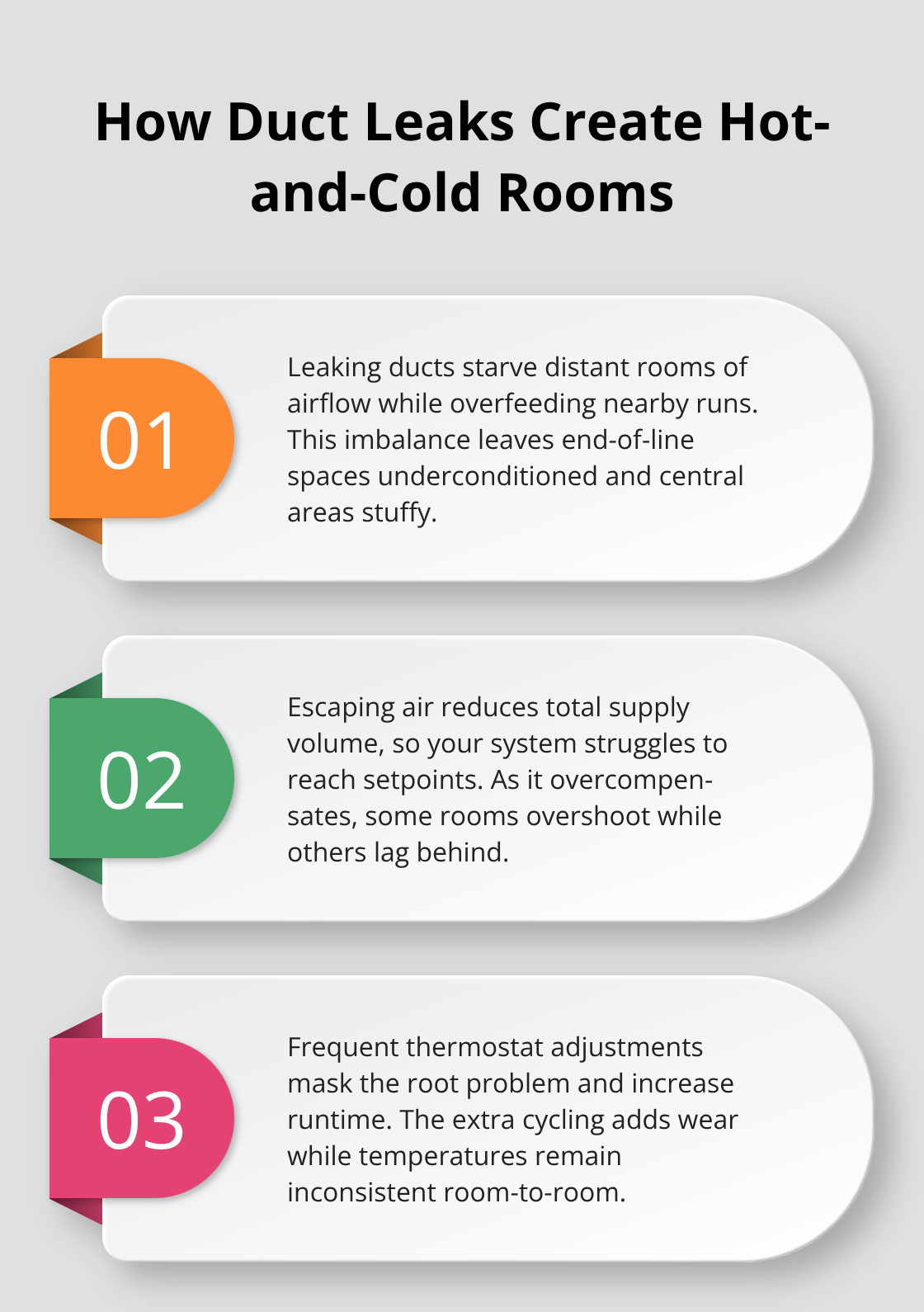
Air escapes before reaching its destination, and rooms at the end of the ductwork run suffer the worst. Your bedroom might sit at 62 degrees while your living room hovers at 76 degrees, forcing constant thermostat adjustments. This temperature inconsistency strains your HVAC system further as it tries to compensate for the lost air volume. The equipment works overtime, generating accelerated wear on motors, compressors, and electrical components.
Why Your HVAC System Fails Early
A leaking duct system forces your HVAC equipment to operate at maximum capacity far more often than necessary. Your compressor, blower motor, and heat exchanger experience accelerated wear when the system can’t achieve temperature setpoints efficiently. Most HVAC systems last 15 to 20 years with proper maintenance, but significant duct leakage reduces that lifespan by 5 to 7 years or more. When replacement becomes necessary, you’ll face $5,000 to $10,000 for a new system. Sealing ducts before major problems develop protects your investment and prevents emergency repair bills during extreme weather. Thermal imaging inspections identify leaks before they cause catastrophic system failures and help you understand exactly where your energy goes.
How Thermal Imaging Finds Duct Leaks
Infrared Cameras Reveal Hidden Temperature Patterns
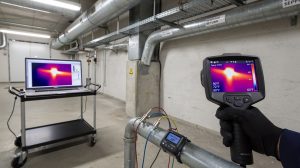
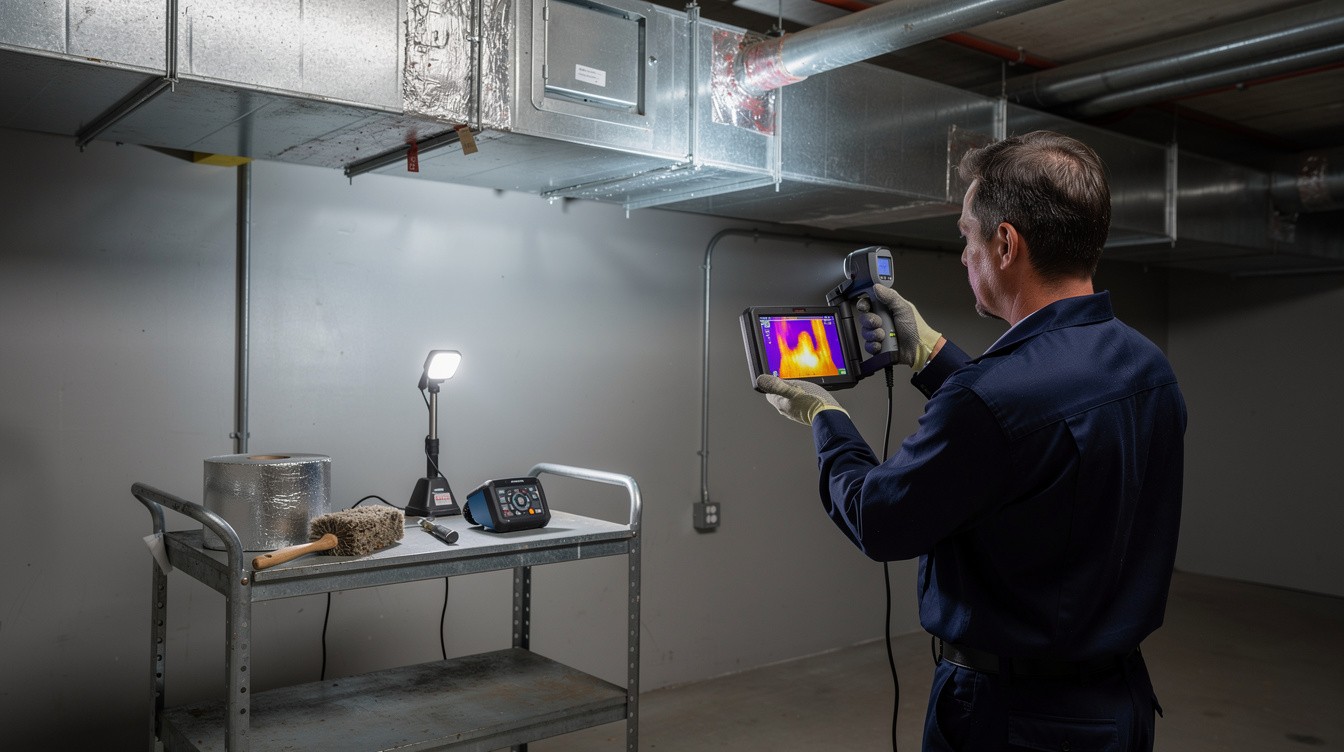
Thermal imaging cameras detect temperature differences that reveal exactly where your ducts lose air. These infrared cameras show warm and cold spots in your ductwork, attic, and walls that remain invisible to the naked eye. When air escapes through a leak, it creates a temperature anomaly that stands out immediately on a thermal image. A leaking duct in your attic appears as a cold spot during winter or a hot spot during summer, depending on whether you heat or cool your home.
Why Thermal Imaging Beats Traditional Methods
The real advantage of thermal imaging is speed and accuracy. A thermal inspection takes hours instead of days, and you receive precise coordinates for every leak rather than estimates based on symptom guessing.
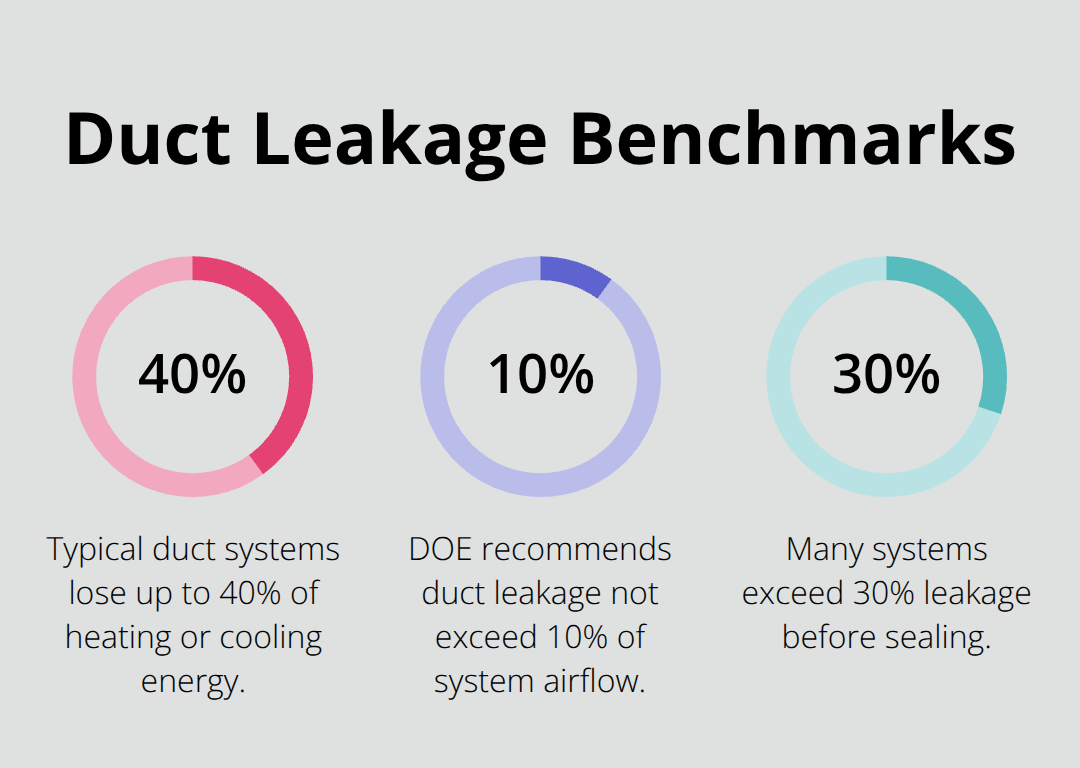
Typical duct systems lose up to 40% of your heating or cooling energy, but without thermal imaging, contractors often miss significant portions of the actual damage. This approach requires no guesswork and no invasive wall cutting to locate problems.
Mapping Your Entire Ductwork System
High-resolution thermal cameras map temperature patterns across your entire ductwork system, giving you a clear picture of where problems exist and how severe they are. Once thermal imaging identifies the leaks, you can prioritize repairs based on size and location, focusing first on the leaks that waste the most energy. Smaller leaks in accessible areas near your furnace or air handler need simple mastic sealant, while larger gaps in hard-to-reach sections may require professional duct sealing tape or aeroseal injections.
Verification Confirms Your Repairs Work
Thermal verification after sealing confirms that your repairs actually worked, showing you the temperature difference before and after each fix. This data-driven approach means you know exactly how much efficiency you’ve recovered and whether additional repairs are worth the investment. The precise measurements from thermal imaging eliminate guesswork from the repair process and help you make informed decisions about your ductwork.
With your leak locations and severity levels now mapped, the next step involves selecting the right sealing techniques and materials to stop the energy loss permanently.
Steps to Seal Ducts and Improve Home Efficiency
Professional Inspection and Assessment of Your Ductwork
Once thermal imaging pinpoints your leaks, the repair approach depends on leak size, location, and accessibility. Small leaks under a quarter-inch require mastic sealant, a putty-like material that adheres permanently to duct surfaces and outperforms traditional duct tape, which deteriorates within 5 to 10 years. For gaps between a quarter-inch and half-inch, mastic combined with fiberglass mesh tape creates a seal that lasts 20+ years. Larger openings and seams need professional-grade duct sealing tape rated for HVAC use or aeroseal injection, a pressurized sealant that fills leaks from the inside of your ductwork.
Sealing Techniques and Materials for Long-Term Results
Improper pressure settings during aeroseal applications can damage ducts or create uneven sealing, so professionals should handle these treatments. The material cost for mastic and tape runs $200 to $500 for a typical home, while aeroseal treatment costs $800 to $1,500 depending on ductwork complexity. Accessible leaks in your attic or basement cost less to repair than leaks buried inside walls, where removal and re-sealing require opening sections of drywall.
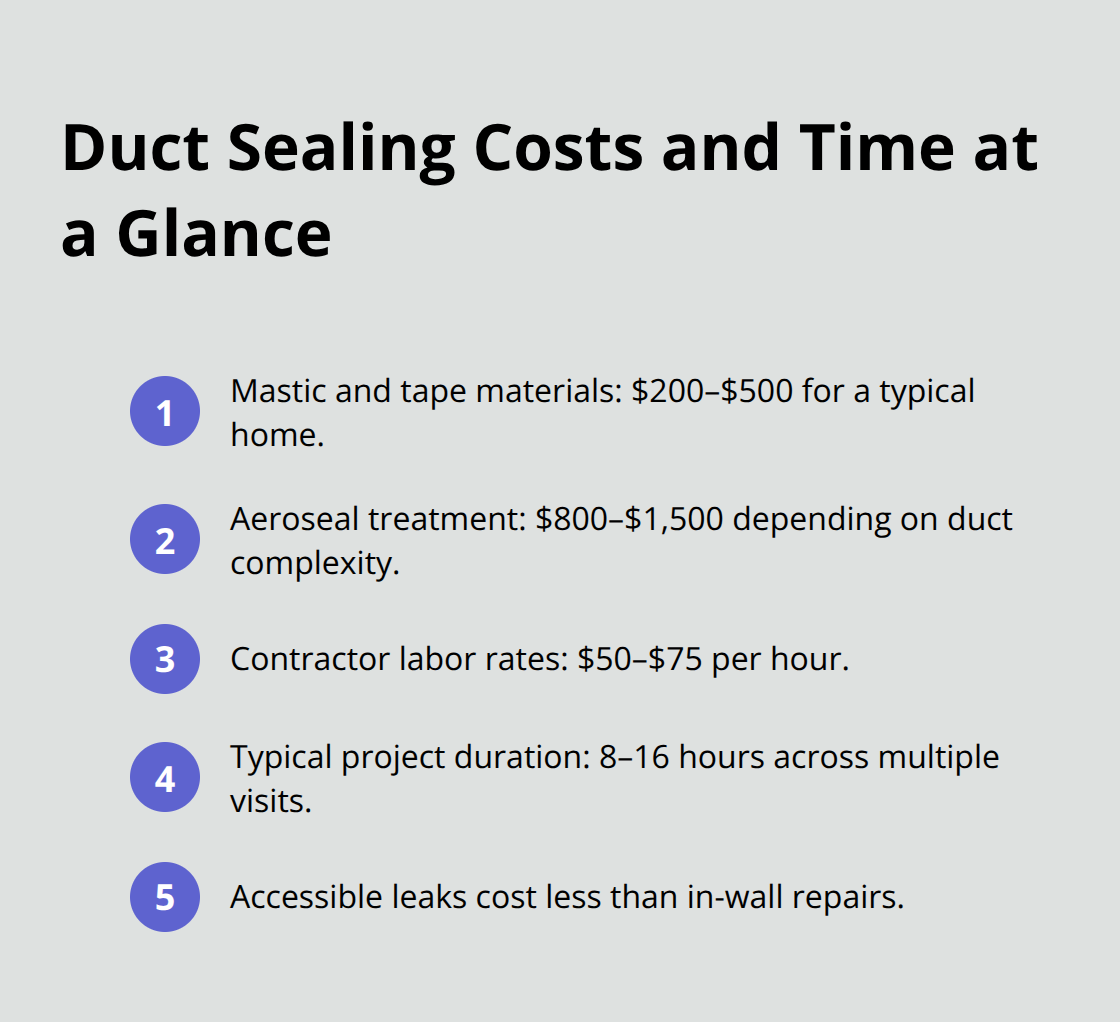
Most contractors charge $50 to $75 per hour for manual sealing work, so a full duct system repair typically takes 8 to 16 hours spread across multiple visits.
Verification and Testing After Repair Work
Thermal imaging conducted 24 to 48 hours after sealing shows whether temperature patterns have normalized around previously leaking areas. A blower door test measures overall air tightness and can show whether your sealing efforts reduced leaks enough to meet building standards. The Department of Energy recommends ductwork leakage not exceed 10 percent of system airflow, and professional sealing typically achieves 5 to 8 percent leakage rates on systems that previously exceeded 30 percent. Request thermal images before and after repair work so you have documented proof of improvement for your records.
Addressing Remaining Leaks
This verification step matters because some leaks require multiple sealing attempts, particularly around complex junctions or where ducts pass through unconditioned spaces. If verification shows remaining leaks, your contractor can target those specific areas without re-sealing sections that already tested successfully. This targeted approach saves time and money while maximizing your efficiency gains.
Final Thoughts
Duct energy leak detection using thermal imaging transforms how homeowners address energy waste and system inefficiency. Leaks waste 20 to 30 percent of your HVAC output, drive utility bills higher every month, and shorten equipment lifespan by 5 to 7 years. Without identifying these leaks, your system works constantly to compensate, cycling longer and harder than necessary while leaving your home uncomfortable.
Professional duct sealing stops this cycle permanently. Once leaks are sealed with proper materials and techniques, your HVAC system operates efficiently, maintains consistent temperatures throughout your home, and reduces strain on compressors and motors. Most homeowners recover their sealing costs within 3 to 5 years through energy savings alone.
We at IE Drone Services use thermal imaging to detect duct leaks with precision and provide before-and-after thermal images so you see exactly how much efficiency you’ve recovered. Stop guessing about your ductwork and contact us today to schedule your thermal inspection.